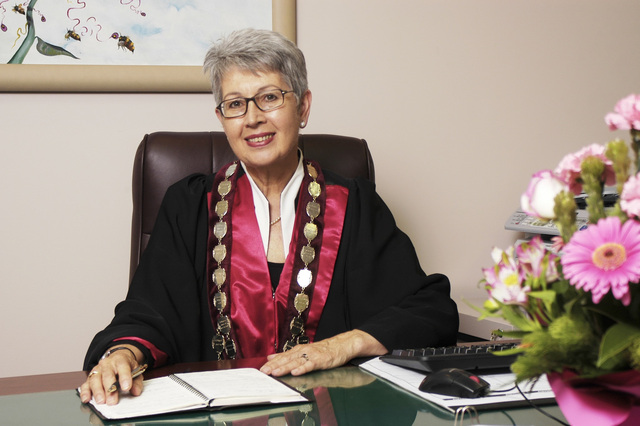
Each edition we feature the views of a Local Government Association President. The following is from Councillor John Jago, President, Victorian Local Governance Association. In November 1997 the VLGA and MAV launched the Code of Good Governance now adopted by 64 of Victoria’s 78 Local Governments.
The Code contains 11 essential features of good governance, a dispute resolution process and the power to establish Good Governance Panels to review the Code and consider matters referred by the two peak organisations.
The first Panel, chaired by former Local Government Minister, The Hon. Alan Hunt AM, was asked to ‘provide models of good governance and recommend the most appropriate methods for advancing Local Governments’ performance in relation to the eleven Essential Features’.
Dr Rosemary Kiss from the Centre for Public Policy at the University of Melbourne and Lynn Murrell, past President of the Provincial Cities, Towns and Boroughs Association were the other two members of the Panel. The Panel published a discussion paper ‘Doing It Ourselves’ in November 1998 and consulted widely. Councils that formally considered the questions contained in the paper reported highly productive discussions.
The soon to be released report of the Panel, titled ‘Doing It Ourselves: Showing the Way’ addresses the role of Mayors and Councillors, their relationship with the administration, the benefits of public participation, ethics, constraints and many other issues raised by Councils with the Panel.
It may seem an indulgence to be considering such fundamental issues when Local Governments face immediate and pressing issues. The amalgamation process has left Local Governments with reduced revenue, a $300m superannuation black hole, an inability to fund infrastructure and substantial cost shifting.
At a time when the focus has been on economic efficiency and the implementation of National Competition Policy it has been easy to overlook Local Governments’ democratic governance role. The agenda is set from above and senior management sometimes see their accountability as being upwards to State administrations.
Standardised performance measures treat all Local Governments as if they were one and the same and bit by bit the democratic role of Local Governments is overridden. Involvement of and accountability to the local community is reduced as the role of elected representatives is diminished.
Local Governments must be more than outposts of central administrations. The concluding paragraph of the Panel’s report states, ‘In a period when central governments are beholden to the forces of globalisation and the market, and less to the aspirations of the community, good governance at the local level can be the force that nurtures and maintains real democracy’.
Only by forging a strong working relationship with the local community and only by adopting good governance practice will Local Governments be able to retain their democratic base and remain credible as the level of democratic government closest to the people.
There is no simple formula for this. Each Local Government must find its own way. But contributions such as the Good Governance Panel’s discussion paper and report will help to provide the beacons.
As Alan Hunt says in his covering letter to the report, ‘Whilst we emphasise that there is no such thing as a universally applicable model of Good Governance for Local Governments, and that each Council must meet the special needs of its own unique community in its own way, we trust that the principles and practices which we have distilled from the successful experience of many Councils will be of assistance to all …’