A new regular feature in response to feedback from our 2001 Reader Survey
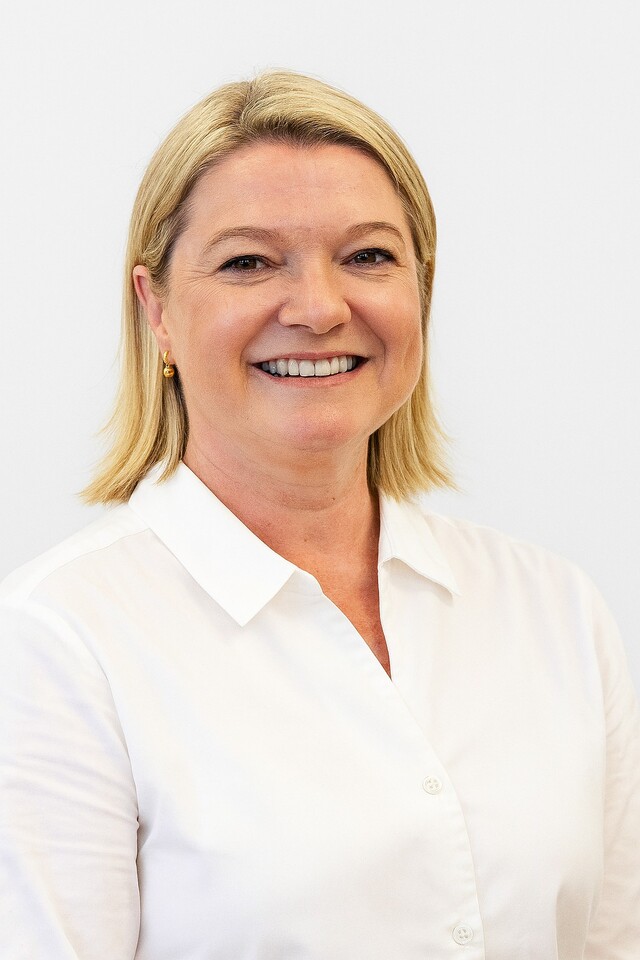
Mayor Kristina Barnett
City of Prospect, SA
Q. How long have you been on Council?
15 years in May 2002.
Q. When and how did you first get involved in Local Government?
As Highbury Ward Councillor in 1987 when another Councillor asked if I was interested. At that time, I was involved with the emerging local community association lobbying Council for more community development activities, such as playgrounds, community centre, traffic management, local history.
Q. What are some of the challenges you’ve faced while in Local Government?
Never having enough money at budget time to do anything without staging it or putting it off till next time. Our Council doesn’t traditionally like to be a high rating Council and is in the lowest third of ratings in SA metropolitan Councils. It has gone from being a medium sized Council to second smallest SA metropolitan Council because we decided, after an expensive investigation, not to amalgamate. More responsibilities devolved from State and Federal Governments with hardly any contribution from them and higher expectations from the community doesn’t make our job any easier at budget time.
Q. What are some of your high points in Local Government?
I have been successful in all my Council elections. Being elected Mayor, I consider a great privilege. I was very pleased that Council has recognised the reconciliation process with our indigenous peoples and is in the process of giving Aboriginal place-names to local parks. Council was the second council in SA to fly the Aboriginal flag out front of our civic centre.
Q. In regards to Local Government, what are some of the issues of importance to you?
Being recognised in the Constitution as the legitimate third tier of government in Australia would be a watershed forward move. However, perhaps it is time to work towards a two tier layer of governance with regional government that is not dominated by the two party dominated political party system as in the eastern states. I believe that Local Government in SA generally works effectively for the common good because it is not dominated by ‘party politics’.
Q. With the recent State election, do you think there will be any change in State/Local Government relations?
In South Australia, our Local Government Association is strong and vigorous as we work towards effective partnerships with whatever State Government is elected.
Q. As a woman in Local Government, does that mean you need to work twice as hard as your male colleagues or are things changing?
I have not found my gender as a woman to be a barrier to achieving change in Local Government but that is because I am an optimist and believe that through education and positive example, we can remove real or perceived barriers brought about by gender and the other areas where equal opportunity legislation operates. I am pleased that at the 2002 Australian Local Government National Assembly, the National Agenda for Women in Local Government (staff and elected members) was passed. This will allow local Councils to address barriers and enhance opportunities for full participation by women and other minority population groups in their communities.
Q. How do you think Local Government can strengthen its force on the political landscape of Australia?
People will look towards their local leaders in Local Government and the combined power of Local Government Associations and the Australian Local Government Association to represent them as they become more disillusioned with political leaders seemingly distant and uncaring about the everyday issues of life. Local Government nationally is a large employer, putting millions of dollars and resources into the community and represents millions of ratepayers and residents.
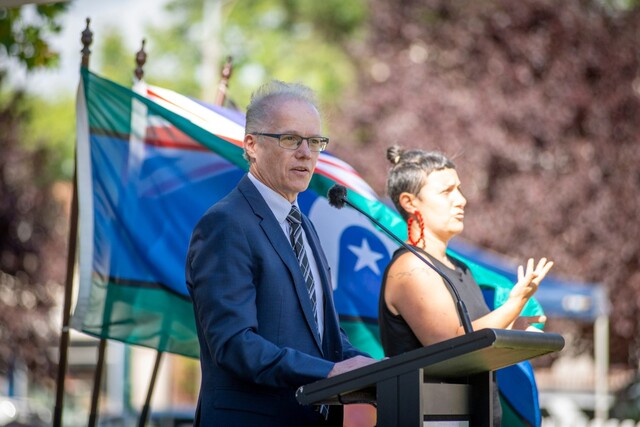
Councillor Eddie Hughes
Whyalla City Council, SA
Q. How long have you been on Council?
I have been on the Whyalla City Council since 1991
Q. When and how did you first get involved in Local Government
I initially ran for Council to promote environmentally sustainable development and to ensure that Council adopted processes that would lead to greater openness, accountability and transparency.
Q. What are some of the challenges you have faced while in Local Government?
The challenges in a community like Whyalla have revolved primarily around the need to diversify the economic base. What has been especially frustrating is the lack of a strategic approach on the part of the Federal Government to regional economic development combined with the (former) State Government’s metro-centric approach.
Q. What are some of your high points in Local Government?
One of the major high points was the opportunity presented by the change of ownership of the steelworks. For years BHP had failed to make an adequate financial contribution to the city as it was not required to pay rates and, instead, paid a pitiful ex gratia payment in lieu of rates. I had pushed for a change in this area for a number of years and I am pleased to say the new company, OneSteel, entered into negotiations with Council and agreed to a significant ramp up in the financial contribution to the city. The additional income will be used to facilitate economic diversification. Other highlights have included the introduction of solar subsidies in 1995 and amendments to the development plan to ensure energy efficient housing design.
Q. Concerning Local Government, what are some of the issues of importance to you?
One of the primary issues in a community like Whyalla is addressing the challenge of living sustainably in a semi arid environment. Whyalla’s water is pumped hundreds of kilometres from the stressed Murray Darling system – we are literally at the end of the pipeline. We are dependent on carbon based energy systems. Communities and their Councils can play an incredibly important role in shifting to a more sustainable society and generating the economic opportunities that will come with that shift.
Q. With the recent State election, do you think there will be any change in State/Local Government relations?
I’ll wait for the new Government to get a few runs on the board before offering an opinion. I’ll judge on actions not words. For our community the new Government’s policy on open Community Impact Statements will be a step forward as we have experienced a range of cuts that have not taken into account wider community impacts.
Q. How do you think Local Government can strengthen its force on the political landscape of Australia?
The starting point will always be effective and professional representation of local communities. Building on that base strong regional organisations with a sense of direction can more effectively engage the other elements in the political landscape.
Q. For those wanting to enter into Local Government, particularly Council, what advice can you provide?
Be clear about why you want to be elected to Council. If you don’t want to be a policy passenger going along just for the ride, you have to be persistent, passionately committed while retaining an open mind, plus willing to give freely of your time. If you are not committed to your community, don’t do it! And remember, have a sense of humour.