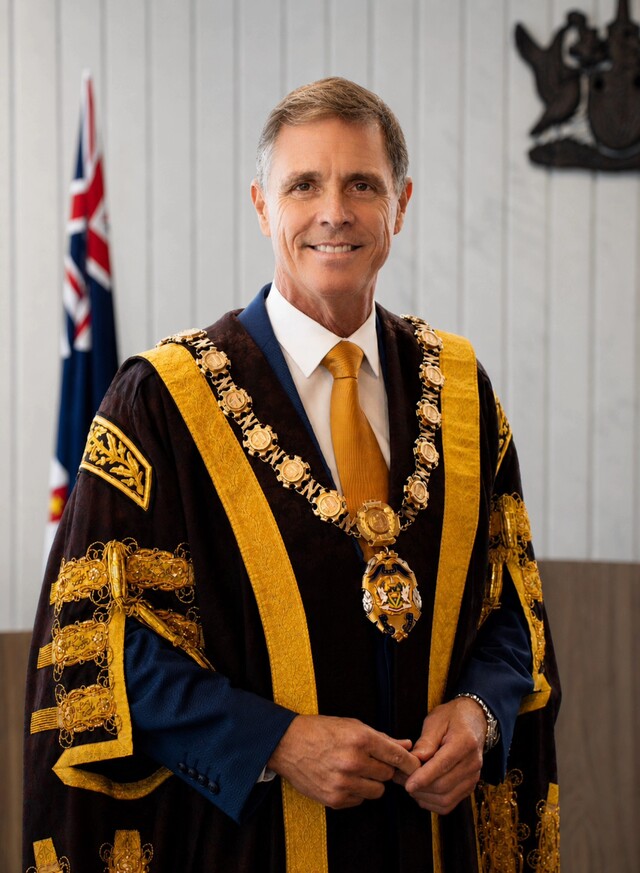
In each edition we feature the views of a Local Government Association President. The following is from Councillor Brad Matheson, President of the Municipal Association of Victoria.
Victoria is leading the way in enabling Councils to implement continuous improvement in dealing with asset management through a program being developed through the Municipal Association of Victoria.
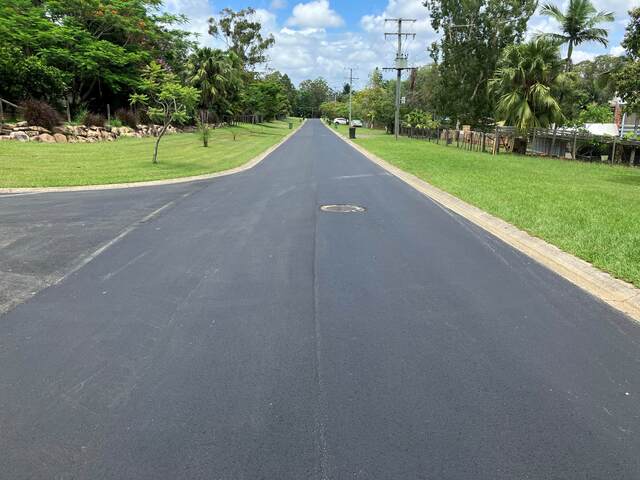
Infrastructure assets within all Victorian municipalities have a collective worth of $33.5 billion. Included in the maintenance of these assets is nine kilometres of sealed road per 1,000 rates assessments within inner metropolitan municipalities and 88 kilometres of sealed roads and 150 kilometres of gravel roads for each 1,000 assessments in rural Councils.
Federal Government grant cuts, most recently the withdrawal of $100 million worth of road funding in last month’s Budget, only increases the pressure on Local Government to find revenue sources to maintain their infrastructure.
The MAV’s belief that Victorian Councils face a crisis as high as $10 billion in the next decade because of crumbling roads, drains, footpaths, parks and public buildings sparked a sector wide benchmarking study in 2001. This MAV study assessed Councils’ internal processes and practices in regards to asset management. It found Victorian Councils were struggling to maintain their assets and recognised that the long term standard of community infrastructure was an ongoing issue faced by all Councils across the country.
After last year’s asset management review, the MAV quickly moved to introduce uniformity in reporting frameworks for road assets and an Asset Management Improvement Program (‘Step’), which comes into full effect next month, was developed.
The MAV has recently been working with other key stakeholders to look at what is required to achieve continuous improvement in asset management. We have concluded that a more uniform, national approach is required and the new two year best practice mentoring program with individual Councils would produce sustained improvement.
To date, over 40 Victorian Councils have voluntarily pledged their support of the Step program. These Councils have committed to being a member of the two year process which involves providing expert advice and mentoring by developing a ‘best appropriate practice’ asset management model and reporting framework.
This model will be developed by consultants with extensive experience in Local Government and will involve extensive consultation with participating Councils. Throughout the two year process, councillors, the CEO and senior Council managers from participating Councils will develop and review the asset management strategy, from which integrated asset plans will result, driven by community need.
An Auditor General’s report that was tabled in the Victorian Parliament on 4 June confirmed the MAV’s 2001 study that Councils are struggling with infrastructure management. The Auditor General’s insistent request for Councils to manage roads, value assets and establish the life of these assets would be made possible through an ongoing financial commitment to local infrastructure by the Commonwealth and the State, to support the MAV’s Step initiative.