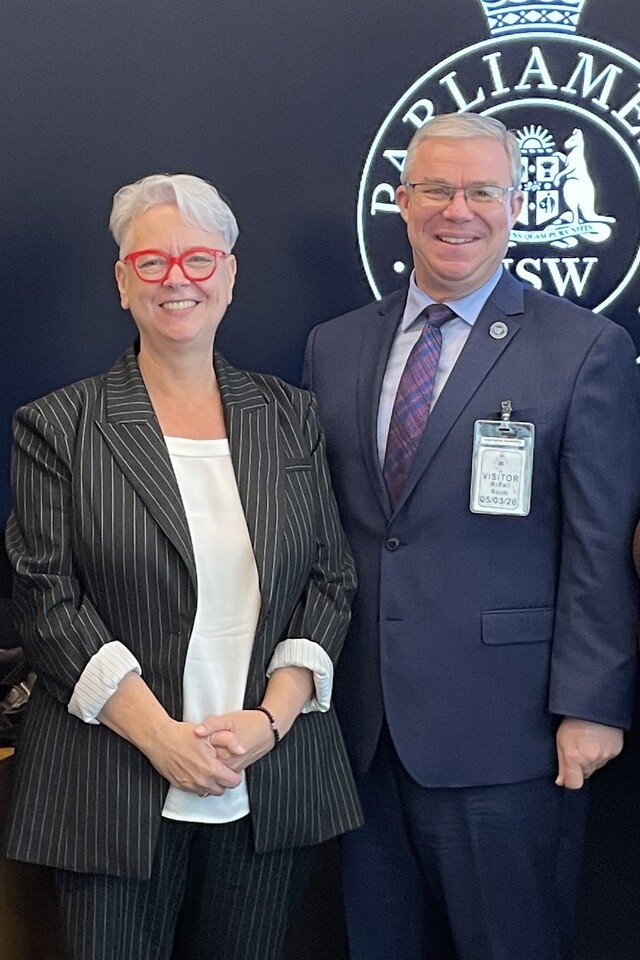
A regular feature, this edition profiling two elected members from New South Wales
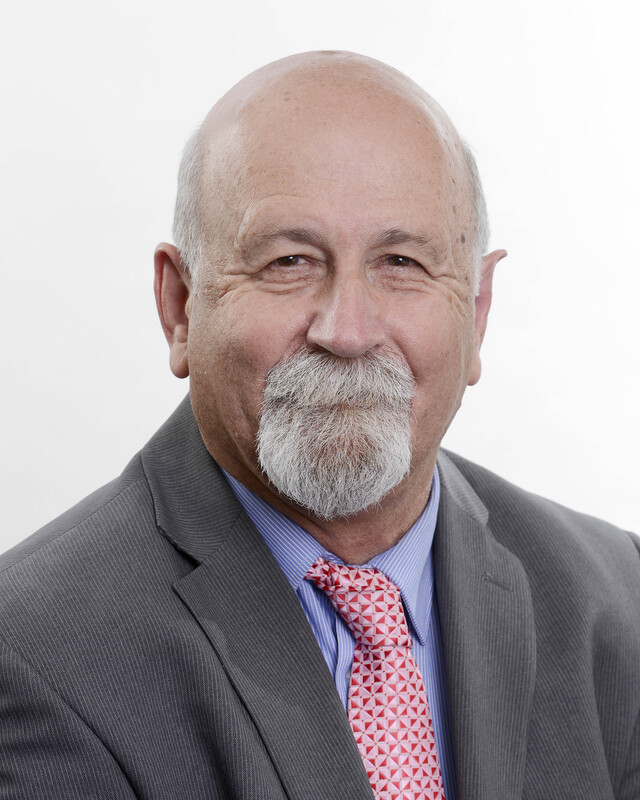
Mayor Colin Sullivan,
Richmond Valley Council,
New South Wales.
Q. Can you tell us about yourself?
I am a lifelong resident of Casino District. I am also a fourth generation member of the family to enter Local Government and a fourth generation member of the family to become Mayor. I spent my early life dairy farming then beef farming. I re-entered the building industry with the collapse of the beef industry in the early 1970s.I am a qualified licensed builder employing four permanent staff, together with many subcontractors.
Q. Describe your Council and Community – what are some of the things that make it unique?
Richmond Valley Council is a new Council, established in February 2000 following the amalgamation of Richmond River Shire and Casino Councils. Basically it is a rural Council depending upon rural interests, including beef and dairy, sugar cane, soybean, tea tree and associated industries.
Q. When and how did you first get involved in Local Government?
I entered Local Government in September 1974, following an approach by members of a small rural area who felt they were not being adequately represented at the time.
Q. What are some things you think should be done in order for greater prosperity of regional Australia?
It is important that local communities think regional, working together with neighbouring Councils and forgetting the parochial attitudes that have existed for too long.
Q. How has amalgamation benefited your Shire and how has it impeded it?
Amalgamation has already been and will continue to be of great benefit to our communities. Savings on overhead costs, better utilisation of plant and machinery and a stronger rate base are just some of the benefits. I am not a person who believes that amalgamation is the answer to every problem. I would encourage Councils to approach amalgamation with an open mind. It is important to maintain a community of interest and not to try and amalgamate Councils which don’t have a common interest. Not all Councils can amalgamate.
Q. What do you think is the future for Local Government?
I am a strong believer in Local Government. With my experience of over 28 years, it is the best form of government. Local Government has a bright and very long future but needs recognition by State and Federal Governments, particular in regard to funding. Local Government has the expertise and the knowledge to meet any challenge thrust upon it by State and Federal Governments but can only meet these challenges when adequately funded.
Mayor Jenny Bonfield,
Coffs Harbour City Council,
New South Wales.
Q. Can you tell us about yourself?
I worked as a teacher during the early years of my career, before moving into small business, working for myself for about 18 years. During this time I was involved in a range of small enterprises, ranging from a caravan park to a major tourism venture, which catered for up to 600 people at a time. There was also a period where I was involved in property development, but most recently I owned and operated a small but successful plant hire business. Since I have taken on the role of Mayor, however, my time schedule has precluded any involvement in business.
Q. When and how did you first get involved in Local Government?
I was planning to go back into teaching; I’d taken up a graduate diploma course and was thinking of re entering education, but life never seems to go on straight lines.
On 23 November 1996, my life turned around. Coffs Harbour experienced an unprecedented storm event – about 300 homes were flooded or damaged, roads and banana plantations were devastated. My personal involvement at that stage was watching the water rise from my ankles to my knees in just 15 minutes – the time it took to evacuate a family. On that day hangs a tale; it was from then that I became involved in a fight for justice with the insurance companies over the issue of whether the homes were damaged by floodwaters or stormwater. My experience as a community advocate, and experience dealing with large institutions and government agencies during that time led to an interest and involvement in Local Government. I could see that I could make a difference at the grass roots level. I stood for a seat on Council, and won, during a by-election in 1998. About nine months later, during the September 1999 NSW Local Government elections, I was elected Mayor for a four-year term.
Q. Describe your Council and Community – what are some of the things that make it unique?
Coffs Harbour City started as a seaside resort that served as a holiday destination for residents of the neighbouring cities of Armidale and Grafton. It was a safe port from which produce and cedar from the region was exported. But Coffs had a fragmented upbringing in that it didn’t have a major industry that gave it wealth or an economic backbone. Coffs is unique in that it is a country city, with a university, a public hospital, a major airport, with a railhead, a national highway, and a functional sea port with Customs. We have all the facilities, and great potential.
Q. What are some of the Local Government issues affecting your Council at the moment?
Coming to terms with settlement patterns on the fragile coastline and hinterland, most definitely, and the challenge of existing agricultural areas and the push for more rural residential development. Some of our farmers want to subdivide. Much of the local farmland has become unviable; this was once a dairying area. And some of the farmers are hoping to get out and look upon their land as superannuation. While I can sympathise with them, the Council has to look at sustainability of the city as a whole, and whether in the long run, the city as a whole would benefit from large scale development of our rural areas.
Q. In serving such a large urban area such as that of the Coffs Harbour municipality, how do you keep in touch with the community, what are some of your methods to staying in tune with what is happening in the area?
One of the fortunate things is that my fellow Councillors mix in different circles and have diverse interests, providing the Council with the ability to have a good, large sounding board on many issues. We do place a strong emphasis on public consultation on major issues affecting our residents, and we are soon to put in place an internet based polling system that will help us to measure community satisfaction on a range of programs. Councillors make themselves easily accessible to the public, and because of this we do get a lot of telephone calls from residents who want to give us information, and I’d say that nine times out of 10 that information is very useful. Approachability is the key, but it can be the maelstrom of Local Government; you’re in the eye of the storm of public opinion, and you’d have to be an ostrich not to know what the popular opinion was on an issue. I always try to enter a public meeting with an open mind, and be persuaded by the breadth and depth of debate.