Home » Area Consultative Committees (ACCs)

Area Consultative Committees (ACCs)

The national network of Area Consultative Committees (ACCs) provides an important link between the Federal Government and rural, regional, remote and metropolitan Australia. The network effectively covers the whole of Australia. As volunteer community based organisations, ACCs respond to issues in their regions and provide a vital link to government on local, social and economic conditions. ACCs work in partnership with the Department of Transport and Regional Services (DoTaRS) and are non-profit, community-based organisations funded by the Commonwealth Government.

Who are the members of ACCs?

The Secretary of DoTARS appoints a leading member of the community to act as Chair of the ACC. The ACC Chair oversees the development of the strategic directions of the ACC and is responsible for the ongoing operations of the Committee. The ACC Chair often establishes sub-committees to enable the ACC to better serve the diverse needs of the region. The Chair and every member of an ACC are committed volunteers drawn from the community, local business and government. ACC Chairs and members give their time and energy because they have a personal commitment to working in partnership with the Commonwealth Government to develop their regions through strengthening business and jobs growth to build a sustainable future for their community.

How do ACCs operate?

Each ACC works within the priority areas identified in the Charter for the National Network of ACCs and in accordance with a Statement of Priorities issued on behalf of the Commonwealth Government by the Minister for Transport and Regional Services. To guide its local-level activities, each ACC brings community stakeholders together to identify opportunities, priorities and growth strategies for the region. This community consultation enables each ACC to develop a three-year Strategic Regional Plan for its region. While ACC members are not paid for their services, each ACC receives annual operational funding from the Commonwealth Government. The ACC uses this funding to employ full-time paid staff to undertake administrative operations and assist the ACC in implementing both the National Charter and its Strategic Regional Plan.

What is the purpose behind ACCs?

ACCs position themselves as key regional stakeholders to find local solutions to local problems whilst at the same time taking a strategic approach to development of the whole region they serve. ACCs provide a whole-of government approach by working in partnership with business and the community to achieve regional economic growth by identifying opportunities to stimulate and sustain business opportunities and create and maintain jobs locally.

For further information please refer to the ACC website www.acc.gov.au or phone the Commonwealth Regional Information Service 1800 026 222 to locate your nearest ACC.

Digital Editions


  • Together Butchulla Talk

    Together Butchulla Talk

    A new Indigenous book celebrating the Butchulla language and local animals was launched at Hervey Bay Library earlier this month with storytime, language, dance and…

More News

  • A creative future for Kingston

    A creative future for Kingston

    The community has been invited to help shape Kingston’s creative and cultural future. Kingston residents are being invited to help finalise the city’s cultural roadmap, with the Draft Creative and…

  • Tweed residents gunking up wastewater

    Tweed residents gunking up wastewater

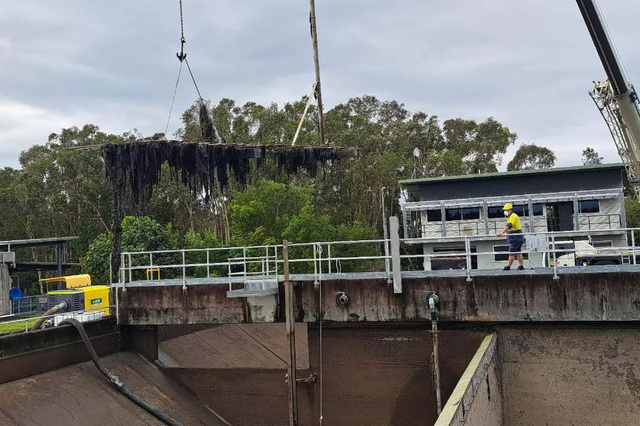
    Tweed Shire Council is urging residents to rethink what they flush down the toilet and pour down the drain, after revealing that crews remove around 156 tonnes of rubbish and…

  • In memory of Chris Quilkey

    In memory of Chris Quilkey

    It was with great sadness that we learned that former Blacktown City Deputy Mayor and Councillor Chris Quilkey has passed away. First and foremost, our thoughts are with Chris’s family,…

  • Unit demolished as Ipswich flood recovery continues

    Unit demolished as Ipswich flood recovery continues

    Ipswich Mayor Teresa Harding has welcomed the demolition of Mihi Grove, a flood-hit 42-unit complex in Brassall purchased as part of the Queensland and Australian Government’s Resilient Homes Fund Voluntary…

  • Fraser adopts tree

    Fraser adopts tree

    The Fraser Coast now has an official tree, with Council today adopting the Kauri Pine as a symbol of the region’s culture, history and natural environment. Fraser Coast Mayor George…

  • Council take on much-loved garden

    Council take on much-loved garden

    Glenorchy City Council will take on the administration of the Chigwell Community Garden, securing the future of the much-loved community space and supporting continued shared use by local groups. Glenorchy…

  • Fuel prices hurt country LGAs

    Fuel prices hurt country LGAs

    The fuel crisis is hitting remote, rural and regional communities hard, with farmers, freight carriers, tourism operators and local government all expressing concerns about the lack of supply and the…

  • Navigating grants

    Navigating grants

    How Administrative Complexity Is Eroding One of Local Government’s Most Powerful Tools Local government grants exist to create impact in communities. Yet across the sector, that purpose is increasingly being…

  • Looking to the future

    Looking to the future

    Flinders Lane will be abuzz for two days this month with Townsville Youth Council – supported by Townsville City Council – set to deliver a free festival focused on the…

  • WA leads the way as people to the regions

    WA leads the way as people to the regions

    Ten million people now call regional Australia home, and Western Australia is leading the way with its regional population growing faster than the cities, according to a deep dive into…