Home » Direct funding

Direct funding

By Peter Johnstone *

Proposals for extending direct funding to Local Governments from the Commonwealth Government, thereby bypassing State Governments, have been floated recently from Commonwealth quarters. Such funding could lead to future cost shifting and could worsen the current vertical fiscal imbalance in Australia.

A truly effective federal system of government in Australia requires both the avoidance of forced cost shifting between governments and a fairer sharing of growth revenues, such as income tax and GST, among all levels of government, according to expenditure needs, that is vertical fiscal equity or balance.

Direct funding, when tied to specific purposes, is little more than agency funding and should always include provisions for maintaining the real value of the funding to meet the specified purpose. Untied direct funding to Local Governments from the Commonwealth Government – that is a vertical redistribution of revenue through a transfer of revenue to Local Governments – would be a simple means of improving vertical fiscal equity, particularly if calculated as a set proportion of a growth tax.

There is no doubt that Local Governments are best placed to provide many services in the community, some of which are primarily a Commonwealth responsibility. Home and Community Care (HACC) is an example of such a service.

Direct funding via the Commonwealth, tied to purposes of this nature, can be an appropriate means of ensuring that Commonwealth objectives across Australia are met in a manner consistent with local and varying needs, if funds are transferred under sufficiently responsive and flexible conditions. However, Local Governments would be unwise to accept direct funding of specific services unless there is a particular benefit to their communities in those services being delivered by their Council, and unless the basis of funding for those services is contractually sound.

On the other hand, Local Governments should and would welcome additional sources of revenue, particularly untied direct funding from the Commonwealth. However, such funding will not contribute to the long term effectiveness and accountability of Local Governments if it is not provided on a reliable base into the future, reflecting growth in the economy.

The best form of direct funding from the Commonwealth to Local Governments would be the provision of access to a growth tax determined in accordance with the principles of vertical fiscal equity; that is, where allocation among Local Governments is on the basis of size, for example, without regard to revenue raising capacity or externally assessed needs.

The need to address horizontal fiscal equity among Local Governments, with grants based on comparative disadvantage and revenue raising capacity, could be met by a separate system of grants.

* Peter Johnstone is Chief Executive Officer of Victoria’s City of Boroondara. He has held senior executive positions with Federal, State and Local Governments.
Digital Editions


  • Grants close soon

    Grants close soon

    Queensland councils have until 31 March to apply for Round two of the State Government’s Secure Communities Partnership Program, which offers up to $400,000 per…

More News

  • Stretching for a good cause

    Stretching for a good cause

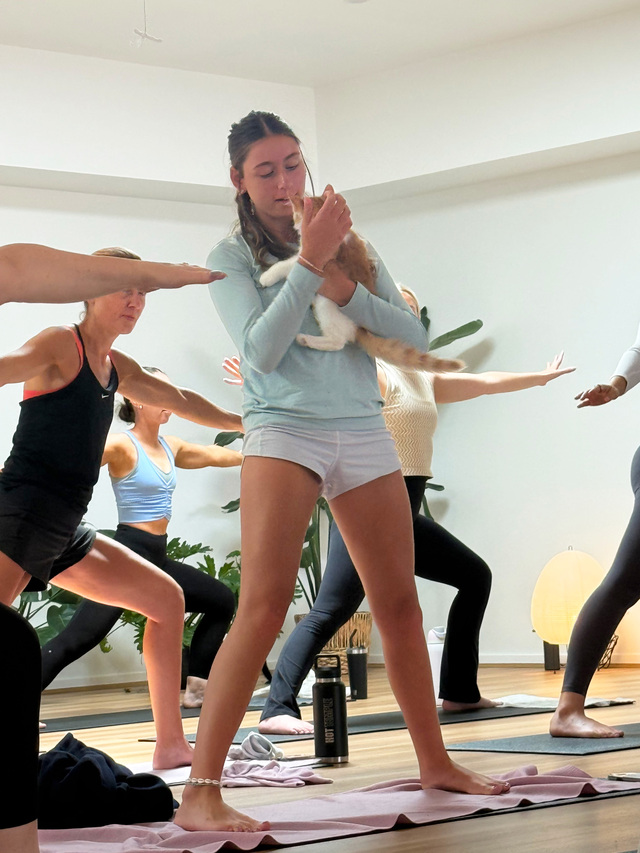
    Ballarat residents stretched, smiled and snuggled their way through a unique Kitten Yoga event that combined relaxation with a heartwarming cause – helping kittens find their forever homes. Hosted by…

  • Murray Library upgrade open

    Murray Library upgrade open

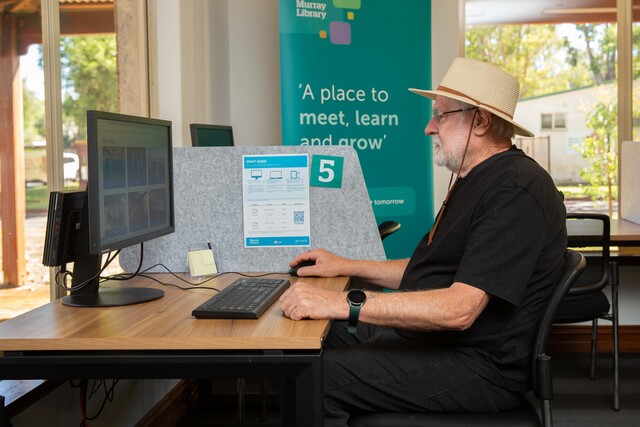
    The Murray Library refurbishment is now complete, and the revitalised space is officially open to the community. The upgrade delivers a brighter, more accessible and flexible library that reflects the…

  • Lockyer announce Scott Greensill as CEO

    Lockyer announce Scott Greensill as CEO

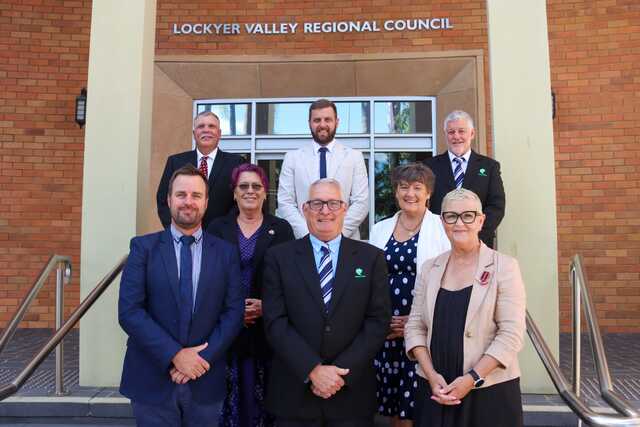
    Lockyer Valley Regional Council has appointed Scott Greensill as its new Chief Executive Officer. Councillors formally approved the appointment of Mr Greensill at a Special Meeting of Council in February.…

  • Myers resigns for health reasons

    Myers resigns for health reasons

    Wollongong’s Councillor Tiana Myers has resigned, as a Ward Three Councillor for City Council due to health reasons. Cr Myers was elected to Council in 2024 with a focus on…

  • Acknowledging women’s role in councils

    Acknowledging women’s role in councils

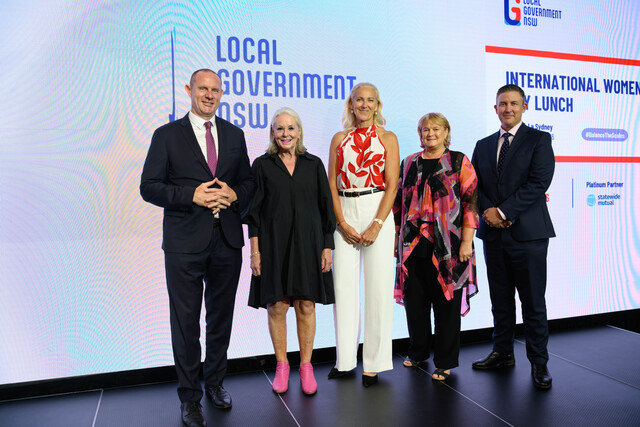
    Council representatives from across the state gathered in Sydney today for Local Government NSW’s (LGNSW) International Women’s Day event. Mayor Darcy Byrne, President of LGNSW, said the event was an…

  • Kylie Davies beats strong field

    Kylie Davies beats strong field

    Flinders Shire Council is pleased to announce the appointment of Kylie Davies as its new Chief Executive Officer. Ms Davies will start in the role on 13 April following a…

  • Leaving on a high

    Leaving on a high

    Mount Alexander Shire Council’s Chief Executive Officer Darren Fuzzard will end his tenure at the council in July 2026, marking ten years of service to the organisation and community. Mr…

  • Safety first for transport corridor

    Safety first for transport corridor

    Traversing a major Townsville transit corridor spanning three suburbs will soon be safer for motorists, cyclists and pedestrians, with Townsville City Council commencing a $3.8 million upgrade of Hugh and…

  • Creating long-term employment pathways

    Creating long-term employment pathways

    The Shire of Carnarvon is creating long-term employment pathways and strengthening workforce capability through its participation in the Remote Jobs and Economic Development (RJED) Program, a national initiative designed to…

  • Cool summer plan for Campbelltown

    Cool summer plan for Campbelltown

    Extreme heat is the biggest killer of natural disasters in Australia, exceeding that for any other environmental disaster combined, including floods, storms, bushfires and cyclones. While high temperatures pose risks…