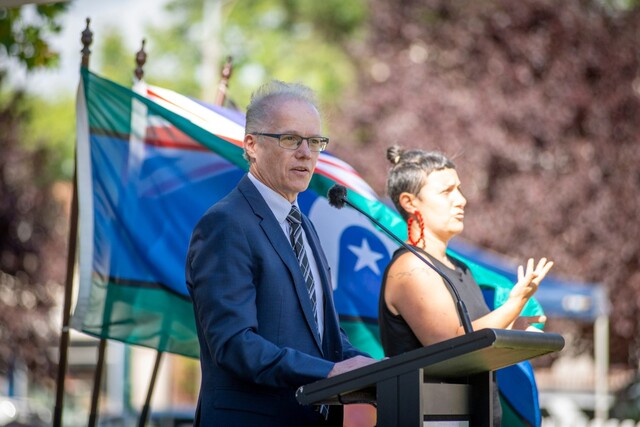
The Local Government Managers of Australia – NSW Division held its Annual Conference in mid-August, just a few weeks prior to the August 31st deadline set for Councils to submit their boundary reform submissions.
“The 31 August deadline to provide the Government with your proposals for structured reform is drawing near,” the Minister for Local Government, Tony Kelly, told delegates. “The deadline was set to make sure the Boundaries Commission can consider your proposals in time for next year’s elections. The State Government is committed to looking at what Local Government is, what it does and how it can be improved. Let me assure you no one is immune from this process.”
President of LGMA – NSW, Cliff Haynes, said that at the 2002 Annual Conference the then Local Government Minister, Harry Woods, laid down the challenge to LGMA and the industry to reform itself.
“However, the LGMA had pre-empted that challenge with the preparation of a discussion paper titled ‘Improving Local Government’, ” Cliff Haynes said. “The purpose of this paper was to raise the broad issues for reform, not simply amalgamations or boundary adjustments, which seems to be the focus of today. Our intention was to start people thinking about the role of both State and Local Government in service delivery and to examine the financial support necessary for Local Government to deliver those services.
“If Local Government is to be sustainable in the future, real financial reform is necessary. Amalgamation and boundary adjustments will not deliver Local Government with capacity for the future. There are great opportunities to look at better partnerships between Local Government and State Government to deliver better outcomes, particularly in rural areas.
“My message to members is that this is a time for leadership: that together with their staff, they see this as an opportunity to build and strengthen Local Government.”
In his address to the Conference, Managing Director of CNH Australia (Case New Holland), Frank Anglin, told delegates that the key areas for competitive advantage lie with the right people, right processes and right technology.
He asked delegates to indicate how many could say that they knew the names of all their employees. Promoting regular walk through of work sites, coffee and chats with staff, he asked how can you get the best from your employees if you don’t know their names?
“It is vital to put the right people in the right roles,” Frank Anglin said. “It is the individuals closest to the customer that have the greatest responsibilities. Hire the best, select people with skills better than your own. Wait rather than taking the best of a poor lot of applicants.”
He said that strong leaders are those able to admit mistakes – risk taking means there must be some mistakes.
The 2003 winners of the LGMA – NSW Management Excellence Awards Program were also announced during the Conference. The Gold Award for Management Innovation – Rural Councils was won by Carnathool Shire Council, while Penrith City Council took out the Management Innovation – Overall Award. Ken Beddie, Director of Corporate Services at Inverell Shire Council was Manager of the Year, with James Carey from Parramatta City Council awarded the Young Manager of the Year.