The Good Oil by Rod Brown *
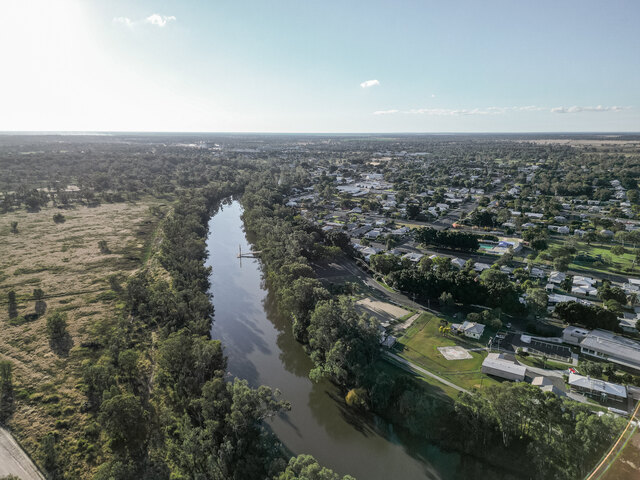
Khancoban is a small town in the Snowy Mountains. With a population of around 300, it faces similar challenges to many other small towns in regional Australia. However, Khancoban is not your standard small town. It had a population of over 3,000 when the hydro scheme was under construction four decades ago – this means it has the infrastructure to service a bigger population. If it could get back to between 800 and 1,000 citizens, it would justify a chemist, hairdresser, a hospital, fully functioning supermarket and so forth. The staircase effect, postulated in the McKinsey Lead Local Compete Global study (1994) is so valid, but it’s the investment trigger that’s required to get the process started.
I was in Khancoban for the annual skins golf game between a dozen Melbourne and Canberra hedonists. The event, now in its 11th year, is organised by Kevin ‘Cowboy’ Neale, St. Kilda AFL legend who has relatives in the area. But there’s a limit to golf, fishing, poker and wine, and two of us had pre-arranged a meeting with Jane Saxton and Mike Graham of the Khancoban United Volunteers Association (KUVA).
In a great example of local self help, KUVA runs a 13 seat community bus, to get townsfolk to Corryong for their shopping, and to and from the golf club. Tumbarumba Shire Council meets most of the running expenses. KUVA also publishes a weekly community newsletter, and Jane is in charge of the Khancoban Community Technology Centre, which provides computer and Internet services for locals.
Competitive advantages and disadvantages
Jane and Mike helped us map out some ideas. The consensus was that Khancoban has three distinctive advantages:
- quality infrastructure, thanks to the Snowy Mountains Hydro Authority – very good townscape and housing, swimming pool, community hall, airport, nine hole golf course and boat ramps
- easy access to lakes, rivers and mountains
- year round water (due to the configuration of the Snowy Mountains hydro scheme, Khancoban Dam is always full, and thus puts it in an advantaged position compared with many other inland towns).
Khancoban’s main competitive disadvantages appear to be:
- difficult road access on the NSW side, by virtue of the topography
- lack of basic services so a 50 minute round trip to Corryong is a regular event
- uncertainty among townsfolk on how to move forward.
Outward Bound – building on competitive advantage
During the course of two sessions with the KUVA folk we developed the concept of an Outward Bound agenda. Our slant is for city schoolchildren to have exposure to rural lifestyles and the natural environment as part of their education. The idea is not new – precedents are the Timber Top school near Mansfield, and more recently the Wesley College outpost in Clunes, north of Ballarat, where Year 9 students have an eight week residential course in the former gold town.
But Khancoban could be different, playing on its own competitive advantages. Its particular mix might be:
- tourism interpretative centre – featuring the region’s natural history, environment and the hydro scheme – for students and tourists alike
- walking trails and nature studies
- water sports – skiing, white water rafting and fishing
- accommodation upgrades and/or construction of a special purpose lodge for students.
On the latter point, I am advised that one of the real spin offs for Clunes has been solid accommodation bookings for the convoys of parents arriving to visit their little darlings.
Getting started
Big initiatives for small communities, like an Outward Bound school in this instance, tend to be difficult to get off the ground because of the organisational and lobbying effort required. However, in my experience, momentum gathers and things fall into place if incremental steps below are followed.
Step 1 – community consultation
As one of the KUVA people mentioned, some folk may not like change, others will have great ideas that can be incorporated. Community discussions thus need to be held at the outset. These discussions might also involve local MPs, Sussan Ley (Federal) and Daryl Maguire (State) plus former Deputy PM, Tim Fischer, a longtime champion for the region.
Step 2 – project scoping
Assuming the large majority is comfortable with the concept, the components and governance systems could then be developed and costed. Substantial networking then becomes important. For example, discussions with the NSW and Federal Ministers responsible for Education, or their minders, might be a starting point. The people responsible for environment, regional development and health would also have an interest. The Principals of high schools and colleges in Sydney are another avenue. This is often an iterative and confidence sapping process, but the aim is to find receptors, to heed their advice and to keep refining the project.
This leads to quality submissions to the respective Federal and State agencies. It is generally a good idea to develop a funding cocktail whereby the various components are individually costed, with funding commitments assigned to different parties. In kind support by the locals should be factored into the submissions. By the way, government agencies are still reluctant to fund scoping and feasibility studies. This is absolutely crazy, and it is harming communities. Governments exhort communities to take the initiative and find bottom up solutions, then fail to help them formulate their ideas and make strong submissions to the funding agencies.
Step 3 – funding application
This follows directly from Step 2. More lobbying is important. Apart from anything else, it shows commitment.
Concluding thoughts
The Outward Bound concept has a certain logic because it reflects the town’s inherent advantages. Government support, based on an intelligently constructed initiative, would arguably draw in private sector investment and consumer expenditure over time. The initiative would build and generate a knock on effect because it dovetails into numerous other potential activities in the local area.
I am advised by the New South Wales Education Department that it has 23 outdoor/environmental centres across the State – with some in rural locations like Gulgong, Wagga, Armidale, Dubbo, Dorrigo and Shellharbour. Some of these centres have accommodation, and are apparently fully booked for school trips ranging from a day to a week. The Khancoban concept could conceivably fit within that program. Queensland has something similar.
We’d be grateful for any advice from readers on how the folk in Khancoban, and similar small towns, might realise such ideas. Who knows, a national initiative might be possible. The downside for our skins game is that Khancoban Golf Club might be swarming with school kids – but wouldn’t that be great!
* Rod Brown’s Canberra based consultancy group, Australian Project Developments Pty Ltd, specialises in industry/regional development and government liaison. For further information telephone (02) 6231 7261 or email apd@orac.net.au