Acclaimed thinker and writer, Phillip Adams, told the Urban Local Government Association of Queensland (ULGA) conference held recently in Caloundra that the ‘sea change’ trend – people moving to the coast away from the cities – continues to be one of the most difficult challenges facing Local Governments. He said without careful examination and investment, sea change towns could easily become ‘see-death’ towns.
He said Local Government has the potential to be the most effective level of government in the country and needed to respond to this issue, ensuring development in their locality is sustainable. However, the ‘sea change’ phenomenon does not necessarily have to be to the ocean. Many inland areas have much to offer those looking for an escape from cities, be that on a permanent basis or as a holiday retreat. With changing work patterns, including the ability to work from home, and an increasing number of people looking very hard at their work/lifestyle balance, extended weekends are certainly on the increase. Sky rocketing house prices in the major urban centres have enabled people to down size to a unit in the city, purchase that country retreat or seaside villa and still have change left over. Northern Tasmania is just one of many areas reaping the benefits of this.
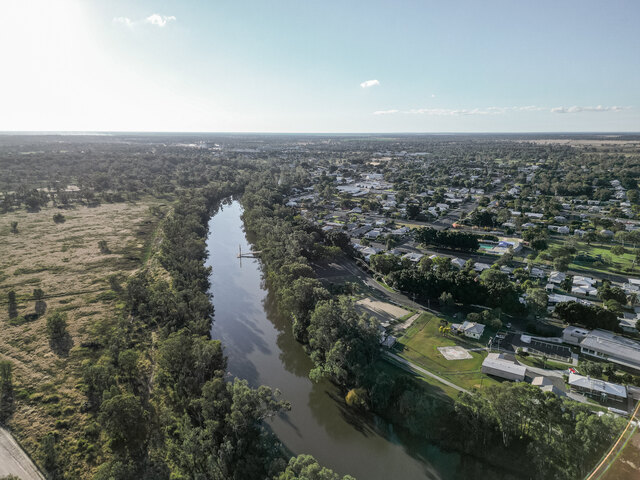
Our featured Council this month is Moira Shire on the beautiful Murray River. One of its townships, Yarrawonga on Lake Mulwala, is experiencing a nine per cent growth rate. A proposed $350 million lake side residential development, golf course, hotel and convention centre is set to create 500 new jobs, provide 1,200 waterfront residential allotments and each year bring an estimated additional 52,000 visitors to the Shire. Environmental impact and economic feasibility studies are key elements of the approval process currently under way.
With this sort of development taking place in various localities around the nation, there is a huge onus on councils to get it right. Short term economic gains could become long term environmental disasters, with the potential to destroy what has attracted people to a particular area in the first place.
From a social perspective, Councils must also be planning for an influx of new residents, with many approaching their twilight years. Our ageing community is heading for sea change destinations, while young workers are flocking to our cities. Planning to meet the needs of demographically very different areas is another major issue confronting councils. Similarly, they need to meet both new infrastructure requirements and increasing costs of rapidly ageing infrastructure.
At the recent launch of its Australian Local Government Population Ageing Action Plan, Australian Local Government Association President, Mike Montgomery, said that with Local Governments picking up the additional community service costs of an ageing community, alongside the backlog of burgeoning infrastructure costs, the Australian Government’s formal response to the Fair Share report on cost shifting and Local Government finances is absolutely crucial.
Developed in partnership with the Australian Department of Health and Ageing, the Australian Local Government Population Ageing Action Plan provides a framework for Local Governments to address the ageing issues that affect their communities. Councillor Montgomery is correct when he says the next step is for Local Government to plan and prepare for demographic change in a strategic and coordinated way, but sorting out the current financial imbalance rests firmly with the Federal Government.
The future prosperity of our communities depends on both these things happening.