Home » Editorial

Editorial

Recent moves by both the New South Wales and Victorian Governments, and in September changes by the Western Australian Government to its Planning and Development Bill, indicate that State Governments are starting to work more closely with Local Government on the vexed issue of planning controls. Local Government Associations across the nation have argued long and hard on behalf of their council members to protect local responsibility for planning matters. The local council and its community are key stakeholders in contentious planning proposals because, long after the developer has left with money in the bank, it is the local community that has to live, and deal with daily, the consequences of bad planning decisions.

In Western Australia, clauses in the Planning and Development Bill, giving the WA Planning Commission power to amend local planning schemes or determine development applications, have now been withdrawn after lengthy lobbying of the Minister for Planning and Infrastructure and other Members of Parliament by the Western Australian Local Government Association.

In New South Wales, the Local Government and Shires Associations have welcomed the Carr Government’s recent announcement that it will reduce and streamline planning definitions and zonings. However, then President of the Local Government Association, Councillor Sara Murray, said that the Associations remain vehemently opposed to private certification. She predicts increasing problems over the next decade culminating with private certifiers not being able to get insurance.

In Victoria, the recent decision to set height limits for residential streets has been welcomed by the Municipal Association of Victoria (MAV) and Victorian Local Governance Association.

Providing more certainty for councils and their communities, MAV President, Councillor Geoff Lake, said this move by the State Government is significant recognition of Local Government’s status as the planning authority with the mandate to determine areas where local amenity should be protected, while concentrating future high rise development to designated activity centres.

These moves by the respective State Governments to work with Local Government to achieve a win win situation are a step in the right direction in intergovernmental relations. However, cost shifting still looms as a major hurdle, including the Federal Government’s role in this practice. Former Mayor and now Independent MP in New South Wales, Richard Torbay, soon found calls by Local Government for funding fairness continues to fall on deaf ears of all the major parties in this State (refer page 6).

The return of the Howard Government with an increased majority, and control of both Houses, may mean it will take on the States with greater gusto in regard to cost shifting. However, its own cost shifting practices may prove to be its Achilles’ heel.
Digital Editions


  • From books to bots

    From books to bots

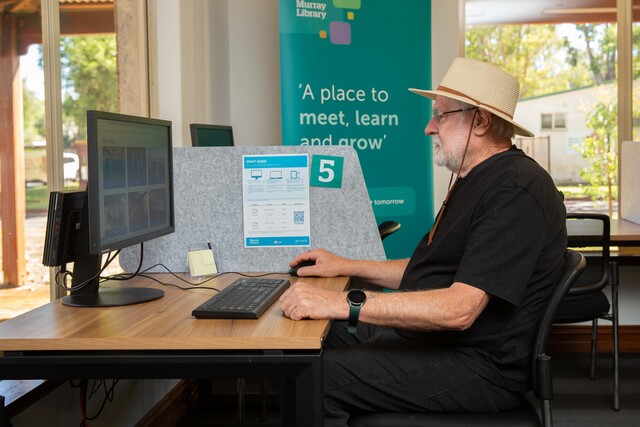
    Tenterfield Library is proving that technology is more than just tools and devices. From coding and robotics to tech support, the Library has become a…

More News

  • Myers resigns for health reasons

    Myers resigns for health reasons

    Wollongong’s Councillor Tiana Myers has resigned, as a Ward Three Councillor for City Council due to health reasons. Cr Myers was elected to Council in 2024 with a focus on…

  • Acknowledging women’s role in councils

    Acknowledging women’s role in councils

    Council representatives from across the state gathered in Sydney today for Local Government NSW’s (LGNSW) International Women’s Day event. Mayor Darcy Byrne, President of LGNSW, said the event was an…

  • Kylie Davies beats strong field

    Kylie Davies beats strong field

    Flinders Shire Council is pleased to announce the appointment of Kylie Davies as its new Chief Executive Officer. Ms Davies will start in the role on 13 April following a…

  • Leaving on a high

    Leaving on a high

    Mount Alexander Shire Council’s Chief Executive Officer Darren Fuzzard will end his tenure at the council in July 2026, marking ten years of service to the organisation and community. Mr…

  • Safety first for transport corridor

    Safety first for transport corridor

    Traversing a major Townsville transit corridor spanning three suburbs will soon be safer for motorists, cyclists and pedestrians, with Townsville City Council commencing a $3.8 million upgrade of Hugh and…

  • Creating long-term employment pathways

    Creating long-term employment pathways

    The Shire of Carnarvon is creating long-term employment pathways and strengthening workforce capability through its participation in the Remote Jobs and Economic Development (RJED) Program, a national initiative designed to…

  • Cool summer plan for Campbelltown

    Cool summer plan for Campbelltown

    Extreme heat is the biggest killer of natural disasters in Australia, exceeding that for any other environmental disaster combined, including floods, storms, bushfires and cyclones. While high temperatures pose risks…

  • Bathurst has it’s scrap together

    Bathurst has it’s scrap together

    Bathurst Regional Council has successfully concluded its ‘Let’s Get Our Scrap Together’ campaign, launched on 1 September 2025 with funding from the NSW Government and delivered in collaboration with NetWaste…

  • Baw Baw acting CEO tenure extended

    Baw Baw acting CEO tenure extended

    Baw Baw Shire Council has extended the contract of Acting Chief Executive Officer Sally Jones until 30 June 2026. The matter was considered as a confidential item in the late…

  • Farewell to a much-loved bridge

    Farewell to a much-loved bridge

    Narrabri Shire Council hosted a special community farewell event in mid-January, Brekkie on the Bridge, ahead of the upcoming demolition of the Violet Street Bridge. The event brought together community…