A regular feature this month featuring two Councillors from Tasmania.
Alderman Rob Valentine, Lord Mayor Hobart City Council, Tasmania
Q. How long have you been on Council?
I was elected as Alderman in April 1992 and as Lord Mayor in April 1999.
Q. Can you tell us about your City?
Hobart is the second oldest city in Australia. It has an area of 77 square kilometres and a population of around 48,000. It is the only city in Australia to manage an area that rises from sea level to alpine regions. The city has 22,343 rateable properties and about 21,600 ratepayers. The value of building approvals amounted to $88 million for 12 months to September 2004.
The City has been the Antarctic and Southern Ocean gateway for Australia and other nations for many years, with names such as Amundsen and Mawson being among the explorers that have stopped over on their journeys to or from the frozen continent.
There are some 5,500 businesses in the City. I believe we currently have the lowest office vacancy rate in Australia at 3.5 per cent. Hobart has a thriving arts and cultural sector and a population that swells by about 41,000 people during the day. The City receives around 80 per cent of all visitors to Tasmania.
Q. What are some of the challenges you have faced in Local Government?
Striking a balance between essential development for tourists without affecting the City’s heritage is one of the major challenges. Our heritage buildings are an important competitive edge as Hobart has the greatest number of such buildings of anywhere in Australia. They give Hobart its character and assist with both our tourism future and enhancement of the City’s liveability.
However, Tasmania has not always enjoyed a thriving economic environment and this fact has only added to the challenge in the face of developmental pressure.
Another challenge has been the implementation of a rolling budget that is currently based on a ten year funding plan for projects. This is designed to provide Council with a clear understanding of the capital works issues facing the organisation and to ensure the big ticket items do not always take precedence over the smaller, less significant proposals.
Another challenge has been to ensure our iconic skyline and bushland is effectively maintained and indeed enhanced for both residents and visitors alike.
Q. What are important issues to you?
People are important to me. In the case of Hobart it is the people that make Hobart as much as the infrastructure. I am always being told by visitors how friendly Hobartians are. This is definitely a competitive edge and is something that we need to encourage.
I endeavour to enthuse people about their City. This enthusiasm rubs off and people generally become more positive. Visitors notice the difference and as a result visitation increases. Built and natural heritage are also important, along with the development of facilities that support the community. It is important that Hobart is able to maintain and enhance its wonderful natural environment which is our real heritage.
Partnerships with private enterprise and other levels of government are very important in a State that has a relatively low population. Without such partnering some facilities would simply never be developed.
Q. What are some of the issues facing your Council area?
On present trends Tasmania will take over the mantle of the oldest demographic profile of any State in Australia in 2006. This presents a number of difficulties.
The demand for housing for the aged is rising significantly, but will this translate into a high demand for hostel care for the aged, or will the older demographic move back to their State of origin to be near their families during the final years of their lives? Should Council then concentrate on encouraging development of hostel care facilities for the aged when the actual level of future demand is not entirely clear?
The present demand for tourism and convention infrastructure is very evident – the hard working staff at the Convention Bureau are to be thanked for that. With our isolation it is obvious we need a number of competitive edges to encourage visitation so far south.
It would seem they are present in our environmental, heritage and tourism assets, at least for the moment. In a period of growth, the challenge is to maintain that interest while finely balancing the bed night capacity of the City. Only time will tell if we are successful.
Like many locations we rely on the effectiveness of transport avenues to our City. Federal subsidies for passenger vehicles and freight to Tasmania are a real necessity to ensure we remain competitive. Recent increases in cheaper airline seats have proved to be a much needed boost to tourism, with visits climbing steeply over recent years. A passenger subsidy rather than a vehicle subsidy would provide a similar result I believe. We must also ensure our Visitor Information Centre and other tourism infrastructure is able to cope with the increase and effectively capitalise on this influx.
Q. What are the key aspects of being a good Councillor?
The most important aspect of a good Councillor is their ability to listen to all sides of an argument before making a final decision. This is not always popular with the community. However, a Councillor who engages with their residents and business is better equipped to make balanced decisions that will benefit the community in the long term.
Councillors should also concentrate on the issue and not so much the personalities they deal with around the Council table, as hard as that may be from time to time. Personalities are relatively transient while the decisions implemented today are with us for a long time into the future and affect future generations. We need to remind ourselves of this from time to time.
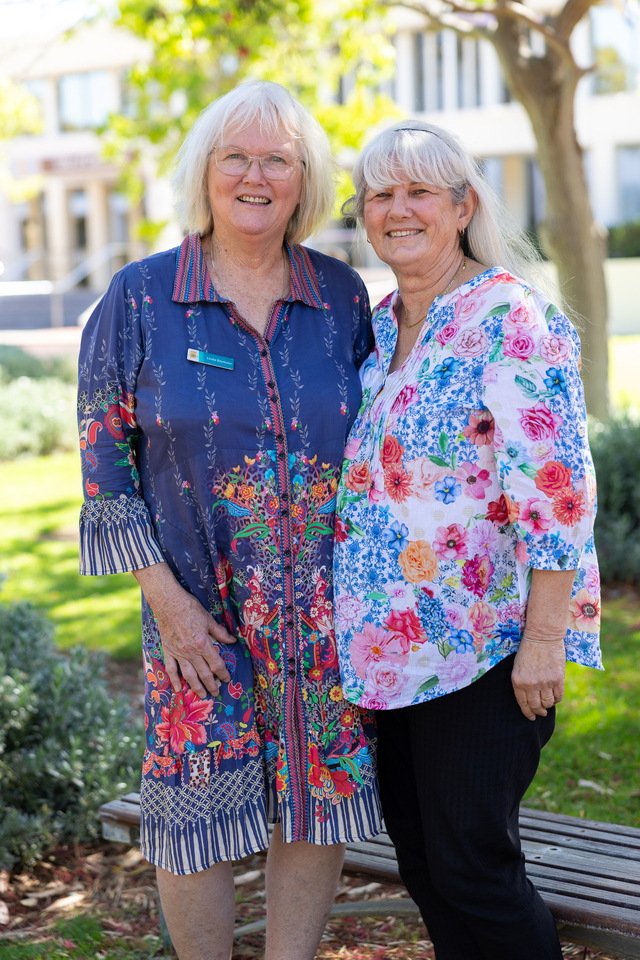
Councillor Beryl Marshall, Central Coast Council, Tasmania
Q. How long have you been on Council?
I have been a Councillor for ten years and ten months in two stints. I was first elected in January 1992 to the then Ulverstone Council. As part of state wide Local Government reform in 1993, the Central Coast municipal area was created with the amalgamation of Ulverstone and Penguin Councils.
I have been married to Ian for 46 years and have two adult married children and four grandchildren.
Q. Can you tell us about your municipality?
Central Coast is situated in North West Tasmania and comprises an area of 932 square kilometres with a population of 21,077.
The economy is largely rural based, with most people in the workforce being employed in agriculture, manufacturing, community services and wholesale and retail trades.
Our coastline has safe beaches, caravan parks, parklands and walking tracks.
Q. What are some of the challenges you’ve faced in Local Government?
Coping with changing dynamics of local community and economy brought about by the increase in visitors and permanent residents.
Q. What are important issues to you?
Some of the important issues are the change of lifestyle. It is sometimes difficult to satisfy community when what they want cannot be achieved in the time frame.
Also, dealing with formal meeting procedures and changing regulations in the Local Government Act Review.
Q. What are some of the issues facing your Council area?
We have many issues facing the Council area. From meeting changes from Local Government Act Review through to learning to live with no natural growth for many years.
There is the issue of an ageing population. This area needs to survive without large industry and commerce.
We also need to deal with tourism and related issues as well as recent economic improvement and growth.
Q. What are the key aspects of being a good Councillor?
You need to be a good listener, able to communicate clearly, and use a consultation process when needed.
Residents’ views need to be respected as does the Council and Councillor, even though they may conflict at times. Having a good knowledge of the community and residents is vital.
Q. What is a recent initiative of the Central Coast Council that you believe will have a significant impact on your community?
The new Ulverstone Visitor Information Centre was recently opened following eight years of planning and consultation. This centre will become the hub for tourists visiting the North West and will be a vital cog in the region’s economy.