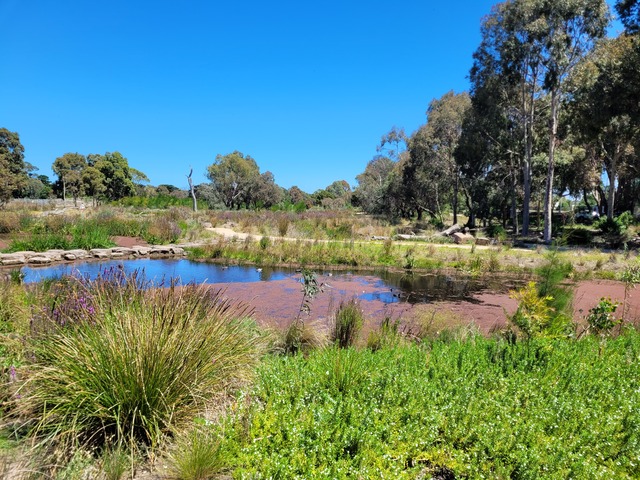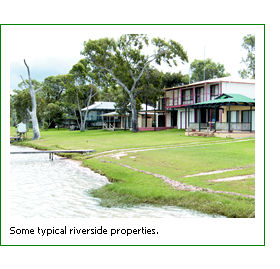
South Australia’s Mid Murray Council, located within regions generally known as the Murray Mallee, Riverland and the Eastern Foothills of the Mount Lofty Ranges boasts one of Australia’s great natural features, the River Murray. Following the amalgamation of four small Councils to form Mid Murray, the new Council found itself not only responsible for 220 kilometres of this magnificent waterway, but also 220 kilometres of prime recreational land – land that combined all of the complicated issues of intensive development with a vital resource and a sensitive natural environment.
Over the years development scattered along the picturesque river corridor had been haphazard. Fifty-nine shack settlements with around 3,500 riverfront shacks of varying age and standards had evolved with no thought given to their environmental impact on what was becoming an even more fragile ecosystem.
The residents’ circumstances also ranged from long term residents on fixed low incomes to those who could afford to spend their weekends and holidays in more luxurious holiday homes.
Within Mid Murray – from Morgan to Mannum – water is pumped by pipeline to the Iron Triangle, Whyalla, Port Augusta and Port Pirie, the Barossa and Adelaide, as well as a myriad of small towns and settlements along the way. A major issue was the lack of any comprehensive and effective effluent disposal strategy along the river valley. The protection of water quality, from not only natural contaminants, but also human waste, was becoming more important to all users of the river, the riverine environment and the water resource.
It was obvious that ratepayers and residents of Mid Murray expected their Council to take a leadership role in safeguarding their priceless irrigation lifeline for the driest State in the nation, a treasured recreational and commercial asset and a vital commodity for the population of the water dependent cities and towns.
With encouragement from its residents, Council embraced the challenge and its shack effluent removal program evolved from initial discussions with shack communities, Government departments and various agencies in the mid to late 1990s. Three main issues triggered Council’s commitment to such a program, namely:
- the State Government’s Crown Shacksite Freeholding Project
- support of the ratepayers
- Council’s review of planning policy in terms of sustainable development within the River Murray Valley.
In simple terms, the offer to freehold Crown shack sites by the State Government was subject to a number of criteria, one of which was the need to address effluent disposal.
Council’s Development Plan Review explored the option of linking development rights to environmental improvement, focusing again on effluent disposal. In tandem, the above three issues resulted in a mandatory requirement that to be able to obtain freehold land tenure and/or to secure development rights there was the need to install and connect to a communal waste control system (STED Scheme or similar). Such systems result in effluent from shacks being collected, treated and removed from the flood plain of the River Murray.
Council soon began receiving requests from shack settlements for assistance in progressing the installation of schemes and this was embraced proactively. Initially Council lodged an application for Natural Heritage Trust (NHT) funding to commence a Mid Murray River Dwelling (Shack) Effluent Removal Strategy.
The strategy incorporated substantial fieldwork including land tenure identification, shack site inspection and data collection as a prerequisite to developing effluent management plans for each of the identified shack site areas within the Mid Murray Council area. It was anticipated the plans would form the basis of scheme design and contract documentation.
Unfortunately, the NHT application was unsuccessful, however, discussions with the River Murray Catchment Water Management Board followed. The board acknowledged the significance of the project in terms of environmental improvement and agreed to part fund a modified project.
A commitment by Council in conjunction with board funding ensured the project would proceed. Secured funding also enabled the employment of a specialised officer on a contract basis. The project was completed and resulted in management plans being produced for each of the shack site areas. This information has since formed the basis of many scheme installations. In addition to the completion of the effluent strategy, Council adopted a policy and guidelines for future involvement in STED Scheme installations.
Council, on request, will coordinate the complete installation of an appropriate communal waste control system. The process includes consultations with shack owners, groups, committees and other interested parties. Decisions regarding the service and setting appropriate fees are reached. Council then enters into negotiation with contractors, relevant agencies and government departments regarding the installation program.
As all schemes are funded by the shack owners in each area, Council provides options for upfront payment as a lump sum or by way of a service charge on rates over a ten year period. This ensures no shack owner is unduly disadvantaged by their financial circumstances.
Leadership
The initiation and ongoing implementation of Council’s effluent removal program, in partnership with the community, is an excellent example of a commitment by Local Government to environmental improvement. This program has generated interest and recognition by a number of agencies, Government departments and Local Governments within South Australia and interstate.
Environmental benefits
Since the establishment of shacks along the River Murray, various methods of effluent disposal have been adopted. These ranged from no facilities at all, long drops, soakage wells, septic tanks connected to soakage trenches, composting facilities, holding tanks and so forth. With the vast majority of shacks sited within the River Murray Flood Plain quite often metres from the river’s edge, the installation of communal effluent schemes has and will produce the obvious environmental benefits of removing contaminated wastewater from the flood plain. Once completed, installed schemes will be treating and diverting an estimated 600 megalitres of wastewater per annum from the flood plain.
Community awareness
Through community consultation, Council’s effluent removal program has generated public awareness of the problem. Riverside dwellers have shown that they are prepared to shoulder the expense of effluent removal in an effort to improve water quality for all people reliant on River Murray water and for the future of the river itself. Council’s experience and knowledge gained through implementing this program is being shared with other Local Governments. Council has also established a STED Scheme Maintenance Committee to oversee all issues associated with installed schemes. This Committee includes three community representative members.
Program commitment
The commitment of both shack owners and Council to the effluent removal program cannot be over emphasised. Council has committed to the ongoing implementation of the program, which at the current rate of scheme installations will continue for the next three to five years.
Collaborative effort
The support of shack community groups, individuals and community associations has been pivotal to the success of Council’s program.
For further information contact Kelvin Goldstone, Environmental Services Manager, on (08) 8564 6020 or kgoldstone@mid-murray.sa.gov.au