Home » Leadership role for Local Government

Leadership role for Local Government

Native title is a key issue for Local Governments around Australia. Rural, remote and metropolitan councils are often parties to native title claims that cover areas of land for which Local Governments are responsible. They are also involved where future development is planned for areas where native title might exist, even if a native title claim has not been made.

Because Indigenous people are part of local communities, more and more often local councils and Indigenous groups are making agreements that deal with issues of mutual concern. These might involve cultural heritage protection, recognition of traditional ownership, town planning and environmental and economic issues.

Local Government is a key player in native title matters, and can provide leadership in finding practical outcomes. Experience has shown that the process of negotiating agreements – as well as the agreements themselves – can strengthen existing community relationships and create new ones. The form those agreements take and what they are about is a matter for the parties. Their scope is determined by local circumstances and needs. There is no ‘one size fits all’ native title agreement.

Indigenous land use agreements (or ILUAs) are one type of agreement that can be negotiated and registered under the Native Title Act. ILUAs have been used to provide for the expansion of town boundaries, new industrial and residential estates, and other developments. Less formal agreements can set out a framework for involving the local Indigenous community in discussions about planning and land use. Whatever form they take, agreements can give certainty for future planning and development. Local Governments and the communities they represent can proceed with confidence.

It is more than a decade since the Commonwealth Native Title Act 1993 commenced. In that period, many Local Governments have reached agreement with Indigenous communities to work together. This supplement gives examples of agreements from various parts of Australia, demonstrating the variety of things that people have been able to agree about. Importantly, it shows that, years after the ink is dry, these agreements continue to provide the basis for communities working together.

The National Native Title Tribunal has a wealth of knowledge and experience to help people negotiate agreements – and avoid the cost, delay and strain on relationships that litigation can involve. We work with Local Governments, Indigenous groups and others towards an Australia where native title is recognised, respected and protected through just and agreed outcomes.

Graeme Neate,
National Native Title Tribunal President

Digital Editions


  • Douglas Shire seeks renewal

    Douglas Shire seeks renewal

    Creative store opens in Mossman through empty spaces program. A new store and community art space has opened in Mossman thanks to a program designed…

More News

  • From books to bots

    From books to bots

    Tenterfield Library is proving that technology is more than just tools and devices. From coding and robotics to tech support, the Library has become a place where curiosity, connection and…

  • Major repairs for levee

    Major repairs for levee

    Goondiwindi Regional Council has endorsed its largest-ever capital works project to repair and reinforce critical sections of the Goondiwindi levee, following significant erosion after recent floods. At this week’s Ordinary…

  • Stretching for a good cause

    Stretching for a good cause

    Ballarat residents stretched, smiled and snuggled their way through a unique Kitten Yoga event that combined relaxation with a heartwarming cause – helping kittens find their forever homes. Hosted by…

  • Murray Library upgrade open

    Murray Library upgrade open

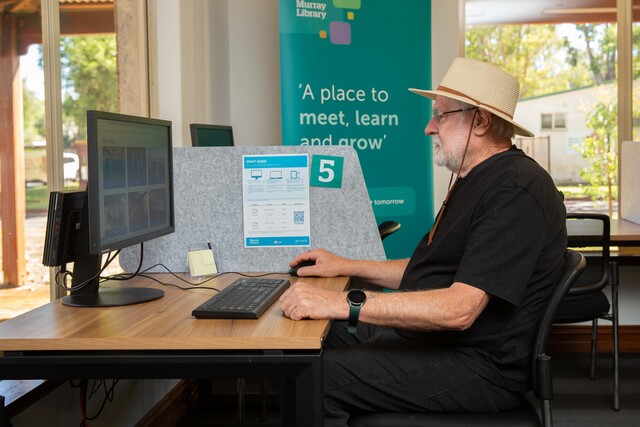
    The Murray Library refurbishment is now complete, and the revitalised space is officially open to the community. The upgrade delivers a brighter, more accessible and flexible library that reflects the…

  • Lockyer announce Scott Greensill as CEO

    Lockyer announce Scott Greensill as CEO

    Lockyer Valley Regional Council has appointed Scott Greensill as its new Chief Executive Officer. Councillors formally approved the appointment of Mr Greensill at a Special Meeting of Council in February.…

  • Myers resigns for health reasons

    Myers resigns for health reasons

    Wollongong’s Councillor Tiana Myers has resigned, as a Ward Three Councillor for City Council due to health reasons. Cr Myers was elected to Council in 2024 with a focus on…

  • Acknowledging women’s role in councils

    Acknowledging women’s role in councils

    Council representatives from across the state gathered in Sydney today for Local Government NSW’s (LGNSW) International Women’s Day event. Mayor Darcy Byrne, President of LGNSW, said the event was an…

  • Kylie Davies beats strong field

    Kylie Davies beats strong field

    Flinders Shire Council is pleased to announce the appointment of Kylie Davies as its new Chief Executive Officer. Ms Davies will start in the role on 13 April following a…

  • Leaving on a high

    Leaving on a high

    Mount Alexander Shire Council’s Chief Executive Officer Darren Fuzzard will end his tenure at the council in July 2026, marking ten years of service to the organisation and community. Mr…

  • Safety first for transport corridor

    Safety first for transport corridor

    Traversing a major Townsville transit corridor spanning three suburbs will soon be safer for motorists, cyclists and pedestrians, with Townsville City Council commencing a $3.8 million upgrade of Hugh and…