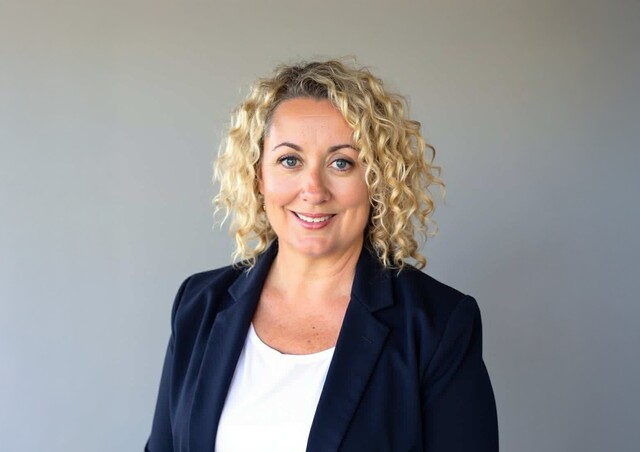
An interview with Alex Sheridan, Executive Manager Technical Services, Town of Victoria Park, WA
As Executive Manager Technical Services at the Town of Victoria Park in Western Australia, Alex Sheridan’s key responsibilities include human resource management, operational management, Council support and strategic and operational planning.
The Town of Victoria Park is located three kilometres from the centre of Perth, and has a population of approximately 28,000 people.
Alex Sheridan manages and controls engineering services, parks services, land and assets, waste and recycling, Council’s depot, heavy and light vehicles. He provides leadership to some 45 personnel and is involved in a number of significant technical committees, including the Metropolitan Regional Road Group and Mindarie Regional Council – Western Australia’s premier waste management authority.
Alex is also Past President of the Institute of Public Works Engineering Australia (IPWEA) Western Australia division, a member of the Institution of Civil Engineers UK, and a Fellow of Engineers Australia. He said management of infrastructure is a key responsibility for any Local Government engineer.
“Our communities rely on it very heavily as it plays a critical role in the delivery of services,” he said. “With some States moving to legislate, Council engineers will be required to provide long term financial strategies, based on sound infrastructure asset management plans. For many years the focus has been on roads and bridges, however, it is imperative that Local Governments change their corporate culture and ensure a whole of organisational approach to management of assets in a sustainable manner. Any accumulated backlog in Council maintenance is in effect a liability just as much as borrowings.”
The Town of Victoria Park recently replaced all 220 kilometres of Council’s slab footpaths with continuous concrete. This has taken nearly ten years to complete, with Council committing approximately $500,000 per year. Council’s 180 kilometres of roads are also in good condition, with rehabilitation being managed using the Western Australia based ROMAN program. The ROMAN software package provides a detailed inventory of roads and paths, together with their age and current condition rating. It also provides a valuation package that allows Councils to meet the needs of AAS27 and an indicative works program feature.
Alex Sheridan said it is essential that infrastructure assets are managed in a sustainable manner.
“Over and above each State developing an Asset Management Strategy/Policy, each Council should develop strategies, plans and programs; define level of service; collect appropriate condition data and have support systems in place; and measure the effectiveness and robustness of the initiatives and programs,” he said.
Aside from the infrastructure backlog, Alex said two main challenges for Councils are the shortage of appropriate technical staff and graffiti vandalism.
“At Victoria Park, we have trained three Trainee Technical Officers under a two year contract to address the shortage of skilled workers,” he said. “They have obtained their diplomas and since moved onto other Councils. Our fourth trainee is now a Technical Officer with Council and is helping to coach our fifth trainee. In addition, the Parks and Gardens area has employed two trainee horticulturalists and we are looking at employing an apprentice motor mechanic in the near future.”
Alex said that graffiti vandalism is a problem worldwide and is a significant cost to Councils.
“Nine years ago, Victoria Park employed a Graffiti Officer with a vehicle and materials necessary to remove graffiti,” he said. “Removal of graffiti in a timely manner from Council and private property is a priority in limiting vandalism.”
In looking towards the future, Alex Sheridan said the environment and climate change, or more importantly climate extremes, that are being experienced in Australia are going to test infrastructure in particular.
“I believe that this is going to be the next big challenge, not only for Federal and State Government, but also Councils,” he said.
Another challenge for Local Governments is whether to continue putting household waste into landfill or invest in the future. Along with six other Councils, the Town of Victoria Park is a member of the Mindarie Regional Council.
Alex Sheridan is a member of its Tender Evaluation Committee, which is developing a build, own and operate type contract.
The contract will see the region’s 500,000 residents make a positive contribution to the environment by processing 100,000 tonnes of waste per year. A biological process will decompose the organic component of household waste in a controlled environment to produce a compost.
Alex Sheridan said Mindarie is about to build stage one of a three stage vision to deal with the regions 300,000 tonnes per year of household waste.