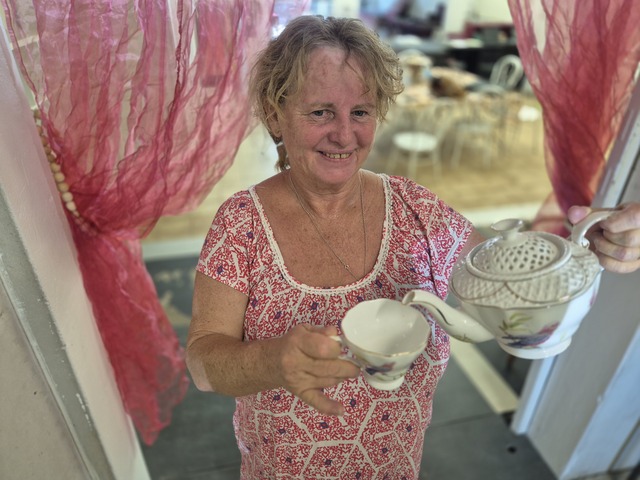
Councillor Jane Clark, Alice Springs Town Council, Northern Territory
Q. How long have you been on Council?
I was elected in 2004 after running a campaign that cost $10.50. I wanted to be elected on my past performance within the community, rather than how much press I could obtain during a campaign. It was a little scary but paid off in the end.
Q. Why did you want to become involved in Local Government?
I had two main issues – the first was an ongoing safety issue with our town pool depth. This was rectified at a cost of $500,000 and I can now sleep better at night knowing that it has been resolved. I tackled things head on, copped a lot of flack and learned a few lessons about the power of speaking out as an Alderman. I now try to be a little more moderate in my approach.
Having served on the Australian Information Industry Association (AIIA) and the Northern Territory Government ICT Industry Development Group for many years, the second issue I am passionate about is the local ICT (information, communications and technology) industry. IT professionals in the Northern Territory are multiskilled, able to communicate well with people of diverse cultural backgrounds and able to improvise in harsh conditions. I work within the IT industry, with the local university and across industry groups to promote the professionalism of our locals. Some of our members believe that all universities should make it compulsory for ICT students to work in remote NT for a month to really learn about pushing the boundaries of communications hardware support services.
Q. Can you tell us about your Local Government area?
Alice Springs has a population of 26,000 people. This includes about 6,500 people of culturally and linguistically diverse (CALD) backgrounds, from more than 60 countries. We are fortunate to be the centre of the Aboriginal art mega boom and home to many internationally acclaimed artists.
The Alice is located halfway between Darwin and Adelaide and is the second largest city in the Northern Territory. The climate is dry, with temperature extremes reaching below zero in winter and above 40 in summer. We have low rainfall and clear blue skies almost every day of the year. The crisp clear air makes it very comfortable, despite the extreme temperatures. The community is very cohesive and we have one of the highest rates of volunteerism per capita in Australia. This sense of community is enhanced by our young population, isolation, prosperity and wonderful climate.
Q. What are the key challenges facing you and your Council?
We are grappling with the cost of maintaining aging infrastructure and sporting facilities. As we have a younger population than most of Australia, sport is very important and this puts stress on our facilities. Alice Springs is the regional service centre for around 20 to 30 remote communities as far away as South Australia and Western Australia. People come to town for shopping, medical treatment, sport, to visit family, holidays and for education. We also cater for a large tourist population. These visitors are essential to our economy, although as they are not ratepayers, they put stress on public facilities. This means we need to balance the input of ratepayers with the output to our visitors. We also have to cope with the seasonal nature of the influx of visitors.
Q. What are the key aspects of being a good Councillor?
A good Councillor needs to be able to understand their constituents and present their views effectively. You then need to understand that other Councillors are doing the same thing and a consensus has to be reached. It is important to use the friction between differing viewpoints to come out with the best for all concerned. A Council that agrees on every point is not a balanced Council. There needs to be discussion and advocacy to serve your Local Government area well. I think it is important to embrace difference, enjoy the ride and know that democracy is about both understanding and being understood.
Councillor Bruce Jones, Coomalie Community Government Council, Northern Territory
Q. How long have you been on Council?
I am presently in my sixth consecutive term as an Elected Member of the Coomalie Community Government Council. I have been with Council since its inception in 1991 and served a term as President between 2003 and 2006.
Q. Why did you want to become involved in Local Government?
Having been a Batchelor resident since 1963, I was excited about the prospect of having a say in Local Government for the Coomalie Region. Originally I was dead against Local Government, but after speaking to some Councillors, it was said to me, “Bruce if you want to fight for what is best for your area, it is better to fight the Government from the inside out, rather than from the outside in”. So I went for it lock, stock and barrel and am still fighting. I have always had a desire to serve the community and recently was awarded my 30 year Service Medal as a volunteer with Northern Territory Fire and Rescue Service. Local Government can be very challenging at times, working as a Councillor to get the best deals you can from the Territory Government of the day. I enjoy the challenge and doing the best I can for our community.
Q. Can you tell us about your Local Government area?
Coomalie Council covers an area of approximately 1,500 square kilometres, with an estimated population of 1,600 residents. The two towns in the region are Batchelor and Adelaide River. Batchelor township was built in 1953 to house the people who worked at the Rum Jungle uranium mine, which closed in May 1971. At this time, the town became an ‘open’ town and was taken over by the Northern Territory government under the Department of Community Development, with a Town Manager in charge. It remained like this until 1991, with the formation of the Coomalie Community Government Council (CCGC).
Adelaide River township is situated on the Stuart Highway and has a history immersed in legends of pioneers, buffalo and crocodile shooters and in more recent years the pastoral industry and mining in the area.
Q. What are the key challenges facing you and your Council?
The big issue among NT Councils is the proposed amalgamation of incorporated and unincorporated land into so called ‘super Shires’ by June 2008. It is proposed that Coomalie will merge with Litchfield Shire, Cox Peninsular, Belyuen Community Government Councils and other groups from unincorporated areas. My personal challenge is to be elected to this new ‘super’ Shire if it ever eventuates.
Council’s challenge is to negotiate the best deals we can from the
NT Government and the new ‘super’ Shire for the Coomalie region.
Q. What innovative projects is your Council working on?
Batchelor is frequently isolated during each wet season, because the two roads into the town are flooded at creek crossings. This temporary closure of the road has caused problems for people travelling to and from work, school buses, tourists travelling to and from Litchfield National Park, and emergency vehicles. Our CEO recently put in a successful submission for funding to upgrade an existing gravel road to a sealed all weather road into Batchelor, thereby alleviating a problem that has existed since the town of Batchelor was built in 1953.
Q. Tell us about a specific success you have had in Local Government.
Being the longest serving Councillor for Coomalie Council, being elected as President for a three year term, working closely with all CEOs and being asked to do a Councillor Profile in Local Government FOCUS newspaper.
Q. What are the key aspects of being a good Councillor?
Keeping in touch with the needs of the community by observation and listening to people; following through on people’s queries; always being honest with the people with whom you are dealing; putting in the hard yards; volunteering your time; keeping in contact with your constituents; working as a team member; and supporting the CEO. Above all, put brain into gear before putting mouth into motion.