Home » Free translating and interpreting services*

Free translating and interpreting services*

Do you need help communicating with
non-English speakers?

The Department of Immigration and Citizenship (DIAC) provides the Translating and Interpreting Service (TIS National) for people who do not speak English and for the English speakers who need to communicate with them.

TIS National has access to more than 1,300 contracted interpreters across Australia, speaking more than 130 languages and dialects. In 2007–08 the high demand languages for interpreting were Arabic, Cantonese (Chinese), Dinka (Sudanese language), Kirundi (Birundi language), Korean, Mandarin (Chinese), Farsi, Spanish, Turkish and Vietnamese.

Contact TIS National on 131 450 – 24 hours a day, seven days a week.

Access to free services

TIS National’s free interpreting service enables communication between non-English speaking migrants and humanitarian entrants, who are Australian citizens or permanent residents, and the following approved individuals and organisations:

  • non profit, non government community based
    organisations, for case work and settlement
    related services where the organisation does
    not receive government funding to provide
    these services
  • Members of Parliament for constituency
    purposes
  • Local Governments for communication with
    non-English speaking residents regarding goods
    and services provided by Local Government
  • trade unions for members’ enquiries • Emergency Management Australia.

DIAC also provides access to free extract translations of settlement related personal documents to eligible individuals. More information regarding eligibility is available at www.immi.gov.au

For the cost of a local call, the Doctors Priority Line supplies medical practitioners in private practice providing Medicare rebatable services with access to an interpreter 24 hours a day, seven days a week.

Interpreter recruitment

Recruitment activity in 2007–08 resulted in 159 interpreters being added to the TIS National interpreter panel. The new interpreters collectively speak 85 different languages and dialects.

Of these interpreters, 67 speak 52 different new and emerging community languages. These interpreters are critical to recently arrived people accessing services in Australia.

DIAC has provided funding to the National Accreditation Authority for Translators and Interpreters (NAATI) to deliver the New Interpreters Project, which targets potential interpreters who speak new and emerging languages in metropolitan areas and those who speak high demand languages in rural and regional areas.

The project will subsidise NAATI preparatory workshops, NAATI application fees, NAATI testing/assessment fees and associated English language testing fees.

Interested parties should contact their local NAATI office or phone NAATI on 1300 557 470. *Copy supplied by DIAC

Digital Editions


  • Change in the weather

    Change in the weather

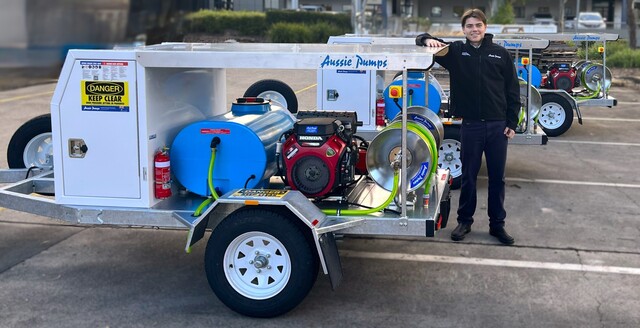
    AUSSIE FLOOD RESCUE It’s obvious to everybody that we are seeing weather changes. It appears to be more erratic and frequent than ever before. Local…

More News

  • Unit demolished as Ipswich flood recovery continues

    Unit demolished as Ipswich flood recovery continues

    Ipswich Mayor Teresa Harding has welcomed the demolition of Mihi Grove, a flood-hit 42-unit complex in Brassall purchased as part of the Queensland and Australian Government’s Resilient Homes Fund Voluntary…

  • Fraser adopts tree

    Fraser adopts tree

    The Fraser Coast now has an official tree, with Council today adopting the Kauri Pine as a symbol of the region’s culture, history and natural environment. Fraser Coast Mayor George…

  • Council take on much-loved garden

    Council take on much-loved garden

    Glenorchy City Council will take on the administration of the Chigwell Community Garden, securing the future of the much-loved community space and supporting continued shared use by local groups. Glenorchy…

  • Fuel prices hurt country LGAs

    Fuel prices hurt country LGAs

    The fuel crisis is hitting remote, rural and regional communities hard, with farmers, freight carriers, tourism operators and local government all expressing concerns about the lack of supply and the…

  • Navigating grants

    Navigating grants

    How Administrative Complexity Is Eroding One of Local Government’s Most Powerful Tools Local government grants exist to create impact in communities. Yet across the sector, that purpose is increasingly being…

  • Looking to the future

    Looking to the future

    Flinders Lane will be abuzz for two days this month with Townsville Youth Council – supported by Townsville City Council – set to deliver a free festival focused on the…

  • WA leads the way as people to the regions

    WA leads the way as people to the regions

    Ten million people now call regional Australia home, and Western Australia is leading the way with its regional population growing faster than the cities, according to a deep dive into…

  • Sewer grant sought

    Sewer grant sought

    Fraser Coast Regional Council will seek Queensland Government funding for two major water and sewerage projects with capacity to support more than 11,000 new homes across the region. At its…

  • Mayors call for waste levy

    Mayors call for waste levy

    Mayors across NSW have called for waste levy to soften the blow of fuel price increases. More than 60 Councils from across NSW have issued a call for the NSW…

  • Lismore four years on

    Lismore four years on

    Four years on: How Lismore is building back and setting a national benchmark. When the 2022 flood inundated Lismore, it was not simply another extreme weather event. It became Australia’s…