Home » What is a comfortable office temperature?

What is a comfortable office temperature?

By Bruce Rowse*

Many Local Governments have set ambitious corporate greenhouse gas reduction targets as part of their climate change program, yet are a long way from achieving those targets.

Changes to temperature settings are a little known but easy way of getting significant carbon savings in council offices.

In office buildings the single largest energy user is the heating, cooling and ventilation system. This system will typically account for 40 to 60 per cent of the building’s energy cost and greenhouse gas emissions.

A major determinant of how much energy your system uses is the temperature at which it is set to operate. Depending on climate, most offices are set to maintain a year round temperature of either 22°C or 24°C.

Hobsons Bay City Council in Melbourne had temperature settings at its Civic Centre adjusted to allow the temperature to vary between 20°C and
25°C. Electricity metering of the air conditioning system showed a 25 per cent energy saving on the packaged heat pump units supplying the building.

The air conditioning temperature changes occurred a couple of months after a building extension – which had increased electricity consumption by 10 per cent.

According to Council’s Environment Officer Rowena Joske, after the temperature adjustments the electricity bills dropped back to what they were before the extension. In other words simply adjusting the temperature settings has cut carbon emission by 10 per cent.

Temperature complaints are, however, a major bane to facility managers, who can’t seem to keep everyone happy.

Do adjustments to temperature settings increase the number of complaints?

In the case above more complaints did occur about it getting above 25°C in some parts of the building. So the system has been adjusted back in those parts of the building to limit the maximum temperature to no more than 25°C.

Comcare, a Federal Government organisation for public sector employees, has produced guidelines as to what a comfortable office temperature is.

According to Comcare the acceptable range of office temperatures is 20°C to 26°C, with 20°C to 24°C recommended in winter and 22°C to 26°C recommended in summer.

In temperate and cold climates in Australia, allowing the temperature in the office to float between 20°C to 24 or 25°C will significantly cut energy use and carbon emissions as compared to setting the system to maintain exactly 22°C.

In hotter climates allowing the temperature to go up to 26°C instead of keeping it at 24°C will similarly save energy and carbon emissions.

In terms of carbon reduction per dollar spent, it doesn’t get much better than changing building temperature settings.

This is why I have chosen temperature settings as the topic for this, my first article in Local Government FOCCUS. Any feedback is welcome.

*Bruce Rowse, energy efficiency engineer, is Director of CarbonetiX, an engineering consultancy specialising in carbon reduction. Contact Bruce via his blog at
www.carbonetix.com.au/blog
 

Digital Editions


  • Grants close soon

    Grants close soon

    Queensland councils have until 31 March to apply for Round two of the State Government’s Secure Communities Partnership Program, which offers up to $400,000 per…

More News

  • Stretching for a good cause

    Stretching for a good cause

    Ballarat residents stretched, smiled and snuggled their way through a unique Kitten Yoga event that combined relaxation with a heartwarming cause – helping kittens find their forever homes. Hosted by…

  • Murray Library upgrade open

    Murray Library upgrade open

    The Murray Library refurbishment is now complete, and the revitalised space is officially open to the community. The upgrade delivers a brighter, more accessible and flexible library that reflects the…

  • Lockyer announce Scott Greensill as CEO

    Lockyer announce Scott Greensill as CEO

    Lockyer Valley Regional Council has appointed Scott Greensill as its new Chief Executive Officer. Councillors formally approved the appointment of Mr Greensill at a Special Meeting of Council in February.…

  • Myers resigns for health reasons

    Myers resigns for health reasons

    Wollongong’s Councillor Tiana Myers has resigned, as a Ward Three Councillor for City Council due to health reasons. Cr Myers was elected to Council in 2024 with a focus on…

  • Acknowledging women’s role in councils

    Acknowledging women’s role in councils

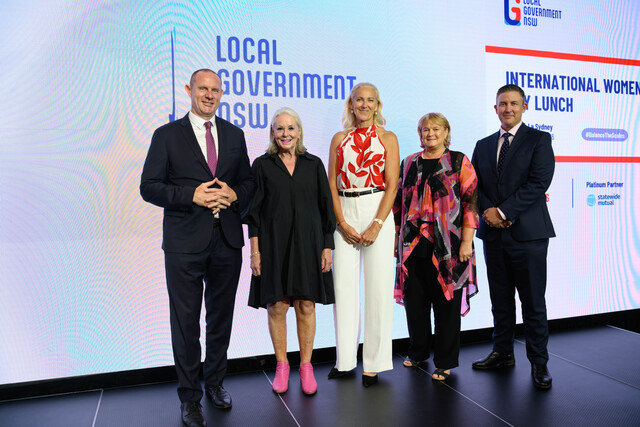
    Council representatives from across the state gathered in Sydney today for Local Government NSW’s (LGNSW) International Women’s Day event. Mayor Darcy Byrne, President of LGNSW, said the event was an…

  • Kylie Davies beats strong field

    Kylie Davies beats strong field

    Flinders Shire Council is pleased to announce the appointment of Kylie Davies as its new Chief Executive Officer. Ms Davies will start in the role on 13 April following a…

  • Leaving on a high

    Leaving on a high

    Mount Alexander Shire Council’s Chief Executive Officer Darren Fuzzard will end his tenure at the council in July 2026, marking ten years of service to the organisation and community. Mr…

  • Safety first for transport corridor

    Safety first for transport corridor

    Traversing a major Townsville transit corridor spanning three suburbs will soon be safer for motorists, cyclists and pedestrians, with Townsville City Council commencing a $3.8 million upgrade of Hugh and…

  • Creating long-term employment pathways

    Creating long-term employment pathways

    The Shire of Carnarvon is creating long-term employment pathways and strengthening workforce capability through its participation in the Remote Jobs and Economic Development (RJED) Program, a national initiative designed to…

  • Cool summer plan for Campbelltown

    Cool summer plan for Campbelltown

    Extreme heat is the biggest killer of natural disasters in Australia, exceeding that for any other environmental disaster combined, including floods, storms, bushfires and cyclones. While high temperatures pose risks…