Home » Future directions in information technology

Future directions in information technology

An interview with Paul Hamilton, Senior IT Officer, Shire of Busselton Western Australia

With most council’s ICT budget fairly tight, Paul Hamilton believes open source software (OSS) is definitely the way of the future.

OSS is software that can be downloaded free of charge but more importantly comes with the actual programming code. This means users can use, change and improve the software to suit their needs, and redistribute it in modified or unmodified form.

Paul says the aim of OSS is to make products more understandable, modifiable, duplicatable, reliable and to an open standard. Moreover it is often developed in a public, collaborative manner, with many users contributing to its content.

“A further issue is that across Local Government, ICT staff are often doing the same things,” he said. “This means we are reinventing the wheel time and time again.”

Calling for increased collaboration and sharing of successes, Paul Hamilton sees many opportunities from maximizing the use of OSS. He believes this should not only involve Local Government but Federal and State Governments as well.

He advocates that the Federal Government department responsible for ICT should select a specific OSS platform and then mandate that over a number of years all levels of governments move over to this.

“For example, if all Local Governments moved to Open Office, then over the next ten to 15 years this would deliver massive savings,” he said.

“If you include all Federal and State bodies then there is an enormous potential to cut costs.”

Australia wouldn’t be the first to embark on a journey like this, as the Brazilian, Russian and Chinese Governments made similar announcements.

Programs are also under way in Munich, Amsterdam and Bristol, and the German Foreign Ministry has announced that it is migrating its 11,000 desktops and servers to Linux as well.

He said that some closed source advocates see OSS as damaging to commercial software companies. However, Paul Hamilton points to alternative approaches such as:

  • software vendors giving away their software and then
    charging for installation and support
  • vendors having their software available as open source so
    that people will be more likely to purchase a related
    product or service from that vendor.

“Vendors over just a few version updates should be able to convert their programs to run on the common platform,” Paul Hamilton said.

He said that as well as cost savings, other benefits include common documentation standards, training advantages and resource sharing.

In Western Australia a group of ICT staff has been meeting regularly to progress the use of OSS in Local Government.

“We are using OSS called FreeMind which provides a graphic way to plot information and ideas,” Paul Hamilton said.

Paul will attend an Open Source conference in the USA next October and plans to discuss this concept further at the Coffs Harbour IT2009 conference in November.


 

Digital Editions


  • From books to bots

    From books to bots

    Tenterfield Library is proving that technology is more than just tools and devices. From coding and robotics to tech support, the Library has become a…

More News

  • Myers resigns for health reasons

    Myers resigns for health reasons

    Wollongong’s Councillor Tiana Myers has resigned, as a Ward Three Councillor for City Council due to health reasons. Cr Myers was elected to Council in 2024 with a focus on…

  • Acknowledging women’s role in councils

    Acknowledging women’s role in councils

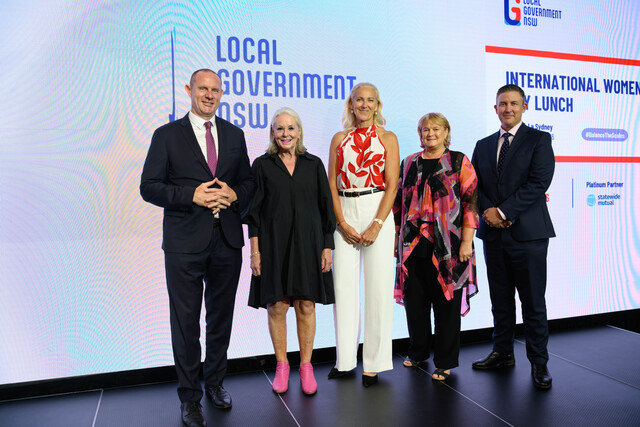
    Council representatives from across the state gathered in Sydney today for Local Government NSW’s (LGNSW) International Women’s Day event. Mayor Darcy Byrne, President of LGNSW, said the event was an…

  • Kylie Davies beats strong field

    Kylie Davies beats strong field

    Flinders Shire Council is pleased to announce the appointment of Kylie Davies as its new Chief Executive Officer. Ms Davies will start in the role on 13 April following a…

  • Leaving on a high

    Leaving on a high

    Mount Alexander Shire Council’s Chief Executive Officer Darren Fuzzard will end his tenure at the council in July 2026, marking ten years of service to the organisation and community. Mr…

  • Safety first for transport corridor

    Safety first for transport corridor

    Traversing a major Townsville transit corridor spanning three suburbs will soon be safer for motorists, cyclists and pedestrians, with Townsville City Council commencing a $3.8 million upgrade of Hugh and…

  • Creating long-term employment pathways

    Creating long-term employment pathways

    The Shire of Carnarvon is creating long-term employment pathways and strengthening workforce capability through its participation in the Remote Jobs and Economic Development (RJED) Program, a national initiative designed to…

  • Cool summer plan for Campbelltown

    Cool summer plan for Campbelltown

    Extreme heat is the biggest killer of natural disasters in Australia, exceeding that for any other environmental disaster combined, including floods, storms, bushfires and cyclones. While high temperatures pose risks…

  • Bathurst has it’s scrap together

    Bathurst has it’s scrap together

    Bathurst Regional Council has successfully concluded its ‘Let’s Get Our Scrap Together’ campaign, launched on 1 September 2025 with funding from the NSW Government and delivered in collaboration with NetWaste…

  • Baw Baw acting CEO tenure extended

    Baw Baw acting CEO tenure extended

    Baw Baw Shire Council has extended the contract of Acting Chief Executive Officer Sally Jones until 30 June 2026. The matter was considered as a confidential item in the late…

  • Farewell to a much-loved bridge

    Farewell to a much-loved bridge

    Narrabri Shire Council hosted a special community farewell event in mid-January, Brekkie on the Bridge, ahead of the upcoming demolition of the Violet Street Bridge. The event brought together community…