With our reliance on ICT ever increasing, and the cost of ICT energy beginning to outweigh equipment costs, it is more crucial than ever for organisations to focus on ‘Greening ICT’.
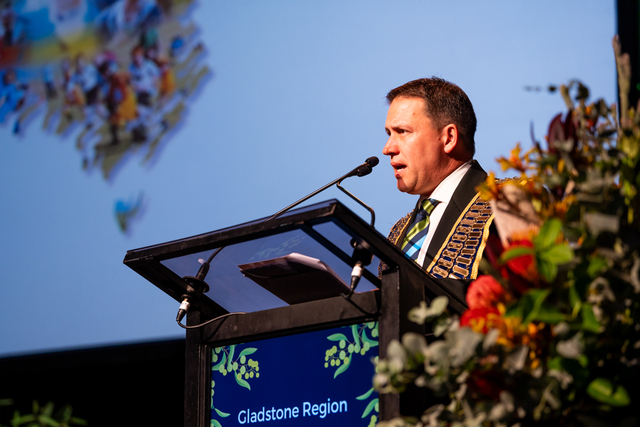
In recent years, Brisbane City Council’s Service Delivery Manager Paul Lahey has played a pivotal role in reducing Brisbane City Council’s energy consumption through a range of measures.
He said that while Green ICT is gaining momentum, a typical services based firm would still find that more than 50 per cent of their carbon footprint is related to IT and office equipment.
“A modern data centre could be compared to a huge refrigerator, full of ovens turned up on high and running with their doors open,” he said. “In Australia alone, desktop computing and its network consumes more than 100 billion kilowatts of electricity and costs organisations over $7.2 billion annually.”
By taking a strategic approach to Green ICT, councils will not only reduce costs, but will be positioned to achieve the following goals:
- reduce the carbon footprint and meet legislative
requirements soon to be introduced - set a direction for future investment in ICT
- build council’s corporate knowledge and
experience in green initiatives - help staff to find opportunities to improve
business outcomes through enabling green
initiatives and solutions - assist council to be recognised as a green
example to others - support council’s Corporate Social
Responsibility efforts.
“Being green is good business,” Paul Lahey said.“It’s not all about returns – risk and governance are also important considerations.
“ICT pervades every sector of the economy, and reducing its footprint will have greater gains for a sustainable future.
“For example, an increasing number of recruitment candidates are evaluating the environmental credentials of firms they choose to work for – and the search for talent is cited as the number one concern for Australian business.”
In Greening ICT, Paul recommends using something similar to the following ten point plan:
- define a policy and strategy for first order (direct
result of its existence) and second order effects
(from IT’s application) - measure and analyse progress
- green the staff – it’s mostly a behavioural
challenge - switch it off if it’s not in use
- act holistically about energy efficiency in the
data centre - move from ‘always on’ to ‘always available’ in
the data centre - consider energy at every decision level
- ensure green printers and printing practices are
used - challenge technology providers’ products
- look for insight into technology or service
providers’ own environmental programs.
When looking at the data centre itself, Paul said to look out for issues such as poor performing equipment, oversized power and cooling equipment, utilisation rate of servers and storage, clogged air or water filters, ineffective room layout and airflow, and inefficient energy management software tools.
Within its own data centres, Brisbane City Council has implemented various environmental improvements, such as reusing water output from four large computer room air conditioners to water gardens.
It has also increased the data centre temperature from 23 to 24 degrees Celsius, has optimised airflow, and is moving towards 100 per cent green power.
However, Paul Lahey said green ICT must be highlighted across the organisation, not just the ICT department.
“Staff can be encouraged to take simplistic, low impact, low capital cost, short term gains in their day to day operations,” he said. “These include turning off equipment when it is not in use, using double sided and black and white printing and presenting more online reports.
“Staff also need to become conscious of how they discard their e-waste.
“ICT related equipment is the fastest growing category of landfill globally, but only 12 per cent of PCs are recycled.
“E-waste contains hazardous components like lead, which do not break down, so it is important that it is recycled and disposed properly where necessary.
“Brisbane City Council reuses and refurbishes systems, recycles systems at the end of their life and recycles consumables, such as ink cartridges.”
For further information contact Paul Lahey on (07) 3403 8888