In the 21st century, distance should not be a barrier to high quality health care. But according to a recent survey of rural health consumers, more than half the rural population are waiting at least a week and some up to six months for a routine appointment with their GP.
Conducted by the Rural Doctors Association of Australia (RDAA) and the National Rural Health Alliance (NRHA) the National Rural Health Consumers Survey has to date attracted more than 1,000 responses.
Released in August, interim results show that more than 52 per cent of rural Australians are waiting one or more weeks for a routine appointment with their GP, 18 per cent are waiting more than three weeks, and some face waits of up to six months.
Others are being forced to attend Accident and Emergency units at distant hospitals for basic consults.
The survey also revealed that among those surveyed:
- 66 per cent had to travel away from their
local area in the past year to receive non
emergency medical treatment - more than 63 per cent were not able to receive a variety of health services in the
past year because of a shortage or absence
of health professionals in their area (with
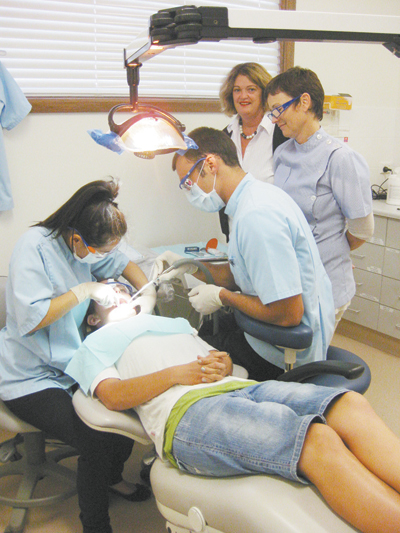
public dental care, cancer care, specialist
care, mental healthcare, maternity ervices
and palliative care cited amongst the most
limited services) - 62 per cent were experiencing a significant
shortage of health professionals in their
area - 33 per cent faced a trip of more than 30
minutes to reach the closest hospital that
provided emergency treatment 24 hours a
day, including seven per cent who had
to travel over an hour to reach such
a hospital.
It found that many rural patients have to travel 160 kilometres or more to access a GP for a routine appointment and some rural patients were being forced to travel up to 1,000 kilometres return for a CAT scan and 2,000 kilometres return for cancer treatment.
An emergency forum organised by the Western Australian Local Government Association (WALGA) in August heard that each year, about 5,000 people die needlessly in rural Australia as a result of inadequate health services.
The forum of more than 100 health industry and Local Government representatives heard that the shortage of general practitioners in regional areas was at critical levels.
WALGA President Mayor Troy Pickard said in response to the crisis, regional councils were having to pay more and offer greater incentives to try to attract doctors.
He said the forum heard some regional councils in Western Australia are paying up to $1,700 a day for GPs, which is about twice the rate considered to be reasonable by the industry.
“Local Governments are increasingly carrying the burden of providing primary health services to their communities and the mood of the forum was that this should be more the responsibility of State and Federal Governments,” Mayor Pickard said.
The forum heard that the crisis had created a ‘bidding war’ between regional councils desperate to secure doctors.
In addition to paying inflated wages and the costs of housing, vehicles, and utilities, some councils had even offered free flying lessons and fly in/fly out every weekend to attract GPs.
“The forum was told of one Wheatbelt Local Government that was paying 10 per cent of its rate income to have a doctor in the town,” Mayor Pickard said.
“For a long time, regional councils have been meeting these costs, but as the financial demands increase, it becomes more and more unsustainable.
“Quite simply, it can’t go on. Regional communities are being stretched well beyond what is reasonable and lives are being put
at risk.”
Harnessing the benefits of modern technology could be the answer to the problem.
RDAA President Nola Maxfield said the
National Rural Health Consumers Survey showed 66 per cent of respondents believe access to telehealth would benefit those living in rural and remote communities.
She is now urging the Independent MPs who will hold the balance of power in the next Federal Parliament to ensure that rural and remote Australians can access fast and reliable broadband services.
“Clearly there is very strong support for better broadband services in rural Australia and the opportunities presented by eHealth, eLearning, eBusiness, on demand entertainment
and video conferencing,” Nola Maxfield said.
“However, if government and business are to build these applications and put in place the business models that support rollout of these services to the bush, there needs to be certainty that the broadband infrastructure will support them.
“Like most people, rural doctors care little about technical issues and terms such as megabytes per second, ADSL, fibre to the home, wireless and optical—what they want to know is that the service will be available, affordable and reliable, and that the ‘pipe’ will be big enough to allow services to run effectively.
“Clearly there are very significant benefits for patients in being able to access services such as video consultations, and being able to ensure that critical information about their clinical conditions can be shared with their consent with the team of health professionals treating them.
“Rural doctors also need a fast and reliable broadband connection to be able to access patient records at remote clinics, hospitals and nursing homes.”
“Many senior doctors can also benefit from eLearning by being able to access high quality continuing education from the comfort of their practices and homes in rural Australia, meaning they will not have to leave their community as often to access this education and upskilling.