The Murray Darling Basin Authority (MDBA) released its Guide to the Proposed Basin Plan on 8 October.
The Guide is the first part of a three stage process that will comprise the Guide, the proposed Basin Plan and the Basin Plan.
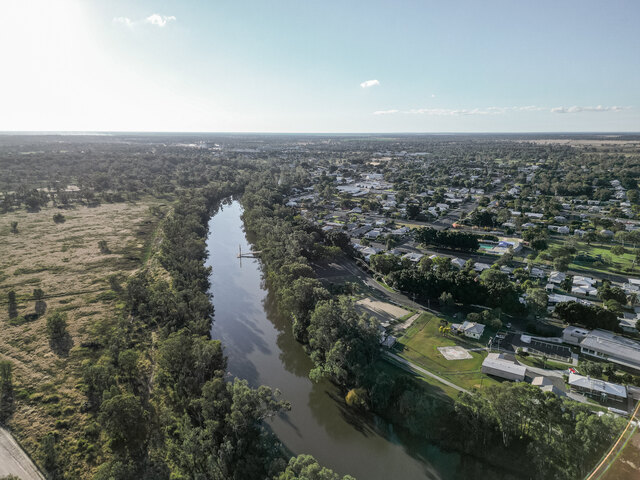
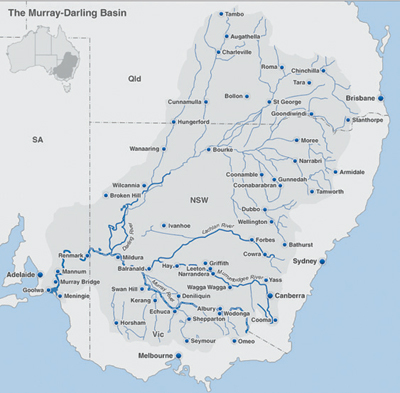
Covering more than one million square kilometres, or 14 per cent of Australia’s landmass, the Murray Darling Basin includes parts of South Australia, Victoria, New South Wales and Queensland. Known as the nation’s food bowl, it is heavily dependent on irrigation. But years of over allocation of water, prolonged drought, natural climate variation and climate change, has put it under enormous stress.
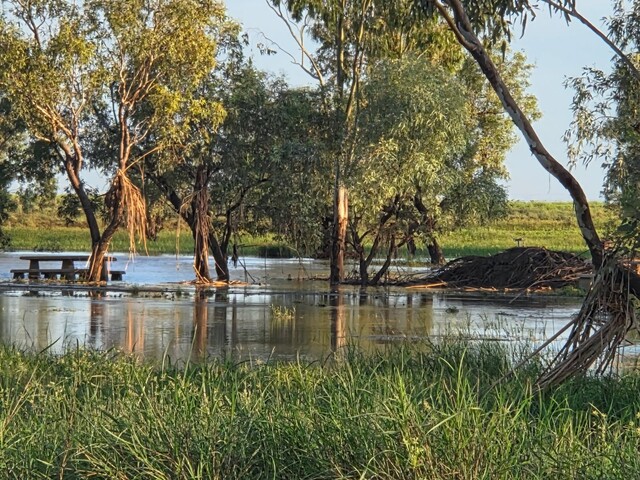
Lack of water has adversely impacted the Basin’s rivers, wetlands, forests and floodplains, with strong scientific indicators that there is now not enough water in the rivers to keep them alive.
The Basin Plan aims to address this to restore the system’s health and its resilience so it can respond better under such pressure now and into the future.
In 2007 and 2008 the Commonwealth Parliament laid out the general objectives of the Water Act 2007, and prescribed how the Basin Plan was to be developed.
The Guide released on 8 October states the following, “The Water Act requires the Authority to determine the volume of water required to maintain and restore environmental assets, using best available science and the principles of ecologically sustainable development. Subsequently the Authority addressed the optimisation of environmental, social and economic outcomes.”
The Murray Darling Association formed in 1944 comprises over 100 Local Governments, along with community groups, businesses and individuals that have an interest in ensuring that the Murray Darling Basin continues as a viable and valuable asset. It has provided the following assessment of the Guide.
“The Guide asks all stakeholders to consider three main scenarios of environmental water needs, as an increase to what has been historically used by the system, to sustain the current environmental assets. This equates to an increase of environmental flows by 27, 32 or 37 per cent.
“It acknowledges that any figure above 37 per cent would have a significant impact on the socio economic conditions of Murray Darling Basin communities, while those impacts would vary significantly from region to region.”
According to the Murray Darling Association, the current water buy back program has already achieved a ten per cent reduction in licensed allocations and is most likely to achieve 20 per cent when the original $3.1 billion program is completed or extended. It believes that by fast tracking the earlier infrastructure programs it is quite plausible to achieve any of the three above scenarios without sacrificing further the food productivity and the social security of most basin communities.
The Guide will not have any immediate effect on the current operations of any parts of any basin communities until the final basin plan is presented to the Minister sometime in 2011, and after considerable public and community consultation. The Federal Government then must get it through the Parliament.
After the release of the Guide, the MDBA began an immediate round of community consultation sessions commencing at Shepparton in Victoria on 12 October. This has resulted in a number of angry public meetings across the region, and claims that the impact on farmers and irrigators will have a multiplier effect on entire rural communities with devastating consequences.
Federal Water Minister Tony Burke has told Parliament that advice from the Solicitor-General confirms that the 2007 Water Act requires the “optimising” of all three factors – economic, social and environmental – in devising a plan for the Murray Darling Basin.
Speaking on ABC radio, Tony Bourke said that this doesn’t mean that these three factors are pulling against each other in opposite directions, as the Basin will not have a healthy economy and strong communities without a healthy river system.
“We must have a healthy river system, strong communities and strong food production and I don’t intend to compromise on any of these three things,” the Minister said. “International environmental conventions state there must be sustainable development which provides the basis for economic and social issues to be fully brought in.”
The Murray Darling Basin Authority (MDBA) is undertaking a region by region economic and social analysis of the proposed cuts to water extraction, which will be included in a full draft of the basin plan when it is released next March.
The Authority states in the Guide that between 3,000 and 7,600 billion litres needs to be returned to the river but immediately adds that no more than 4,000 billion litres should be returned to the environment, because any more than that would be unacceptable on social and economic grounds.