The Australian Local Government Association (ALGA) has released the findings of an independent study into the funding needs of Australia’s local roads. This estimates that an additional
$1.2 billion will need to be spent each year just to maintain the current standard our local road network.
The 565 local councils across the country manage 650,000 kilometres of local roads, which represent more than 80 per cent of the entire Australian road network.
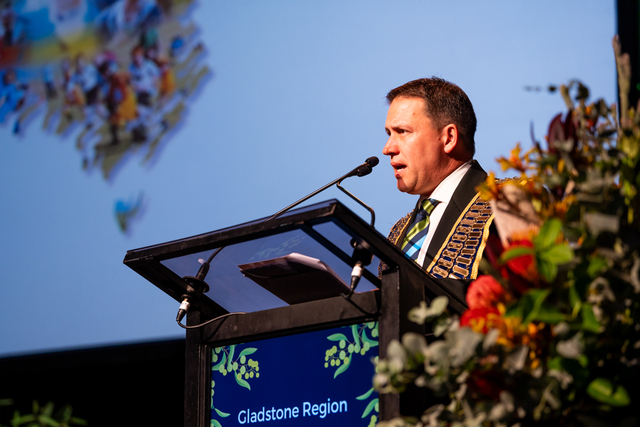
The study, commissioned by ALGA and conducted by Jeff Roorda and Associates, was released in October at the 2010 National Local Roads and Transport Congress in Bunbury, Western Australia.
The congress attracted more than 300 Local Government delegates from around the nation.
The study examines a sample of 158 councils from across the country and calculates the rate of annual under expenditure by all councils is $860 million. This will blow out to $1.2 billion if current expenditure settings are not improved.
“The Australian community is being dudded by successive State and Federal Governments who are happy to throw billions of dollars at new toll roads and national highways, but who are not prepared to properly fund the basic local road infrastructure that connects every Australian to home, work, schools, farms, markets and tourist destinations,” said ALGA President Councillor Geoff Lake.“If the Government is serious about focusing on regional and rural Australia, there is no better way to do that than by improving local road infrastructure.
“Speak to any country Mayor and they will tell you that every dollar spent on upgrading roads leads to more than a three fold dividend to the local economy through increased productivity.”
The study also finds that while councils have increased rate revenues to meet funding shortfalls, the pressures on councils in other service areas means there is simply not enough available from the local rate base for roads.
“What this study makes crystal clear is that the magnitude of funding local roads is now well beyond cash strapped and resource constrained councils and a dramatic increase in Commonwealth investment is desperately needed,” Councillor Lake said. “Federal funding for local roads is woefully inadequate and even on the most generous interpretation represents only about a third of total local road expenditure.
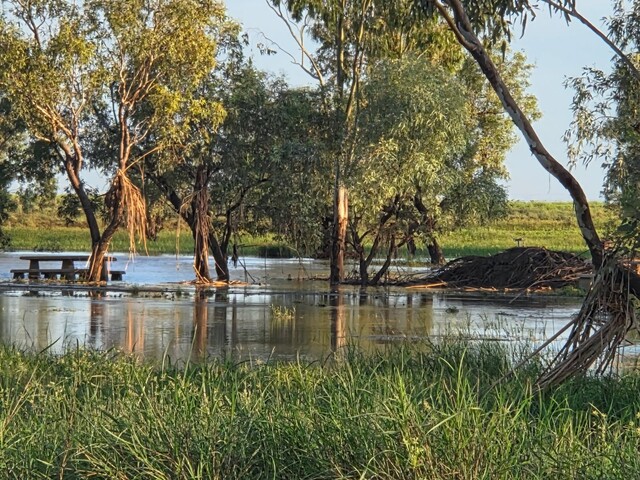
“Boosting local road funding will also offer significant advantages to remote Indigenous communities who regularly suffer dislocation from their neighbouring communities and towns because of inadequate roads being shut following relatively minor rainfall – sometimes for several months of the year.”
After a drive into remote parts of Western Australia along the Outback Way, Councillor Lake said he was shocked to find that Boulia – a shire of about 600 residents – had to maintain the section of the road from Boulia to the Northern Territory border, because the Queensland Government does not class this section as anything more than a mere access route to the pastoral stations.
“The Outback Way is a great example of councils working together,” said Councillor Lake. “The seven councils along route from Queensland, the Northern Territory and Western Australia are all working cooperatively and effectively to argue why the Outback Way should be made a sealed route from Winton to Laverton.
“Not only would this represent an iconic alternative crossing of the Australian continent from east to west through the middle of the country with vast tourism potential, but it would be a big boost to the pastoral stations and towns along the route.
“It would also provide all weather road access to the many remote Indigenous communities who rely on parts of the route for access to their next closest towns.”
Councillor Lake said this is one of hundreds of examples of critical local road infrastructure needed by local communities across the country.
The full report is available on the
ALGA website at www.alga.asn.au under ‘Recent Updates’.