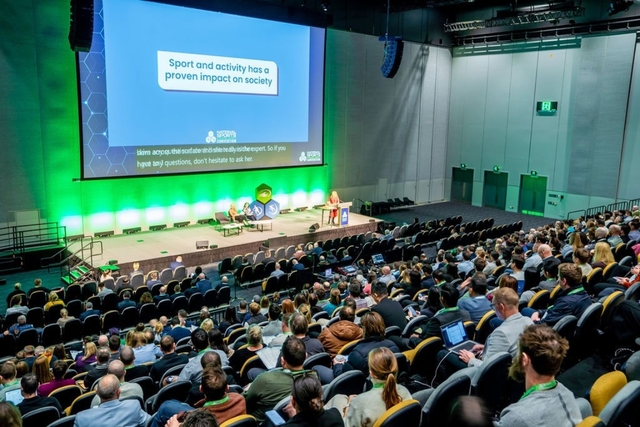
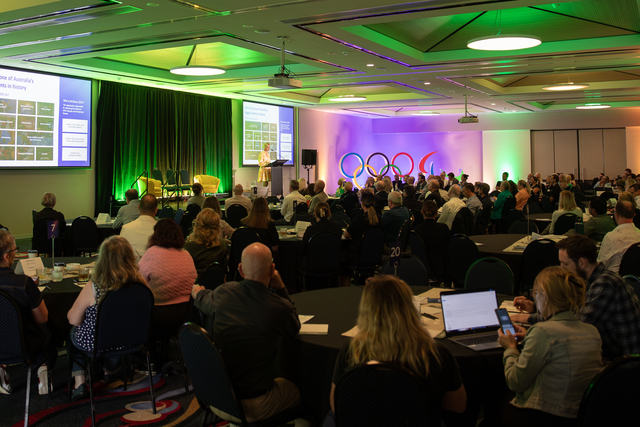
In opening the 2011 Local Government Professionals Annual Conference in Melbourne, Victorian Minister for Local Government and Aboriginal Affairs Jeanette Powell said the conference was a timely opportunity for delegates to share their experiences following a series of natural disasters around Victoria.
Staged on 17 and 18 February, the conference theme was ëEngaging Success – Leading or Following’.
“It has been anxious times in this atmosphere of leading communities through terrible events,” Jeanette Powell said. “First we had the locust plague, then floods, fires and a now a second round of locusts.
“Councils have responded well to these challenges, ensuring the safety of their communities, while also securing their own family safety.
“It is heartening to see the Local Government sector pull together as with the bushfires. Councils have offered equipment, personnel and other support, as they always do in times of crisis.”
Jeanette Powell said that good leaders shine through in times of adversity.
“The spirit and community cohesion we have seen are a testament to Local Government as leaders,” she said. “People go to Local
Government for everything. If a road is closed, if they need an evacuation centre, if they need information – they turn to Local Government.”
However, keynote speaker and Principal of Managing Values, Dr Atrracta Lagan, said that today’s leaders are failing to respond to the pace of change. She said that leaders are supposed to champion change, but may be becoming followers.
Dr Lagan highlighted the 67,000 volunteers that immediately reached out after the Queensland floods.
“They didn’t look at budgets and policies,” she said. “They thought about their communities and jumped in to help each other – that was more important.”
Dr Lagan said that building strong communities begins with building a strong community inside the organisation.
“Leadership can only start in your own backyard,” she said. “Most organisations are over managed and over led. Although Local Government is below the national average in terms of employing disengaged staff, more consultation is needed so that leaders are better able to respond to situations at hand and reflect the values of their teams. The new generation of workers see new ways of doing new things, they have new values and they expect that they can live their values in the workplace.”
Dr Lagan said that more and more, ethics are being separated from business.
“An organisation is only as ethical as its employees,” she said. “A code of conduct is easy to read and write, but implementing it is a more challenging task.
“We all see the world differently and have our own assumptions on how people should act, and we need to consider this in a code of conduct.”
She said that the priorities of the leader/manager become the organisation’s priorities.
“People learn with their eyes. They see what their leaders or managers are doing to set an example and they follow.”
Turning the focus to elected leadership, participants from the 2010 Emerging Leaders Program also delivered an inspiring presentation, addressing the question, “Is Local Government representative Ö and does it need to be?”
Initiated in 2004, the Emerging Leaders Program annually engages staff of all ages from a mix of rural and metropolitan councils, who aspire to positions of leadership.
The program provides them with an opportunity to understand their own and others’ management and leadership styles, including that of CEOs, elected members and businesses.
Presenting their findings to the question in a news report fashion, the 2010 Emerging Leaders said their research found that overwhelmingly, Local Government does need to be more representative of the community, but that changes are needed across the sector for this to occur.
Significantly, their research found that there is a large anomaly between what residents and councillors themselves believe the role of a councillor is.
More than half of the citizens interviewed had never contacted a councillor before and
45 per cent did not know what ward they lived in.
They also found that councillors generally tend to be educated, retired and self employed, which is not entirely representative.
The Emerging Leaders suggested that the years 2011 to 2016 be years of change and processes of community education. They called for more online engagement, consultation and education to increase residents’ understanding of the role of councillors and councils, as well as how they can participate and have their voice heard.
Technology advances, such as streaming council meetings and consultation processes live on council websites – and even translating them – could capture a new audience and greater representation.
In addition, the councillor role needs to be promoted in a better light, as most people see it as a position that is very time consuming, with low remuneration. By presenting the position in a better light, a greater variety of people will run for council and it will ultimately become a more representative sector.