I was at Wollongong University recently on business, and what impressed me, yet again, was its style and beauty. It also now has an Innovation Campus — confusing, because it’s near the beach and about one kilometre from the main campus.
Wollongong itself is a lovely city, with great beaches, hinterland and climate. Some say it lacks an airport, but it’s only an hour from Sydney Airport folks. A good node for a Gosford-Sydney-Wollongong fast train!
Anyway, on the way home, I dropped into a club at Nowra for a quick bite and to check the local ambience. It looked like a Bunnings store from the outside, but inside the friendliness was not in evidence when I asked a group of ageing drinkers how to find the new ‘back road’ to Canberra.
“Why the f… would anyone want to go to Can-berra,” snorted the ringleader of the group. “Well the feds had to put AFP headquarters somewhere,” I countered. You could’ve heard a pin drop. But his cheery little mate snapped out of it and provided some directions.
Main Road 92
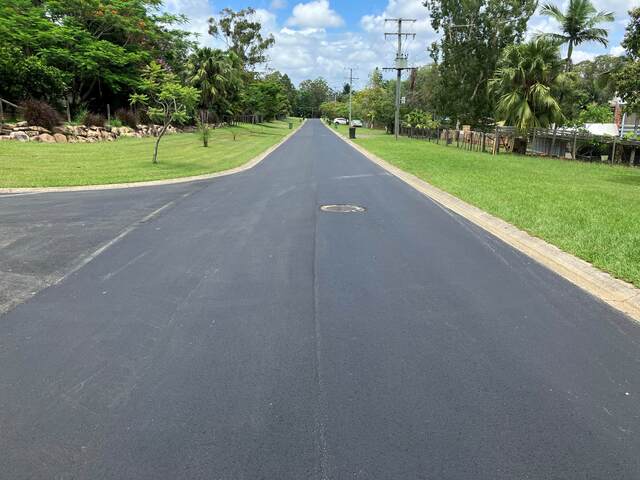
Soon I was cruising along 70km of wide, sealed road through some pretty, forested country leading to the village of Nerriga, with a nice pub but not much else. Beyond Nerriga there’s a choice of terrible roads to either Braidwood or Tarago, and then onto Canberra, Albury, Melbourne etc.
The point of this travelogue is that it’s all part of the Main Road 92 project, first seriously mooted in the mid 1990s to get heavy freight from the Illawarra through to southern regions without the climb through Kangaroo Valley or Clyde Mountain ne Bateman’s Bay — about 30 minutes of travel time saved, and less environmental damage than other routes.
It seems that local federal member Jo Gash, Transport Minister Sharp and PM Howard had got the ball rolling with a federal grant of $35 million, which was reluctantly matched by the Carr state government, with Shoalhaven Council chipping in $12 million.
The first stage was completed in 2010 — some 17 years after talks began. Now a $300k study is about to develop costings for the second stage, and there probably won’t be much change out of $100 million.
The moral of the story? — It’s a classic case of coordination failure. Seventeen years to get a half-completed project. The good news is that it has a pan-regional priority and Jo Gash is still there (now as Mayor of Shoalhaven). The bad news is that conventional cost-benefit analysis won’t adequately measure the environmental, road safety and regional development benefits. Same story for hundreds of road projects across Australia.
My suggestion would be to establish it as a model project on the following basis:
(i) the road cannot be left like it is
(ii) set a target of five years for completion
(iii) aim for 25 percent cost savings via new age work practices
(iv) wrap it up in a five-cornered model project between the feds, the state, five to six councils, the unions and industry associations and
(v) call it the Shoalhaven Way and really talk it up.
Getting more out of your roads budget
Governments spend around $16 billion annually on roads, and local government is the client for about one-third of it. The bulk is spent in WA (34%) and Queensland (32%).
The construction work rolls on without much fanfare, except for constant calls from local government for more federal funding to address the backlog of road maintenance, let alone the demand for major upgrades.
How would you like an extra 20-30 percent funding for roads in your council area? This is the reality because of the inefficiencies endemic in this sector. The problem stems from sloppy work practices, out-dated building and construction awards, the ‘cost plus’ tendering syndrome and a basic lack of competition in some regional areas.
As an example, a work team of seven recently replaced three metres of crash barrier panelling near my home here in Canberra. A straightforward job that took about 90 minutes. The manpower involved two doing the replacement/fitting of the steel panels, one truck driver, one mini hoist operator, two men operating stop-go traffic signs, and two looking on (leaners on shovels).
Now the interesting thing is that the Victorian Premier, Ted Baillieu must have been thinking along the same lines because he has convinced Council of Australian Governments (COAG) to establish an independent review panel to investigate the cost, competitiveness and productivity challenges in the building and construction industry. This is long overdue – the last such exercise was twenty years ago! The report to COAG is due next July.
In my experience, the way these things work best is for COAG to agree on a set of reforms and then bundle them into eight to 10 model projects to prove things up. I can think of three live road projects that would be ideal – the Shoalhaven Way (as above), the Esperance – Lake King Cascade Road, and the Peninsular Development Road (i.e. all-weather access on Cape York). If you have a road worth featuring, please contact us.
Canberra Airport
While on the subject of Canberra bashing, the Canberra Airport terminal will be completed this coming March. It and the adjoining business park are a testament to local entrepreneur and visionary Terry Snow. You might remember his brother George, who sailed the maxi-yacht Brindabella for many years.
So now Canberra will arguably have the best airport development in Australia, and the most boring CBD.
Hubs and precincts – feds developing a sense of place?
The PM’s Manufacturing Taskforce tabled its ‘Smarter Manufacturing’ report in August, and the Government will reply in an ‘Industry & Innovation Statement’ around November.
The report is good — it walks the reader through the realities of a high dollar, high cost economy. There is some new-age thinking, specifically the development of globally-oriented innovation precincts that build critical mass around our comparative advantages and opportunities, and smaller scale innovation hubs, based on niche specialisations in major regional centres, and on existing strengths.
Bottom line
Local councils, Regional Development Australia (RDA) Committees, analysts and universities should track this study because the hubs and precincts agenda has legs. It is the realisation that place matters. If the feds lock onto this, you can shape your lobbying pitch for a range of federal programs. To start the ball rolling we could have seafood precincts — Lakes Entrance, Port Lincoln; aged care precincts — Victor Harbor, Port Macquarie; dairy precincts — Warragul, Taree; grain precincts — Bunbury, Wee Waa. More on this next month.
Federal grants
The federal program freeze is selective. Those still rolling and relevant to local government are: the RDA Fund – Rounds Three and Four have opened – Round Three has 50 million for projects in small towns, while Round Four has $175 million for strategic infrastructure projects. EOIs close on the 6th December for the Tourism Industry Regional Development Fund (TIRF) — up to $250,000 to improve the quality of accommodation and attractions in regional areas closes 14th December. the Industrial Transformation Research Program — $5 million for a university to collaborate with industry to establish a research/training hub. Angle for local councils too. Round one applications close on the 4th December.
Rod Brown is a Canberra-based consultant specialising in
industry/regional development, investment attraction, clusters and
accessing Federal grants. He also runs the Cockatoo Network. He can be
contacted at apdcockatoo@iprimus.com.au or phone (02) 6231 7261. Go to the blog at www.investmentinnovation.wordpress.com for 550+ articles on issues relevant to Local Government.