Mayor Jodie Harrison, Lake Macquarie City Council, New South Wales
I have 14 years experience working in local government, which is how I came to realise the profound role councils play in building communities. I was first elected as a Ward Councillor in September 2008, and was elected as Mayor in September 2012, so it’s fair to say I’m still quite new.
My involvement in local government was in the areas of governance, performance management and organisational change. Prior to becoming Mayor of Lake Macquarie City Council, I spent a few years working for a couple of unions, and that is how I developed my love of helping people to become empowered.
Facts, figures and challenges
With a population of over 200,000 people, Lake Macquarie is NSW’s fourth most populated local government area. The lake itself, which sits between 10 kilometres of coastline and 13 forests, is twice the size of Sydney Harbour and looks different every day.
We have over 12,000 businesses, mainly small to medium-sized enterprises, which employ just over 100,000 people. The most important outcome for me is that community members feel part of decisions made by Council, as elected councillors encourage people to take action on issues themselves and engage in community consultations.
A major challenge for our Council is to maintain our region’s way of life, as population growth becomes a reality. The estimate is that Lake Macquarie will be home to an additional 60,000 people by 2035 and will require an extra 36,000 jobs. Ensuring that the infrastructure provided by the other levels of government is available when the new populations move in will be difficult.
Lake Macquarie’s successes
A significant success I have enjoyed as Mayor was Lake Macquarie City Council winning the NSW Local Government and Shires Association AR Bluett Award for 2012. The announcement at the end of October highlighted several of the key achievements that earned us the prestigious award, which is recognised as the highest accolade a NSW council can receive.
The achievements that led to the award included: the Lake Macquarie Variety Playground at Speers Point — the best play space in Australia; the approval for a $7 million sustainable resource centre that will recycle demolition waste and save our community $28 million over four years; and the launch of our new tourism campaign that gives the City a greater presence in the minds of east-coast holidaymakers.
Another project that was recognised by the AR Bluett Award is ‘Our Possum Skin Cloak by the Lake’ — a significant cultural revival project that was developed in partnership with our art gallery’s Aboriginal reference section and local Aboriginal communities. The exhibition travelled to the Australian Museum in Sydney, where it was seen by more than 50,000 people.
Difficult decisions and future sustainability
Personally, my greatest achievement in local government was being part of a council that made the politically difficult decision to apply to the Independent Pricing and Regulatory Tribunal (IPART) for a rate increase above the rate cap.
IPART approved a seven-year increase that will enable Lake Macquarie City Council to maintain existing assets and levels of service and to meet the needs and priorities of our growing City, while securing long-term financial sustainability.
More recently, Council has agreed to establish a trial biobanking site on Council land. This will allow Council and other interested parties to test the biobanking scheme that has been established in NSW to create biodiversity offsets, which can then be sold to offset loss of biodiversity from development sites.
Throughout my term as Mayor, I hope to accomplish a balance between the protection of Lake Macquarie’s remaining natural environment with a built environment that provides quality residential, work and recreation facilities. I hope my lasting impression on the community is that I am approachable, fair and principled and, when my term is over, I hope to leave behind a stronger, more resilient Lake Macquarie.
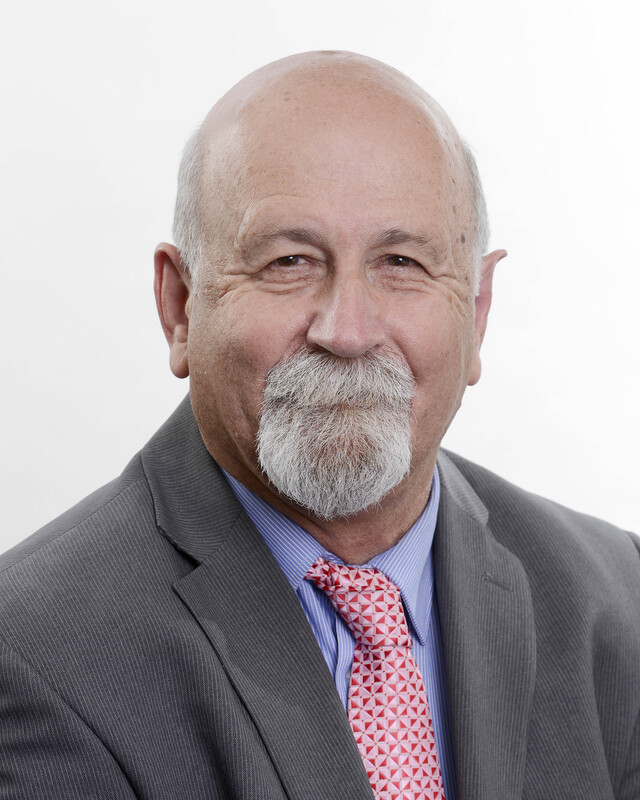
Lord Mayor Gordon Bradbery OAM, Wollongong City Council, New South Wales
I was elected as Lord Mayor in September 2010, from a field of 12 candidates, with 63 percent of the vote after preferences. When I first came to Wollongong in 1996 the City’s reputation had been sullied by the Royal Commission into the New South Wales Police Service, and especially by disclosures about two previous Lord Mayors.
Both the community and Council needed appropriate leadership after a corruption inquiry by the International Commission Against Corruption (ICAC), which blighted the City’s profile. This was followed by three and a half years of administration.
It is my wish to restore confidence in Council and lead the city through a period of economic change, particularly with the downturn in the steel industry and the manufacturing sector, and see Wollongong repositioned with a diverse economic base to make it more resilient to economic fluctuations.
Wollongong highlights
Wollongong is the third largest city in New South Wales and the ninth largest city in Australia in terms of population. In 2011, there were 201,000 counted as living in Wollongong.
The geography of the city makes it an attractive place, with 40 kilometres of South Pacific Ocean coastline and the Illawarra escarpment to the west, with views and recreational opportunities that are unique.
We have 17 patrolled beaches, walkways, and cycle-ways down the coast and around Lake Illawarra, and some of the most beautiful beaches on the south coast of NSW.
The making of a Lord Mayor
I spent 14 years working for the Church as a Youth and Children’s Welfare worker before being ordained in 1985. I then served 15 years as a Minister of The Church on the Mall, which is located in the centre of Wollongong.
I have also been a Chaplain to the New South Wales Police, Rural Fire Service, RSL Padre, and Administrator of Wollongong Mission of the Uniting Church.
During this period I also held the position of Chairperson of Lifeline South Coast, I was a board member of the former Unanderra Care Services, and an advocate for homeless people and for mental health services.
Following the 1994 bushfire disaster, which devastated the Sutherland Shire in Sydney, I was awarded the Medal of the Order of Australia for community service.
With degrees in Psychology and Sociology from Wollongong University, and in Divinity from Sydney University, I was the first Mayor to be a graduate from Wollongong.
I come to the Lord Mayoral position from a social justice and welfare orientation and a liberal, academic theological perspective. I believe that, in a multicultural and multi-faith community, my academic and employment background serves me well.
Wollongong’s challenges
One of Wollongong’s significant challenges is transforming from a city with a manufacturing, industrial base, which included a large steelworks in Port Kembla, to a city where health and financial services are now the major employer, that has the world-class University of Wollongong, and that is developing innovative information and technology industries.
Plans, projects & policies
Council has set up an active transport reference group to look at issues of walking, bicycling and public transport around the city. We have also set up an Aboriginal Reference Group that will provide advice on issues affecting the Indigenous community in Wollongong.
While we already engage with the different groups in the city on a regular basis on various issues, enlisting community engagement or consultation is a major challenge in terms of hearing a broader range of views other than those that usually dominate.
We have just completed ‘Wollongong 2022’, which is a community strategic plan for the city for the next decade. This involved talking with and listening to those people who usually don’t engage with local government: children, youth and people from minority groups.
Wollongong’s future
As for many councils, financial sustainability is both critically important and challenging. Wollongong went through a period of rapid growth in the post-war era and much of the infrastructure from that era now requires replacement.
On top of this, we are planning to make provisions for new amenities as the City expands. The last major greenfield development will be at West Dapto, involving an additional 50,000 residents by 2050 — a city in itself. This community will require associated infrastructure, community services, and planning requirements.
As Lord Mayor I want to establish and maintain a strong and ethical leadership through this period of transition, and reposition the City to emphasise our opportunities and vibrant lifestyle.
Above all, I’d like to be remembered as the Lord Mayor who led the city through times of great change with stability and integrity, and to see the City emerge in a position of pride and with a sense of control over its destiny – living in a sustainable way, both economically and environmentally.