Home » Regrowth and recovery after bushfires

Regrowth and recovery after bushfires

The Tasman municipality faced many challenges following disastrous bushfires early this year which left homes destroyed, trees burnt and wildlife lost.

The small,  rural Tasman Council’s initial response included setting up support communication networks with SES personnel to address the needs of thousands of locals and trapped visitors with no power, road access or mobile phone reception.

Support and practical help then proceeded to rebuilding, collecting information, planning, removal of waste and dangerous and hazardous materials.

The turmoil and trauma of the event affected the community in different ways, and only now, without the sounds of chainsaws and large machinery clearing the land, are green shoots appearing out of the ashen wastelands.

Early stages of recovery included grant assistance, removal of burnt trees, hanging limbs or other dangerous vegetation, advice for rebuilding and replanting, and setting up communication networks.

A strong community spirit has seen numerous new programs commence and has strengthened existing partnerships.

Council has assisted with the Tasman Landcare Groups’ free garden assessment program, to assist people wanting advice on weed control and vegetation management. A focus was on what to expect after fire in the garden, along with an upcoming revegetation program.

The Council has also worked closely with the Dunalley Tasman Neighbourhood House to support revegetation, weed control and beach rubbish clean ups. The bushfire exposed years of rubbish accumulated in beach reserves. A recent clean up by volunteers collected half a skip load of debris on just one section of the beach.

The fire, which ripped through from Forcett Forests and jumped across waterways, was described as a fireball travelling at ferocious speed and with intense heat.

As well as houses reduced to rubble and ash in minutes, cars, water tanks and other objects were moulded into mangled sculptures in temperatures in excess of 2000°C.

The risk of septic tanks being weakened and rainwater contamination in water tanks was high, with other hazards including falling trees, gas, live power lines, explosive materials, aerosol cans, diesel, pesticides, unstable structures and health risks from dust and ash.

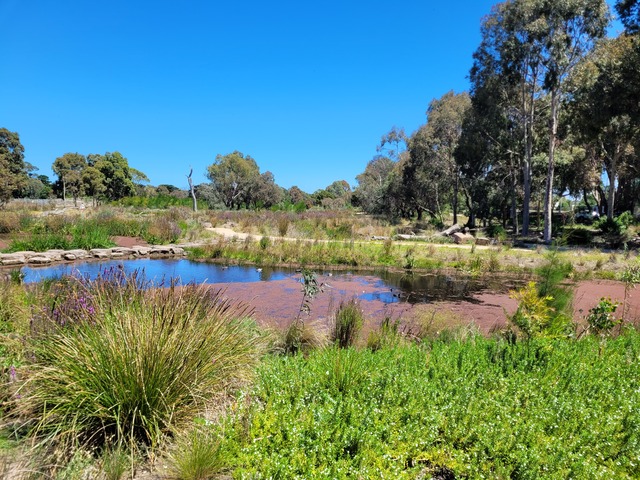
Planning, clearing, planting and subsequent regrowth is proving to be a therapy in a number of ways.

The replanting plan has used fire resistant plants or species which trap burning embers and sparks and reduce wind speed around buildings, in order to reduce the chance of future bushfires causing such devastation.

Digital Editions


  • Planning for the future

    Planning for the future

    Cowes Primary School students brought plenty of energy and curiosity to Berninneit Cultural Centre in mid-October for a special Meet the Mayor visit as part…

More News

  • New president meets PM

    New president meets PM

    Newly elected Local Government NSW (LGNSW) of president Mayor Darcy Byrne has wasted no time in advocating for councils across the State, heading to Canberra to meet with Prime Minister…

  • Greater action called during 16 Days of Activism

    Greater action called during 16 Days of Activism

    Hobsons Bay City Council is calling on the Victorian state government to take greater action to address gender-based violence in the municipality. As part of the global 16 Days of…

  • Light and Lollies in Kwinana

    Light and Lollies in Kwinana

    The City of Kwinana is delighted to launch its first Christmas Lights Trail in the lead up to the 71st Lolly Run. Mayor Peter Feasey said houses lit up for…

  • Barnaby Joyce leaves the Nationals

    Barnaby Joyce leaves the Nationals

    Former Federal member of the National Party and one-time Deputy Prime Minister, Barnaby Joyce has resigned from the National Party. He announced his resignation in a statement issued this afternoon…

  • New fire station for Albany

    New fire station for Albany

    A new purpose-built fire station has opened in Kalgan, giving the Kalgan Bush Fire Brigade a modern facility to support its growing membership and emergency response capability. The project was…

  • Golden haul for Bendigo

    Golden haul for Bendigo

    The City of Greater Bendigo took out gold in the Local Government Award for Tourism at the prestigious 2025 Victorian Tourism Awards, cementing its position as a leader in delivering…

  • New leadership group for Latrobe

    New leadership group for Latrobe

    Latrobe City Council elected its new Mayor and Deputy Mayor with Councillor Sharon Gibson as Mayor along with Councillor Dale Harriman as Deputy Mayor for the next twelve months. Mayor…

  • CMA backs Dr McGirr’s Rural Health Action Plan

    CMA backs Dr McGirr’s Rural Health Action Plan

    Country Mayors Association of NSW (CMA) Chairman Mayor Rick Firman OAM and his Board have thrown their weight behind a ‘pragmatic and practical’ new plan for rural health in NSW,…

  • Christmas comes early to Katherine

    Christmas comes early to Katherine

    Christmas has come early for the Katherine community, with the Northern Territory Government delivering two much-loved people-mover trains to join the popular ‘K-Town Express’ Christmas light tour. After delighting visitors…

  • Let’s stick together

    Let’s stick together

    The Country Mayors Association of NSW (CMA) and Local Government New South Wales (LGNSW) have a strong and mutually supportive relationship, according to CMA Chairman Mayor Rick Firman OAM. He…