The Abbott Government faces interesting times in 2014 on the industry front. The critical question is whether it is willing to modify its laissez-faire approach to save Australia’s manufacturing and processing industries.
Surely it must embrace reality, and get some intelligent debate underway. Legitimate government intervention must not be constantly tagged as a ‘hand out’ by the popular press and the current generation of politicians trying to appeal to the aspirationals.
As a Cockatoo member here said recently “the case for co-investment in the auto industry is not part of the public debate. The proposed government support was much lower per vehicle than other comparable countries. The problem is that dry economists refuse to appreciate the large multipliers flowing from domestic auto manufacture i.e. employment, exports, innovation, defence/security implications, skills and design etc. Without an injection of government funding these benefits will not be realised and investment in the industry will be sub-optimal for the economy as a whole.”
The added problem is that the dries generally don’t understand the realities of local companies competing in a global market with a high $A. Companies like Ford and Holden needed to justify their local investments. The Treasurer’s goading was never going to work. And Opposition Leader Shorten needn’t be too smug either, since outdated work practices are at the heart of the problem.
And think about this. A car is mostly made of steel (which comes from iron ore), plastics and rubber (from oil), glass (from silica), energy (from oil and gas) and the occasional bit of leather (from cattle). Australia has significant comparative advantages in all those raw materials – but things go rapidly downhill from there.
As another Cockatoo member observed, a properly constructed resource rent tax could have been utilised for a ‘strategic structural assistance fund’ for local industries bearing the consequences of a high exchange rate. Norway’s $800 billion Sovereign Wealth Fund is the stand-out example, drawing tax revenues from oil producers. Unfortunately our Future Fund (about 1/10 the size of the Norwegian Fund) relies on federal budget surpluses (sic), and because the Australian Mining Council hijacked the mining revenues debate, injections to the Future Fund’s injections are problematic.
Riverina naturally
Speaking of raw materials, I passed through the Riverina last month – flowing fields of wheat, barley, canola.
Stopped at Lockhart for a break – many shops are closed until later in the week. Stopped at Urana for a beer – the one pub is only open from 4-8 pm during the week. A nice old bloke was ruminating over the absence of shearers (the lifeline of pubs) because the sheep numbers haven’t yet recovered from the drought.
There is little value add in these communities. It’s strange that primary producers enjoy tax deductions to grow crops and all manner of ‘primary’ things, but the processing of these crops is not similarly treated. I’m not suggesting a huge subsidy program here, but one wonders that given the growing evidence of foreign investment in our agricultural sector, whether a small tax incentive might trigger some investment in downstream processing by the Chinese et al. But I’m dreaming since the Government is hoist on its free market petard.
But Treasurer Joe Hockey did make the right call on GrainCorp, probably with some advice from Trade Minister Andrew Robb, who interestingly once worked for the National Farmers Federation. As Robert Gottliebsen (Business Spectator) suggests, if GrainCorp can find the right management, it now has the opportunity to be the ‘Big Australian’ of agriculture. In other words it could duplicate in agriculture, what BHP Billiton has done in minerals.
Railways
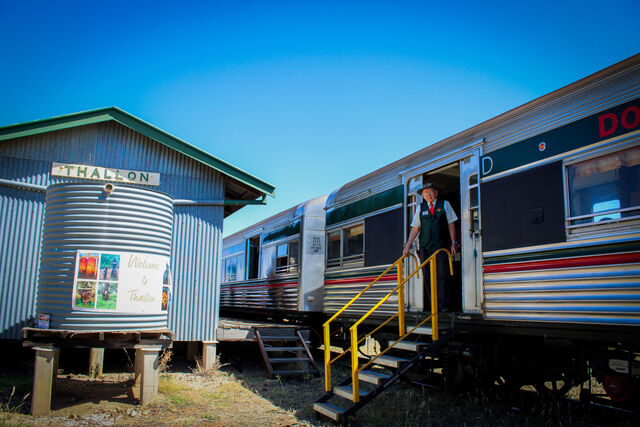
Federal Transport Minister Truss delivered an interesting speech last month where he indicated that the feds are certainly serious about Inland Rail – the question is whether a hike in truck road user charges will be required to shift the traffic to make it pay. Note that Adelaide-Darwin rail has never turned a profit.
Truss said (in the same speech) that he plans to ask the states about their level of support for high speed rail, and whether they’re willing to reserve the corridor for a high speed rail line. He said this will be expensive with no immediate return. He added the rider that the feds are ‘open to innovative funding and construction proposals that may help a deeply indebted country (sic) to deliver such a large project.’
Cockatoo’s recipe for a long life – don’t back odds on favourites, don’t run up stairs, don’t get excited about high speed rail.
COAG interest in regions and heavy vehicles
Last month’s Council of Australian Governments meeting agreed to commission urgent work on infrastructure, including acceleration of project delivery; fast-tracking of planning and approval timeframes; advice on the next major transport reforms, including proposals for heavy vehicle charging; options to increase private sector investment in infrastructure projects; and ways to prioritise projects that improve productivity or unlock economic growth potential including in regional economies.
Two topical issues here. First, despite the trucking industry’s protestations, there has always been concern in federal (and some state circles) that taxes on heavy vehicles are not sufficient to recoup the road and environmental damage they cause. And if they pay their way, the economics of the Inland Rail project would be improved.
Secondly, unlocking the economic growth potential of regional economies is most apposite to the Riverina issue. Good opening for some regional universities to undertake some serious work.
East Timor looming scandal
Canberra is awash with intrigue re ASIS’ alleged bugging of the East Timorese 2004 Cabinet Room discussions on its oil and gas treaty with Australia. The case is now in The Hague to have the $40 billion treaty torn up.
ASIO has replied with raids on the office of ACT lawyer Bernard Collaery and the home of the whistle-blower who allegedly fitted the listening device! Collaery is no fool – if these claims are substantiated, some very serious fall-out will ensue.
Rod Brown is a Canberra-based consultant and lobbyist specialising in industry/regional development, investment attraction and clusters, and accessing federal grants. He also runs the Cockatoo Network.
Phone: (02) 6231 7261 or 0412 922 559
Email: apdcockatoo@iprimus.com.au
Blog: www.investmentinnovation.wordpress.com (750 articles)