Karl Benz patented the gasoline powered motor vehicle in 1886.
So began the world’s love affair with car travel and a corresponding decline in physical activity.
Our modern environments are built around the mobility of the motor vehicle instead of our physical capacity.
Nowhere is this more evident than in Western Australia.
Perth’s urban sprawl is one of the biggest in the world, with the metropolitan area spanning 120 kilometres from north to south.
Experts predict this may expand to an astonishing 270 kilometres by 2050.
Outside the metropolitan area, Western Australia is one of the most geographically dispersed populations in the world.
Our State is bigger than Western Europe and four times the size of Texas.
The obvious implication for Western Australian Local Governments is the extraordinary pressure this places on Council infrastructure, both current and future, to accommodate more vehicles on the road.
But what about the more fundamental cost of this trend; the impact of a car-centric lifestyle on our communities’ health and well-being?
Of course, the increasing reliance on car travel is not solely to blame for the obesity epidemic and other negative health trends.
But with a sedentary lifestyle being a major factor in declining health outcomes for our communities, Local Governments have an important responsibility to help address this.
Local leadership can provide the vision and inspiration to steer the community towards active living.
Councils interact with their communities on a daily basis through a range of functions that can enhance the opportunity for increased physical activity.
Local Governments can help shift the thinking of developers, service providers, businesses and other stakeholders towards better health outcomes.
A more active community will result in decreased health costs, increased social networks, neighbourhood revitalisation, carbon emission reductions, increased tourism and reduced crime.
Local Governments therefore have a big investment in active communities.
Most planning schemes already demand a public open space contribution.
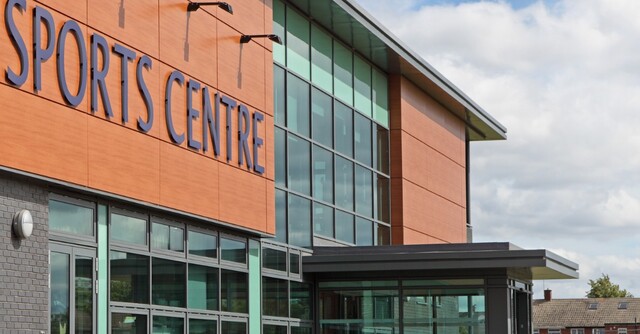
Western Australian Local Governments provide more than 7,000 kilometres of footpaths and 3,600 kilometres of dual use pathways, as well as numerous sports grounds, swimming pools and various courts, rinks, fields, pitches, and halls.
Many Local Governments develop Physical Activity Plans as part of their strategic planning, and often come together to plan and develop regional level recreation facilities in partnership with State Government agencies.
There are many issues for consideration in improving physical activity outcomes in our communities, such as:
- diversity of governance arrangements for recreation facilities and services through shared use agreements, charging for open space use, maintenance schedules and facility standards
- capital funding scarcity through decreased State and Federal Government funding for recreation facilities
- the maintenance funding dilemma whereby the cost of maintaining facilities can be more expensive than building them and
- recurrent funding for activity programs to make them more sustainable.
So how can Local Governments move forward on these issues?
Firstly, we need to keep the objective of increasing physical activity front of mind as we develop strategic visions for our communities.
Secondly, in conjunction with the relevant State Government Agencies, Local Government Associations can develop resources for Members on standardised governance approaches for assets, facilities and programs.
Finally, embracing an integrated planning approach to facility and program development that has at its heart the objective of creating more physically active communities will put us all on the right path.