Last month the Turnbull Government announced that the new Alien and Thor movies will be filmed in New South Wales and/or Queensland.
The clincher was a $47 million federal subsidy.
I have no problem with subsidies if there is a defined public interest, and 3000 direct jobs and strong multipliers are in the public interest.
Purists would argue that Australia’s world-class film technicians and actors, plus a weak Aussie dollar, mean that we shouldn’t be offering anything to overseas film producers. But they miss the point.The international film industry is intensely competitive. For example:
- The French Government invests huge amounts – 1.3 billion euros ($US 1.75 billion) to produce 279 films in 2012.
- The normally reticent Canadians (federal and state) subsidised their film industry to the tune of $C635 million in 2010 according to ground-breaking research by the School of Public Policy at the University of Calgary.
- The UK Government spends about $US340 million annually on film and TV subsidies.
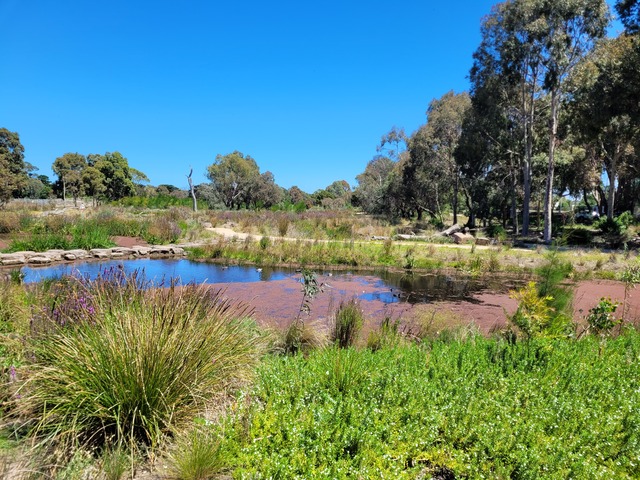
Anyway, Communications Minister Mitch Fifield and Prime Minister Malcolm Turnbull reportedly took a ‘minute by minute’ interest in the two projects. And some of our Cockatoo members in remote areas are now taking a similar interest because they have long-held dreams of creating jobs using their natural features as a back-drop for movies of different genres and budgets. In this regard, regions like Tasmania, Victoria’s High Country, the Flinders Ranges, the Kimberleys, Cape York, Broken Hill etc. would be thinking the same.
So I did some digging to understand how our resplendent outback regions might track the Alien/Thor movies pathway.
Firstly, the $47 million grant is a one-off, because there is no federal program that could deliver funding of this size. So it was signed off as special circumstances by Cabinet. One federal official mentioned that it’s a ‘pop-up grant’, which is a good way to describe it.
Secondly, there is no funding from the NSW Government, because an indignant Screen NSW official told me it doesn’t get involved in federal decisions! He was very defensive, and indeed a bit miffed.
Thirdly, the Queensland Government appears to be in the same boat as NSW. But the feds giving them both a free ride does set an unnecessary precedent.
So what other lessons can we draw? From my vantage point, the difficulty for a regional council or development body is in getting onto the treadmill. The federal government cannot help because it’s at the end of the process. The state governments should be approached however, at least to defray the costs for an expert to run a workshop explaining the ins and outs of the film production industry.
Local stakeholders can also be making their region known to location scouts, and local and international film producers and directors. I am advised that Baz Luhrmann was well aware of where he wanted to film the ‘Australia’ movie, but he is probably the exception to the rule.
Other options include:
- Offer some international film producers a free family trip through the Daintree, Cape York or the Franklin River next time they’re in the country. It’s about building friendships.
- Think about the French and Dutch still smarting because Captain Cook beat them to the punch. Surely there are many storylines of their sailors or pirates doing naughty or heroic things on our shores. Australia could access European subsidies and get their actors working with ours.
- Think indigenous jobs. I have colleagues in the federal system keen to fund sustainable indigenous jobs in film crews and the like. Ring me!
The Australian Screen Production Incentive
For the record, the Australian Government’s standard mechanism to support film and television production are tax incentives. They are the Producer Offset for the production of Australian film and television projects. The Location Offset, a 16.5 percent rebate which supports the production of large-budget film and television projects, and the PDV Offset, a 30 percent rebate which supports work on post, digital and visual effects production (PDV) in Australia, regardless of where a project is shot.
Mentioned in dispatches
Paul Antonio, Mayor of Toowoomba – did a tremendous job on Q&A recently, urging regional stakeholders to raise their voices. And he challenged a nervous Nelly in the audience to welcome refugees. “We will do our share here in Toowoomba principally because we are set up beautifully to accept refugees…quite frankly, I’m happy to do it, I’m happy to wear this one right on the chin.” Bravo Paul!
Angus Taylor, MP – the low profile Liberal member for Hume is our tip for a Ministerial position after the next Cabinet reshuffle. He is beginning to assert himself, eloquently putting the case for the modernisation of media legislation by repealing the ‘reach rule’, the ‘two-out-of-three’ rule and streamlining other restrictions. He’s also a very vocal critic of wind turbines. His CV is hugely impressive and we’re amazed he’s still on the backbench.
Rod Brown is a Canberra-based consultant and lobbyist specialising in industry/regional development, investment attraction and clusters, and accessing federal grants. He also runs the Cockatoo Network.
Phone: (02) 6231 7261 or 0412 922 559
Email: apdcockatoo@iprimus.com.au
Blog: www.investmentinnovation.wordpress.com (750 articles)