Home » Local Government’s important contribution to national productivity

Local Government’s important contribution to national productivity

Local Government plays a key role in the provision of a range of services and infrastructure that underpin local and regional economic development and make an important contribution in achieving higher productivity nationally. Local government employs just under 189,000 Australians (around 10 percent of the total public sector), owns and manages non-financial assets with an estimated written down value of $354 billion (2013–14), raises around 3.5 percent of Australia’s total taxation revenue per annum and has an annual operating expenditure of around $33 billion (2013–14), just under six percent of total public sector spending.

Local roads, in particular, are an essential component of the national road network and enhance not only local and regional productivity but in aggregate make a significant contribution to state and national productivity.  

Economic development and productivity is a focus for almost every council. They contribute significantly to the productivity and economy of their regions – and nationally – by focusing efforts in three key strategic areas:

  1. Creating and maintaining the investment environment by ensuring the availability of appropriate physical and social infrastructure and lobbying on behalf of local and regional communities for sufficient community services such as education and training, health and wellbeing, community safety and emergency services.
  2. Facilitating new local investment by actively promoting business development through local economic development facilitation, strategic planning, working with business associations/main street organisations and active involvement with tourism or other business activities.
  3. Attracting external investment through the creation of new business and capital by collaborating with regional bodies such as Regional Development Australia, Austrade and developers to attract and create new businesses and investment.

Local Government is a natural leader in local economic development because councils know their local business communities, workforce and comparative advantages better than anyone else. Local people and businesses are the key to economic growth and development. In this regard, councils are perfectly positioned to work with local stakeholders to drive a bottom-up, place-based approach to achieve prosperity.

The Australian Local Government Association’s 2016–17 pre-budget submission, available on alga.asn.au, focuses on opportunities for the Federal Government to partner with Local Government to invest in an innovative and prosperous future for all Australians.
Digital Editions


  • Lockyer send flood expert north

    Lockyer send flood expert north

    Lockyer Valley Regional Council has answered the call for assistance from a community impacted by Ex-Tropical Cyclone Koji, with a staff member from Council’s Disaster…

More News

  • Lockyer announce Scott Greensill as CEO

    Lockyer announce Scott Greensill as CEO

    Lockyer Valley Regional Council has appointed Scott Greensill as its new Chief Executive Officer. Councillors formally approved the appointment of Mr Greensill at a Special Meeting of Council in February.…

  • Myers resigns for health reasons

    Myers resigns for health reasons

    Wollongong’s Councillor Tiana Myers has resigned, as a Ward Three Councillor for City Council due to health reasons. Cr Myers was elected to Council in 2024 with a focus on…

  • Acknowledging women’s role in councils

    Acknowledging women’s role in councils

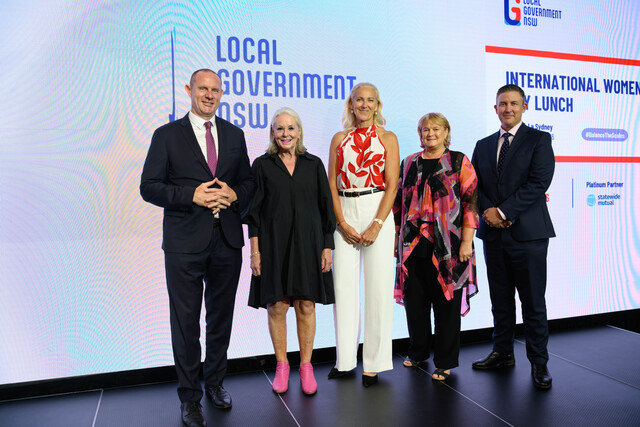
    Council representatives from across the state gathered in Sydney today for Local Government NSW’s (LGNSW) International Women’s Day event. Mayor Darcy Byrne, President of LGNSW, said the event was an…

  • Kylie Davies beats strong field

    Kylie Davies beats strong field

    Flinders Shire Council is pleased to announce the appointment of Kylie Davies as its new Chief Executive Officer. Ms Davies will start in the role on 13 April following a…

  • Leaving on a high

    Leaving on a high

    Mount Alexander Shire Council’s Chief Executive Officer Darren Fuzzard will end his tenure at the council in July 2026, marking ten years of service to the organisation and community. Mr…

  • Safety first for transport corridor

    Safety first for transport corridor

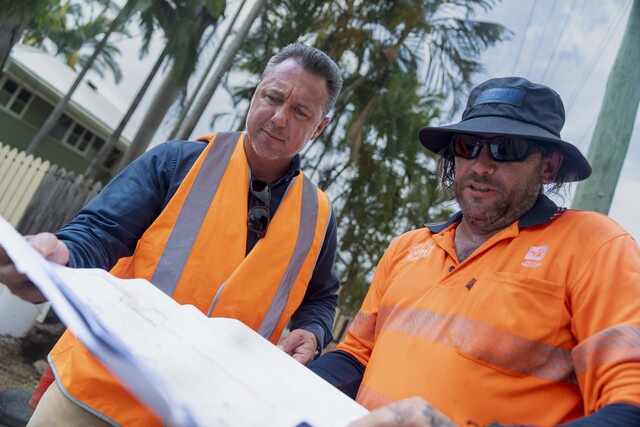
    Traversing a major Townsville transit corridor spanning three suburbs will soon be safer for motorists, cyclists and pedestrians, with Townsville City Council commencing a $3.8 million upgrade of Hugh and…

  • Creating long-term employment pathways

    Creating long-term employment pathways

    The Shire of Carnarvon is creating long-term employment pathways and strengthening workforce capability through its participation in the Remote Jobs and Economic Development (RJED) Program, a national initiative designed to…

  • Cool summer plan for Campbelltown

    Cool summer plan for Campbelltown

    Extreme heat is the biggest killer of natural disasters in Australia, exceeding that for any other environmental disaster combined, including floods, storms, bushfires and cyclones. While high temperatures pose risks…

  • Bathurst has it’s scrap together

    Bathurst has it’s scrap together

    Bathurst Regional Council has successfully concluded its ‘Let’s Get Our Scrap Together’ campaign, launched on 1 September 2025 with funding from the NSW Government and delivered in collaboration with NetWaste…

  • Baw Baw acting CEO tenure extended

    Baw Baw acting CEO tenure extended

    Baw Baw Shire Council has extended the contract of Acting Chief Executive Officer Sally Jones until 30 June 2026. The matter was considered as a confidential item in the late…