Local governments are discovering economic advantages to supporting migrants and refugees and a new network is encouraging councils to share their knowledge.
In 2009, the Luv-a-Duck poultry factory had a problem. Nhill – the northwest Victorian town where the factory is based –had almost full employment, so the company was struggling to fill positions.
General manager at the time, John Millington OAM, had an idea. He approached AMES (Adult Multicultural Education Services) in Melbourne and they put him in contact with a newly arrived community, the Karen people. The Karens had come to Australia after fleeing persecution in their native Burma; many had spent significant time in Thai-Burma border camps awaiting resettlement.
It was arranged for a busload of Karen people to be brought to Nhill.
In a report by AMES, Mr Millington described some initial reactions: “We took them on a bus tour around town. We stopped at the police station and on gets the local rural cop. There was silence and then the police sergeant smiled and said ‘hello’ and you could hear the sighs of relief.”
Five people accepted Mr Millington’s job offer and settled in the town with their families. A steady trickle followed and today there are roughly 200 Karen people residing and working in Nhill.
Tony Doyle, Chief Executive Officer of Hindmarsh Shire Council, the local government that covers the area, said the settlement has been a breath of fresh air for the town.
“Without any hesitation I say that the town feels privileged to have the Karen people here, they are wonderful citizens, they’re very community minded… they have really thrived in the environment up here.”
Council got on board early on in the settlement process, helping to rally funding, coordinate support services and develop a Karen Community Plan.
Mr Doyle said the community has embraced its new arrivals. “It’s been a whole-of-community approach to support and settle the Karens into Nhill and I think that’s been the most joyous part about the experience.”
Last year, a report by AMES and Deloitte Access Economics estimated that the settlement of the Karen people has added approximately $41.5 million to the town’s economy since they arrived and approximately 70 jobs have been created.
The process has not been without struggles. “At times it’s been extremely challenging because as refugees they have needs around health services, they have needs around educational services, and we just don’t have those services in our area,” Mr Doyle said.
Council employs a Karen person as a resettlement officer, and they are currently working on initiatives like providing translated information at banks and doctors’ practices.
Aleem Ali, Manager of the recently-launched Welcoming Cities network, said the situation is a gleaming example of both how to support migrants and how to address the common narrative of population decline in Australian towns.
“I think that at the moment, particularly in Australia, the economic case for migration is not really getting the airing and the conversation that it deserves,” Mr Ali said.
“At the moment multicultural policy is often, certainly not always, but often a bit marginalised – it can tend to be relegated to festivals and events – rather than actually being embedded across policy frameworks and underpinning economic development opportunities.”
Welcoming Cities, launched last month, aims to be a national network that connects municipalities with each other to discuss their experiences supporting refugees and migrants.
Mr Ali said the initiative is “still very much in start up”, but the network hopes to promote recognition of good work and facilitate partnerships between local government and community organisations. Eventually an accreditation program will be introduced, meaning a Council could meet international standards to become a ‘Welcoming City’.
Mr Doyle said Hindmarsh Shire would be interested in the opportunity to share their knowledge. The Nhill township had to forge their own path without much precedent, which Mr Doyle said worked out well, but he would still be grateful for opportunities to learn further.
“We love to share what we’ve learnt over our journey and we’d be very interested in learning from others about what their experience has been and things that have worked well that we can apply in Nhill.”
Elsewhere, in the outskirts of metropolitan Melbourne, Hume City Council has a significant multicultural population. On average, the local government area welcomes 80 new migrants each week.
Director of City Communities, Margarita Caddick, said the Council facilitates a number of programs aimed at making migrants feel welcome.
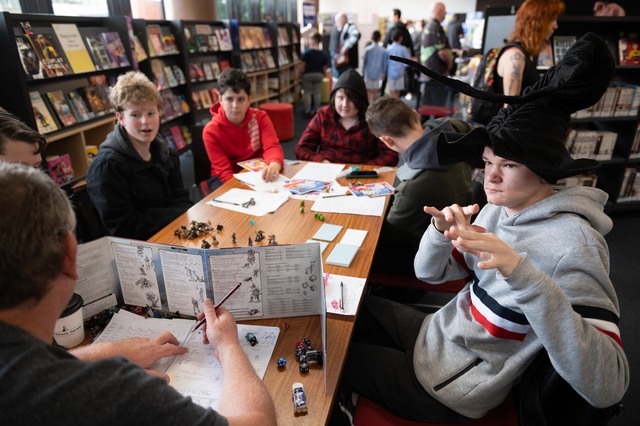
A bilingual storytime runs at the City’s libraries, which is taken by storytellers who were once newly arrived migrants. A maternal health program helps new mothers and a schools program supports students whilst also linking their parents with training opportunities and language lessons.
“It’s important that people have the opportunity to get to know one another and break down any fears,” Ms Caddick said.
At this early stage, Ms Caddick said it is hard to know how effective the Welcoming Cities network could be – “Networks are only as effective as the members of the network” – but the opportunity for knowledge to be shared on a national level is significant.
“When any movement grows, the collective is larger than the individual and you can create a much larger voice.”
The Welcoming Cities initiative is backed by Welcome to Australia and the Scanlon Foundation. It is based on a similar strategy started in America in 2009, the Welcoming America movement.
Mr Ali said they are not looking to simply transplant the American model, but there is a push for the network to become internationally relevant. He said the organisation is “also working with Germany quite closely at the moment, given their significant challenges around migration and refugees… they’re very much committed to building a global movement, so we want to be part of
that as well.”