Home » We need to talk about revenue

We need to talk about revenue

President’s comment

Do Australian governments have a revenue problem? It’s a question that is rightly occupying economists, taxation specialists, politicians and commentators. As all spheres of government continue the never-ending quest for greater expenditure efficiencies, better governance and structural change, there is growing concern that they are having less success on a fourth critical front.

How do governments achieve and maintain financial sustainability while improving services and responding to the challenges ahead, including population growth, the ageing of Australia and climate change?

The challenges are particularly acute for local government, who are most responsible for creating and maintaining the infrastructure and services that support and build not only resilient local economies but also functional, healthy and inclusive communities. In New South Wales, the financial sustainability of local government is being undermined as never before, thanks to an unholy trifecta of rate pegging, cost shifting and intergovernmental transfers, which fail to achieve the horizontal fiscal equalisation for which they were designed.

For example, rate pegging has halved the NSW change in rates per annum compared to other states. Between 2004/05 and 2014/15, NSW local government rates increased by 5.7 percent per annum, compared to an average of 10.9 percent for other states and the Northern Territory. Meanwhile, LGNSW research found cost shifting onto the state’s councils by the Australian and NSW Governments has increased from $380 million in 2005/06 to $670 million in 2013/14. And the Commonwealth’s three-year freeze on Financial Assistance Grant indexation has ripped nearly $1 billion out of council funding nationally for infrastructure and maintenance.

It should come as no surprise that the NSW Treasury Corporation in 2013 found the total infrastructure backlog for NSW councils had increased from $5.8 billion in 2009 to $7.2 billion in 2012.  Nor is it surprising that ALGA’s National State of the Assets 2015 report found $47 billion of local government infrastructure across Australia was in a poor or very poor state.

Good progress has been made when it comes to NSW councils making expenditure and efficiency gains, but if we are to truly make councils financially sustainable, we must not shy away from the real task. We can no longer pretend that local government can meet new statutory obligations, deliver new services, or build the new infrastructure our communities desire without a broader and more flexible financial base. It is time to think beyond the current paradigms, and to hold honest and transparent discussions around the allocation of public functions and services, and how those functions and services are funded.
Digital Editions


  • Grants close soon

    Grants close soon

    Queensland councils have until 31 March to apply for Round two of the State Government’s Secure Communities Partnership Program, which offers up to $400,000 per…

More News

  • Stretching for a good cause

    Stretching for a good cause

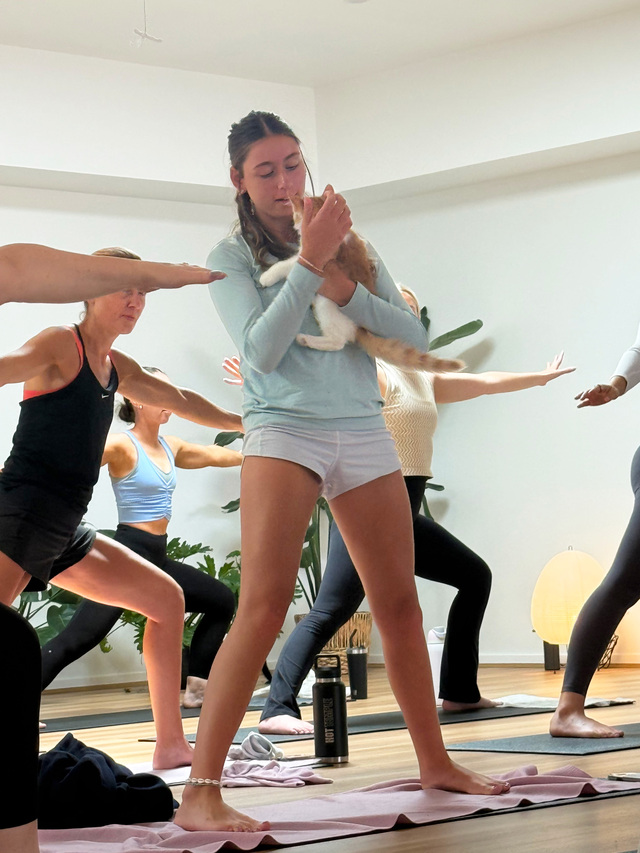
    Ballarat residents stretched, smiled and snuggled their way through a unique Kitten Yoga event that combined relaxation with a heartwarming cause – helping kittens find their forever homes. Hosted by…

  • Murray Library upgrade open

    Murray Library upgrade open

    The Murray Library refurbishment is now complete, and the revitalised space is officially open to the community. The upgrade delivers a brighter, more accessible and flexible library that reflects the…

  • Lockyer announce Scott Greensill as CEO

    Lockyer announce Scott Greensill as CEO

    Lockyer Valley Regional Council has appointed Scott Greensill as its new Chief Executive Officer. Councillors formally approved the appointment of Mr Greensill at a Special Meeting of Council in February.…

  • Myers resigns for health reasons

    Myers resigns for health reasons

    Wollongong’s Councillor Tiana Myers has resigned, as a Ward Three Councillor for City Council due to health reasons. Cr Myers was elected to Council in 2024 with a focus on…

  • Acknowledging women’s role in councils

    Acknowledging women’s role in councils

    Council representatives from across the state gathered in Sydney today for Local Government NSW’s (LGNSW) International Women’s Day event. Mayor Darcy Byrne, President of LGNSW, said the event was an…

  • Kylie Davies beats strong field

    Kylie Davies beats strong field

    Flinders Shire Council is pleased to announce the appointment of Kylie Davies as its new Chief Executive Officer. Ms Davies will start in the role on 13 April following a…

  • Leaving on a high

    Leaving on a high

    Mount Alexander Shire Council’s Chief Executive Officer Darren Fuzzard will end his tenure at the council in July 2026, marking ten years of service to the organisation and community. Mr…

  • Safety first for transport corridor

    Safety first for transport corridor

    Traversing a major Townsville transit corridor spanning three suburbs will soon be safer for motorists, cyclists and pedestrians, with Townsville City Council commencing a $3.8 million upgrade of Hugh and…

  • Creating long-term employment pathways

    Creating long-term employment pathways

    The Shire of Carnarvon is creating long-term employment pathways and strengthening workforce capability through its participation in the Remote Jobs and Economic Development (RJED) Program, a national initiative designed to…

  • Cool summer plan for Campbelltown

    Cool summer plan for Campbelltown

    Extreme heat is the biggest killer of natural disasters in Australia, exceeding that for any other environmental disaster combined, including floods, storms, bushfires and cyclones. While high temperatures pose risks…