When the Central Desert Regional Council was formed in 2008, it inherited a significant waste legacy problem, but a concerted effort from the Council’s Waste Management Team has turned that around.
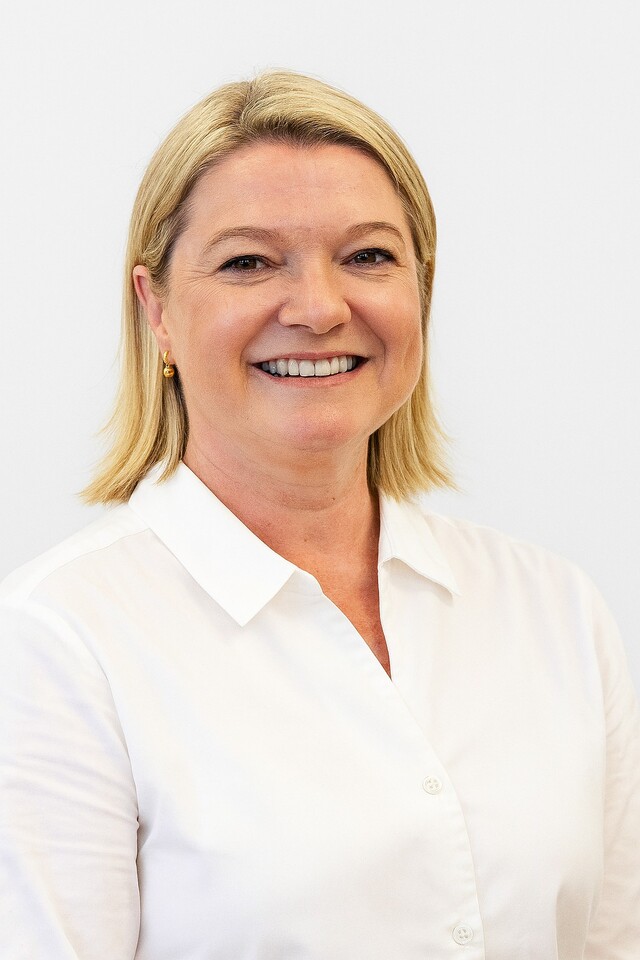
Central Desert Chief Executive Officer Cathryn Hutton nominated the team as Local Government Focus High Achievers.
“In a partnership arrangement with LGANT, NT Health Department and our two neighbouring councils, a Waste Coordinator was employed to lead the Central Australian Waste project,” Ms Hutton said.
“As our Council hosted the Waste Coordinator, he initially worked with our waste management team in Yuendumu, Lajamanu and Ti Tree. He also worked with staff from MacDonnell and Barkly Councils in their major communities.”
The Central Desert Regional Council area covers 280,000kms2 of remote central Australia.
“Our 5000 residents are spread across nine major communities and a number of occupied homelands. (If you look at the bureau of statistics our population density is zero!),” said Ms Hutton.
“Almost all of our residents (86 percent) are local Indigenous peoples; this is also reflected in the Council’s employment profile: 85 percent of our staff employed in our communities are local Indigenous people.
“Our communities vary in size from approximately 1000 to maybe a dozen (in a homeland).”
Ms Hutton said waste often poses significant problems for remote areas.
“Waste management in remote communities, particularly remote Indigenous communities, has been notoriously difficult and poorly managed.
“Waste poses significant health issues and the management of the old waste facilities also posed health and safety issues for our staff as well as the communities.
“Across the region we experienced ill-defined landfill compounds, poor environmental practices with burning of all waste types, no waste separation, poor landfill infrastructure and hazardous work practices.
“Many of our staff reported that they didn’t like working at the dump before because it was dangerous.”
As part of the Central Australian Waste project the Council partnered with two neighbouring councils – MacDonnell Regional Council and Barkly Regional Council – to prepare the first technical landfill manual developed specifically for remote application.
“Our project not only focused on the preparation of a manual suitable for remote applications, it also provided standardized site plans and “best practice” guides, staff engagement and training,” said Ms Hutton.
“As part of the project we have developed Environmental Management Plans for the major communities, which can be adapted to suit our smaller communities. “We have also developed an accredited training package suitable for use with local Indigenous employees.
“The councils are also developing a landfill audit app with images and spoken words designed for those users who have English as a second language.”
The project was awarded at the 2015 National Awards for Local Government in the ‘Boosting productivity through infrastructure’ category, which Ms Hutton said was a good moment for the Council.
“It is always wonderful to be recognised for a significant achievement; the National Award proved to us that we were doing something valuable and innovative.
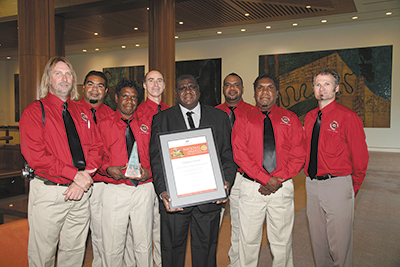
“However, perhaps the biggest impact of winning the award was the opportunity for several of our Yuendumu-based waste management staff to visit Canberra.
“For many of the staff it was the first time on a plane and, for one, the first time they had ever seen a sheep!”
Teamwork was crucial to the overall success of the project: “All of the team members were genuinely committed to making the project work.
“The willingness to try something different and also work through issues in a collaborative manner allowed this project to be successful.
“The local Indigenous employees in the Yuendumu Works Team have run with the project and are providing excellent mentoring for our other remote teams.”
The standards outlined in the Central Australian Waste Management manual are being embedded in all of Central Desert’s remote communities.
“The process of training and reinforcing best practice is an ongoing exercise and something that the council continually prioritises,” said Ms Hutton.
“We are currently working on identifying and establishing management plans for legacy asbestos in communities.
“Our biggest challenge is the vastness of the land and the extremely poor practices of the past.
“The complicated land tenure arrangements in the NT also add complexity to this particular issue.”
The next major focus for the waste management team is reducing litter in communities.
“We are working with communities to improve household litter issues and improve community awareness,” said Ms Hutton.