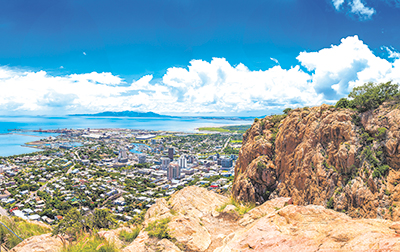
The Federal Government continues to roll out its City Deal policy but who will see the real benefits?
Malcolm Turnbull took a swift trip down to Tasmania last month to further the Federal Government’s City Deal program. Within the same day the Prime Minister signed a new City Deal with Hobart and handed over some cash for Launceston’s existing deal.
A few days later the first Victorian City Deal was announced and a Memorandum of Understanding signed to set in motion a plan for the Geelong region and the Great Ocean Road, which took the total number of signees up to six, alongside Townsville, Western Sydney and Darwin.
Meanwhile some are left scratching their heads over the policy. The mayor of Toowoomba told the Toowoomba Chronicle in January that the council was confused as to what a City Deal actually meant.
He is not alone in the lack of understanding around City Deals.
Observers are confused by the opacity of the application and allocation process. If the federal government has a plan for their allocation, where is the criteria?
Following in the footsteps of the United Kingdom, the Federal Government introduced City Deals as part of the Government’s Smart Cities master plan, which was launched during Malcolm Turnbull’s 2016 election campaign. Meant to stimulate growth in regional cities the deals combine targeted funding from all three tiers of government as well as corporate investment and community vision.
Director, Cities Research Institute at Griffith University, Professor Paul Burton, sees City Deals as a positive policy advancement signifying a federal government focus on and commitment to cities and importantly, involving all levels of government.
“If the three levels of government, that tripartite arrangement, can be made to work that’s when you have the potential to have the greatest impact,” he said.
However Prof Burton is concerned by the apparent ad hoc allocation process.
“It appears bottom-up, which is generally speaking good, but in this case the Federal Government should have a better view of where tripartite partnerships are most needed.”
Assuming that support should go to the cities or regions most in need of, or best positioned to benefit from the program, Prof Burton commented that the reasons why a city is selected to be beneficiary of a City Deal should be self-evident, and if they are not – “there will always be a whiff of the pork barrel about it”.
The first City Deal, announced in June 2016, was offered to Townsville, the country’s most marginal federal seat.
Politics aside, Townsville City Council Mayor, Jenny Hill, sees clear benefits for her region coming from the City Deal. The area has high unemployment rates, particularly amongst youth and its large indigenous populations. The mining downturn, culminating in the closure of Queensland Nickle last year had a flow-on effect which destroyed many small businesses.
“We began a campaign to build a stadium, hoping to stimulate employment and build confidence in our community, and now it’s wrapped up in the City Deal,” Mayor Hill said.
“We see the City Deal as a 15-year contract between levels of government on real deliverables. It sets out the vision, developing collective plans for economic growth and a real commitment to actions, investments and reforms. And governments need to actually implement them.”
The city is already seeing some investment offshoots. As the holes for the stadium’s pylons were dug by the local construction company that have been awarded the contract, a land purchase was made nearby for a Hilton Hotel Double Tree development.
“With the raft of things we’ve got planned for the site, Hilton Hotels were encouraged to build next door,” said the mayor.
“Some things need to be delivered by government, no doubt about that, but their involvement can de-risk business involvement.”
The broad brush strokes for Townsville’s plan include upgrading the port facility, developing a Defence hub, creating an industry powerhouse, building connectivity and enabling infrastructure.
Mayor Hill said, “Currently we have short term policy which gets criticism from everyone. This gives us a platform to identify key things needed for the future. Economies won’t change overnight, we need long term policy to achieve them. That’s what City Deals can change.”
The second city invited by the Prime Minister to sign a City Deal was Launceston in November 2016.
Launceston City Council Mayor, Albert van Zetten said, “He [the Prime Minister] was particularly impressed that as a council … we had a plan and a vision and that as a city we were ready-made for a City Deal.”
The Launceston City Deal has a shorter five-year shelf life, set to expire in 2022. Major projects include the University of Tasmania campus relocation to the inner city, the Launceston City Heart Project and improving the health of the Tamar River. Project partners include the West Tamar, Meander Valley and George Town councils, and Telstra.
“Launceston does face some challenges – it has relatively high unemployment (particularly among the young) and relatively low educational attainment and slow economic and population growth,” said the mayor.
“However, there is a strong culture of innovation with one of the highest rates of start-ups in the country.
“The process itself [of setting up a City Deal] wasn’t difficult, but I believe that was due to the significant level of tri-partisanship between those three levels of government to achieve a positive outcome for Launceston.”
Mayor van Zetten said his advice to other councils bent on pursuing a City Deal is to identify your city’s challenges and build your plan around your region’s strengths and natural advantages.
“It’s imperative to have a clear plan and a vision for the type of city you want to be,” he said.
Mayor Hill said when negotiating with two levels of government instead of just one the imperative is to “put away your political agenda and put your community first.”
However, when you look at the map, a picture appears of the political mileage to be gained through strategic delivery of City Deals.
Launceston for example, sits in the swinging Federal seat of Bass, but more notable are the Hobart City Deal announcement and the handover of Launceston’s funding just six weeks out from the State election.
As Tasmania, South Australia and Victoria face the polls in 2018 and with the potential for a Federal election to round off the year it will be interesting to see where the next few City Deals are made.