By Roger Gibbins and Sasha Lennon
According to a recently released report by Infrastructure Australia, our largest cities are facing a watershed moment in their growth and development. Between 2017 and 2046, Australia’s population is projected to increase substantially, by almost 12 million people. This is equivalent to adding a new city, roughly the size of Canberra, every year for the next 30 years.
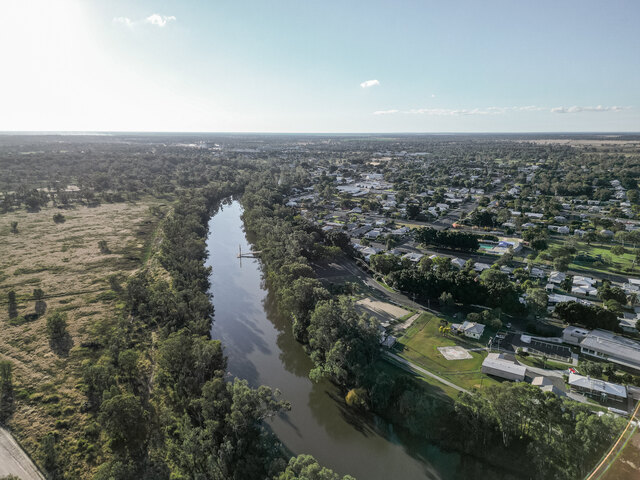
The Infrastructure Australia report tackles what is shaping to be one of the greatest challenges of the 21st Century in considering how our cities should evolve and grow to cope with the nation’s mounting population and urban growth pressures. Unfortunately, by failing to recognise the important links between the big cities and our regions, the analysis is stuck in an old paradigm.
Posing alternative development scenarios – essentially low, medium and high density – Infrastructure Australia asks, should our cities expand outwards, at a low density, or consolidate inwards at a higher density?
But in asking whether Australia’s cities should expand, all three scenarios assume ‘consistent metropolitan boundaries’, that is, there is no an expansion scenario. Each scenario is simply a redistribution of growth within the currently designated urban area. It would appear that infrastructure Australia has ‘boxed’ itself in on this issue.
The report acknowledges that a number of factors are not considered and these include current and emerging ‘mega-trends’ defined by rapid technological transformations and changes to where and the way people are working, living, investing and do business.
If these factors are considered – the rapid growth of the digital economy underpinned by the ‘Internet of things’, new ways of growing things (high-tech food production) and making things (advanced manufacturing), the use of ‘smart city’ technologies and evolving transport and communications technologies (automated vehicles, drones and high-speed rail linking our towns and regional centres with the big cities) – we can begin to think of metropolitan and regional planning within a new paradigm, one which embraces and responds to current and emerging technologies that will shape the way we all live, work and invest in our cities and regions.
Under this new paradigm, there is an opportunity to embrace patterns of urban and regional development that challenge the assumption that future growth must be contained within ‘consistent metropolitan boundaries? Related questions include:
1. What if all future dwellings adopt the full suite of environmentally sustainable initiatives that we know exist today, and source their power from renewable resources by application of existing and emerging technologies?
2. What if transport technologies that we already know about draw their power from sustainable resources to allow fast and efficient movement over vast distances without congestion?
3. What if universal accessibility across urban areas removes the price premium on locations close to concentrations of employment thereby reducing the cost of housing to reflect only the basic cost of production – thus maximising affordability and minimising inequality?
These are important questions which require collective consideration and collaborative action across all three tiers of government. And importantly, the private sector needs to be involved.
A shift in thinking requires leadership at the highest levels. Otherwise, if we are to persist with the old planning paradigm, government decision-makers and private enterprise will be effectively shut-off to the possibilities of the beneficial disruptions that technology is already creating around the world.
Attempting to cram more of our growing population into cramped and potentially unliveable capital cities is not the answer to Australia’s population challenge. Investing in infrastructure and technology that links the regions with our cities could be. Its time to start thinking outside the box.
References
Infrastructure Australia (2018), Future Cities – Planning for Our Growing Population
About the Authors
Roger Gibbins is a Melbourne-based freelance consultant specialising in economic impact assessment and business case preparation. He is an Associate with SC Lennon & Associates Pty Ltd. Sasha Lennon is a Brisbane-based consultant specialising in economic development strategy and policy formulation. He is the Director of SC Lennon & Associates Pty Ltd. Go to sashalennon.com.au.
*Copy supplied by SC Lennon & Associates