The Intergovernmental Panel on Climate Change recently issued its latest report with a stark warning about how long we have left to moderate CO2 emissions and to halt global warming.
It is no longer enough to reduce emissions, we need to start actively reducing the CO2 already in the atmosphere.
The planting of more trees is the only realistic method we have of reducing atmospheric carbon but, in Australia and around the world, moves to encourage more forests and plantations are failing to generate anywhere near the levels of required. Furthermore, science tells us that trees are only really effective at carbon absorption during the growth stages. Once they mature, the wood needs to be harvested and new trees planted, supported by the active use of certification schemes like Forest Stewardship Council and/or Responsible Wood (Programme for the Endorsement of Forest Certification).
In the built environment wood provides three significant environmental benefits. Firstly, wood is the only large-scale renewable building material currently available. The tallest timber building in the world is currently a university residence building called Brock Commons in Vancouver, Canada. It is 18 storeys or 53 metres tall, and incorporates 2233 cubic metres of engineered timber in its structure. Calculations have shown that the volume of timber used would have been regrown in US and Canadian forests in a mere six minutes.
Secondly, when wooden products are used in the construction of buildings, they provide long-term carbon storage – about half of the dry weight of wood is carbon, which is stored for as long as the building exists. The oldest timber building in the world is the Horyuji Temple in Japan, which has been storing timber since 710, over thirteen hundred years.
And thirdly, using wood significantly reduces the CO2 emissions that are produced when using more carbon intensive materials such as concrete and steel, which have significantly higher levels of embodied energy. If we replace a cubic metre of concrete with a cubic metre of timber, this will result in a reduction of approximately 1 tonne of CO2 emissions from entering the atmosphere.
The built environment is the primary source of CO2 emissions in Australia, so it’s important to both understand and address the embodied energy used in construction. Using more wood in construction undoubtedly has the potential to significantly reduce the impact of climate change.
Research proves wood is good for our health, wellbeing and productivity
The health and happiness benefits associated with spending time outside in nature are well known. This love of nature has been termed ‘biophilia’ and explains our innate need to connect with the natural world.
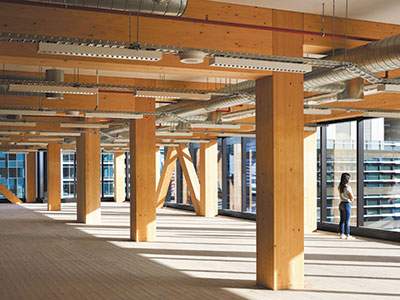
The use of wood in the interior of a building has clear physiological and psychological benefits that mimic the effect of spending time in nature. The feelings of natural warmth and comfort that wood elicits in people has the effect of lowering blood pressure and heart rates, reducing stress and anxiety, increasing positive social interactions and improving corporate image.
Why you should consider a Wood Encouragement Policy (WEP)
A WEP generally requires responsibly sourced wood to be considered, where feasible, as the primary construction material in all new-build and refurbishment projects. There are now two Local Government Authorities and sixteen local councils that have adopted a WEP in Australia, and in June 2017 Tasmania became the first state in Australia to adopt a state-wide policy.
So, why don’t you consider adopting a Wood Encouragement Policy? For more information please contact David Rowlinson, Make It Wood Campaign Manager, at david[@]planetark.org or 0400 474 412.
*Copy supplied by Planet Ark