Cost shifting is increasingly impeding local government’s ability to deliver services and maintain infrastructure for communities.
Councils in New South Wales (NSW) are still coming to terms with the State Government’s most recent exercise in cost-shifting with the unexpected $19 million emergency services levy invoiced to councils just as they finalised their annual budgets for 2019-20.
The increased levy to fund workers’ compensation insurance for volunteer and career firefighters suffering work-related cancers, resulted from legislation passed last November.
Revenue NSW sent Central Coast Council an emergency services levy invoice for $4,825,320, an increase of $624,977 (14.9 percent) on last year’s levy.
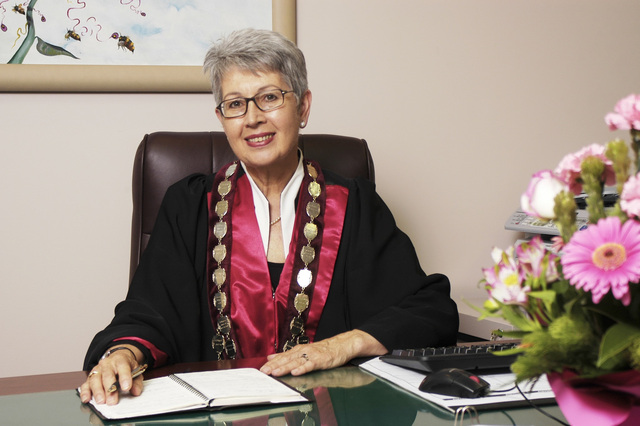
Mayor, Jane Smith, said while Council supported improved workers’ compensation for emergency services staff and volunteers, the unexpected levy would impact Council’s ability to deliver services to the community.
“Many of our own staff members are also volunteers and we want them to have adequate workers’ compensation if they or any other emergency worker is unfortunate enough to need it.
“However, the implementation of this increase has been poorly planned and goes against the NSW Government’s commitment to work in partnership with the Local Government sector.”
Two months to pay
Western Sydney Regional Organisation of Councils (WSROC) President, Councillor Barry Calvert, was incredulous that local governments had been given only two months’ notice on the levy without warning or consultation.
“We are severely disappointed in that the Government has failed to consult with councils on changes to the Emergency Services Levy for the second time in as many years.
“In 2017, the Government sought to collect a state Emergency Services Property Levy from residents via councils. This poorly thought through plan was eventually scrapped, causing significant and unnecessary costs to local government.
“Compensation for our emergency service professionals is important, however, giving local government less than two months to find the funds for this scheme is ridiculous, particularly at a time when the NSW Government is boasting record budget surpluses.
“Local government is not a source of revenue for the state government. We are funded by rate payers, and each cost shifting measure is money taken away from local programs in local communities.
“The Government has clearly not learned from their disastrous 2017 scheme. After years of poor consultation and cost shifting via state imposed schemes, such as mandatory Independent Hearing and Assessment Panels (IHAPS) and council amalgamations, there are limits to what local governments can afford.”
Local Government NSW (LGNSW) President, Councillor Linda Scott, called on the State Government to fund the first 12 months of the levy.
“The $19 million Emergency Services Levy contribution, and the lack of funding to help councils meet the Government demands for Crown land management, are clear cases of blatant cost shifting from state to local governments.
“Our latest study put the cost shifting hit on councils at $820 million per year, and that was before these fresh new cost shifts were revealed.
“Councils just don’t have, and cannot raise, sufficient revenue to fund these new Government demands and responsibilities – which means the end result impacts on the community through reduced infrastructure and services.”
The study, Impact of cost shifting on Local Government in NSW 2018, was based on data from the LGNSW cost shifting survey undertaken every two years. It put councils’ cost shifting burden in excess of the estimated annual infrastructure renewal gap of $500 million per annum (which is the gap between what councils need to spend on their existing infrastructure and what they can actually afford).
The biggest areas of cost shifting were the waste levy (especially metropolitan and regional councils), Emergency Services Levy (especially rural councils), public libraries, pensioner rate rebates, and regulatory burdens associated with companion animals, noxious weeds, flood controls etc.
Increases reimbursed
Cost shifting, according to the report, ‘occurs when the responsibility for, or merely the cost of, providing a certain service, concession, asset or regulatory function is shifted from one sphere of government to another, without corresponding funding or revenue raising ability required to deliver that new responsibility’.
Compounded by 40 years of rate pegging in NSW, cost shifting diverts councils’ income away from local infrastructure projects to meet additional demands placed on them by other levels of government.
In Western Australia, some councils face increases of up to 67 percent in the cost of bushfire volunteer insurance after a Supreme Court ruling determined that the cost of injury to bushfire volunteers would be borne primarily by local governments.
The Local Government Grants Scheme, however, provides a mechanism for reimbursing the cost of insurance for Bush Fire Brigades as well as any increases, through the Western Australian Department of Fire and Emergency Services which administrates the scheme.
Stealth attack
South Australian councils felt the effect of an unexpected charge when a 40 percent increase to the Solid Waste Levy was announced in the 2019/20 State Budget.
Local Government Association South Australia (LGA-SA) President, Sam Telfer, said the State Government had launched a stealth attack on ratepayers by jacking up its Solid Waste Levy by 40 percent only one week after criticising some of the lowest council rates rises in recent years.
The Solid Waste Levy is a tax on waste sent to landfill. It was implemented in 2003/04 at $5 per tonne, and is now headed for $140 per tonne.
“The $2.5 million that the Government has made available to councils and the industry for waste and recycling projects over the next four years is a complete farce when you consider councils will be asked to contribute $42.5 million through the Levy this coming year.”
The Queensland Government waste levy came into effect on 1 July 2019 but will at this stage have no direct impact on households, as councils will receive an annual advance payment from the State Government to reimburse them for the costs.