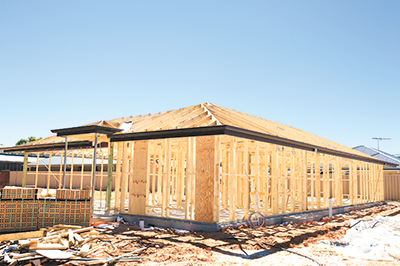
As Australia’s housing affordability crisis shows no signs of alleviating, local governments are becoming increasingly proactive in looking for new housing solutions.
Tensions were running high in Sydney in August as intergovernmental disagreement over the Martin Place tent city came to a head. New South Wales Premier Gladys Berejiklian and City of Sydney Lord Mayor Clover Moore traded barbs and as the media dashed from one hastily called press conference to another, the situation seemed ever more farcical. Eventually the State Government rushed through legislation to bypass the powers of the council and threatened police action against the tent city dwellers – so they reluctantly packed up and left. The incident was – as well as a masterclass in intergovernmental buck passing – a glaring reminder that the city’s housing crisis has become acute – a trend that is echoed across Australia.
The City of Sydney has been active in its attempt to provide affordable housing, and uses several key mechanisms – developer levies, voluntary planning agreements and selling off land – to boost housing supply, but it is limited in its ability to do so. The City has generated around 800 affordable homes over the past two decades, mostly via developer contributions, but this is well short of its outlined target of 10,500 affordable homes by 2030.
An analysis by researchers at University of South Australia (UniSA) and University of Technology Sydney (UTS) found that even as a well-resourced urban council, the City of Sydney ‘is severely constrained’ by the NSW Government’s restriction on local government-enforced developer levies, which are currently only applicable in a small number of areas. Other councils within Greater Sydney are also pushing to provide alternative housing solutions; notable among them are Canada Bay and Randwick, but they face similar constraints.
The research project currently being undertaken by UniSA and UTS, ‘Local Government and Housing in Australia for the 21st Century’, is examining the changing relationship that local government has to housing. Researcher Professor Andrew Beer said although local governments are largely beholden to state policy, there is innovation within the limitations and local governments are becoming increasingly involved in the housing space. “The big difference I’ve noticed is that local government is now much more willing to address issues around housing in their jurisdictions than they were 20 years ago or even 15 years ago,” he said.
Councils are instigating strategies such as developing local housing reference groups, zoning land for affordable housing and, in some areas, building housing and working in collaboration with not-for-profit housing providers. There are a few instances of multi-council collaboration on housing projects. The City of Port Phillip in Victoria and Brisbane City Council and Gold Coast Council in Queensland are notable for their success in creating standalone housing associations. In South Australia, the City of Salisbury piloted a program that used surplus council-land to build properties for low-income first homeowners, while Council maintained equity in the property.
Professor Beer said there is no one-size-fits-all approach: “Which strategies you follow will depend upon where you are in Australia, so a declining rural shire is going to have different challenges ahead of them compared to the eastern suburbs of Sydney – they might not have much to learn from each other, but they will have a lot to learn from their neighbours.” He said encouraging these conversations is key as “housing has been such an emotionally charged topic in local government that often those conversations just don’t happen”.
Some local governments are turning their attention to protecting the most vulnerable in the community. Recently, The Hills Shire Council in northwest Sydney approved a policy to create transitional housing for women escaping domestic violence. Hoping to take advantage of the housing boom in the area, the strategy will encourage developers to include up to three transitional homes in new apartment blocks in exchange for extra floor space. The homes will remain owned by the developer, but will be managed by community housing providers for ten years. Hills Mayor Yvonne Keane described it as ‘the pinnacle achievement of my time as Mayor.’
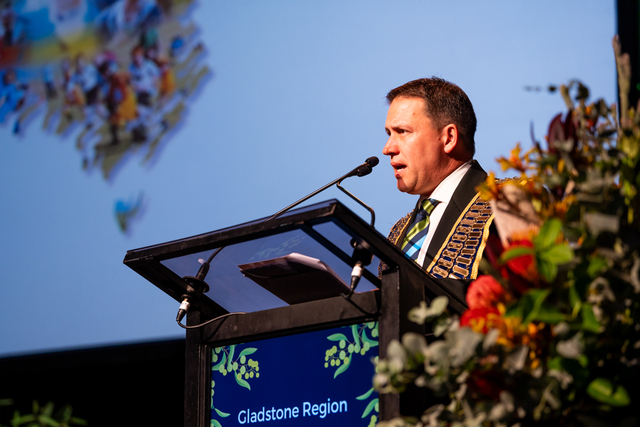
Last month, the City of Casey and Cardinia Shire Council in Victoria joined forces for the inaugural Casey-Cardinia Housing Summit, which aims to address the increasing housing pressures in the region. Casey Councillor Amanda Stapledon spoke at the event and said the region’s rapid growth is placing “increasing stress on the support offered by local government and community service organisations” and that the problem of homelessness is ‘bigger than we realise’ as people are often couchsurfing or sleeping in their cars.
She said councils could play a key role in advocating to the State Government for funding. “One of the things that councils can do is really talk with confidence about what the area looks like and what the best outcome for their community could be.” As a result of the summit, four working groups will be established and partnerships with housing not-for-profits will be further developed. Cr Stapledon said other innovative strategies discussed at the summit included tiny homes and container houses.
Professor Beer said the aim of his team’s research is to give councils “a better toolkit” to address housing issues. “I think one of the problems local governments have with housing is they haven’t historically dealt with these issues, so when they’re challenged to do something in the housing space – by state government or by councillors or by groups within their area – they often really don’t know what actions are effective and they don’t know how they can support them. We want this research to give them the tools to achieve those goals and do so in a way that doesn’t break their budgets.”
The researchers are currently welcoming the input of all local governments across Australia and more information can be found on their website: localgovernmentandhousing.com