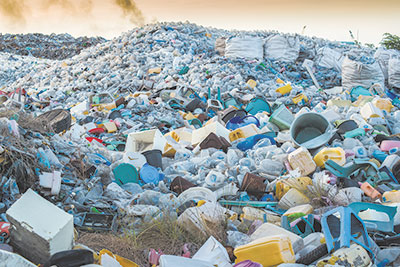
The City of Melbourne has backed a campaign from the Municipal Association of Victoria calling for the introduction of a
state-wide Container Deposit Scheme.
Lord Mayor, Sally Capp, said a Container Deposit Scheme would help reduce plastic and glass being sent to landfill.
“The recycling system is broken and we need to harness community and industry support to fix it.”
The City of Melbourne has joined other Victorian councils – Cities of Frankston, Darebin and Port Phillip in calling for the Victorian Government to introduce container deposit legislation into parliament.
Chair of City of Melbourne’s Environment Portfolio, Councillor Cathy Oke, said Victoria and Tasmania were the only Australian states yet to commit to a scheme.
South Australia, Northern Territory, New South Wales, Australian Capital Territory and Queensland all have schemes – with Western Australia and Tasmania following suit in 2020 and 2022, respectively.
“South Australia first introduced their scheme in 1977, leading the nation on waste management. They currently offer a 10 cent deposit and refund on beverage containers.
“Introducing a similar scheme in Victoria would help reduce litter while providing a commodity that could be used by our local industry.
“Along with reducing litter, the scheme would ensure the beverage supplier industry takes greater responsibility for packaging, and rewards individuals, community groups, sporting clubs and charities for picking up littered beverage containers.”
Recycling to landfill
The issue of recycling in Victoria was brought to a head on 27 July, when SKM Recycling, one of three major waste processors in the state, stopped receiving the City’s recyclables forcing 45 tonnes of recycling into landfill each day. SKM sorted 50 percent of Victoria’s kerbside recycling – close to 300,000 tonnes a year.
SKM ceased operating following two years of intermittent site closures ordered by the Environmental Protection Authority (EPA), due to fire or unacceptable risk of fire, at the company’s stockpile depots. SKM went into receivership in early August forcing more than a third of Victoria’s councils to divert their recyclables to landfill.
A recent Parliamentary Budget Office report estimated the unfunded cost to councils of the recycling crises for the 18 months to 30 June at around $42 million. These costs continue to rise for many of the 33 councils affected by SKM’s closure.
Cr Oke said more than $500 million of landfill levy income collected by Victorian Councils was available in the State Government’s Sustainability Fund and could be invested to increase capacity in the local recycling sector.
“We need the State Government to unlock the funds councils have collected from landfill levies and invest in new technologies to transform our waste and resource recovery sector.
“We need Government procurement targets like the steel industry, to build Australia’s domestic recycling industry.
“The City of Melbourne will also look at increasing the amount of recycled products that we use in our infrastructure projects. Instead of having our glass bottles and plastic thrown in to landfill, they could be used to help build new roads, footpaths, bikeways and playground equipment.”
Policy leads the way
Federal and Victorian Ministers met with the waste and recycling industry to discuss solutions to the recycling issues, developing markets for recycled materials, new infrastructure capacity, and the reinvestment of waste levies back into the sector.
The National Waste Recycling Industry Council (NWRIC) advocated removing inconsistencies between states and territories on what waste was levied, where the liability for the waste levy sat, how far waste could be moved and how the levy was administered through a mutually agreed Waste Levy Protocol.
The Council called for all state governments to be more transparent and accountable for the total amount of levies collected annually, what proportion of the levies were invested back into the waste and recycling sector, and what outcomes were achieved.
While Victorian councils have been hardest hit by the 2018 collapse of the international market for recyclables led by China’s ban on contaminated waste imports, the flow on affect has been widely felt.
Many countries, including Australia have changed or will have to change the way in which recyclables are processed and reused.
Fixing the mess
On June 2, the Victorian government announced a $34.9 million funding package towards recycling reforms to help Victoria create a more stable and productive recycling sector, while improving the quality of recycled materials and developing new markets for them to be processed.
A $14.3 million Recycling Industry Development Fund was part of the package to enhance Victoria’s domestic remanufacturing capabilities. This funding would target secondary processing infrastructure for priority materials such as paper, cardboard and plastics.
An additional $13.8 million was for incentives to encourage new entrants to the Victorian recycling market, diversifying the sector and leading to more investment. Expanding education programs to improve understanding of what could and couldn’t be recycled, would help reduce the contamination of kerbside recycling.
The Andrews Government has since announced a $10 million loan to SKM’s receivers KordaMentha to help clean-up SKM sites and resume waste processing.
“This loan is the fastest way of getting recyclable materials sent to processing sites instead of landfill,” Minister D’Ambrosio said.
Council of Australian Governments (COAG) met on 9 August, agreeing to ‘establish a timetable to ban the export of waste plastic, paper, glass and tyres, while building Australia’s capacity to generate high value recycled commodities and associated demand’.
“The strategy must seek to reduce waste, especially plastics, decrease the amount of waste going to landfill and maximise the capability of our waste management and recycling sector to collect, recycle, reuse, convert and recover waste.”
Metropolitan Waste and Resource Recovery Group (MWRRG) is progressing plans for new collaborative procurements for recycling services, working with 11 council clusters comprising more than 60 councils across the state.
By councils working together, larger contracts will be offered to the industry to encourage investment in recycling infrastructure and technology, and to attract new candidates to the Victorian recycling sector.