Aboriginal carbon farmers based in northern Australia have joined the fight against climate change following an agreement between the City of Sydney and the Aboriginal Carbon Foundation.
The City is buying 1800 Australian Carbon Credit Units (ACCU) from Indigenous carbon farmers to help offset Sydney’s inner-city emissions.
Lord Mayor, Clover Moore, said, “The City of Sydney has been certified carbon neutral since 2011 and we continue to increase the energy efficiency of our own buildings and operations by taking ambitious climate action, from switching to LED lights and electric or hybrid vehicles, to installing solar panels and a massive Tesla battery at our Alexandria depot.
“Last year we switched to 100 percent renewable electricity to power our operations, but where emissions can’t be avoided we invest in fantastic projects, such as Aboriginal carbon farming, to offset them.
“If we’re serious about tackling our climate emergency, we need to do everything we can to reduce our emissions, including through national and international programs like this one.”
The continued development of a local carbon offsetting market can help reduce emissions, create local jobs, support Indigenous business, support farming and have wider environmental benefits across Australia.
The Lord Mayor said it was vital for organisations like City of Sydney to look at a range of options when it came to dealing with the climate crisis.
“First Nations people of Australia play a vital role in the climate emergency response and we are proud to be tackling this important issue together.
“This new deal will not only see us support high quality Aboriginal carbon farming projects, but it also underlines our commitment to reconciliation.
“The City has purchased these offsets from projects in northern Australia, but we hope to see the program expand across other states, including New South Wales, so we can also support businesses closer to home.”
Fire stick farming
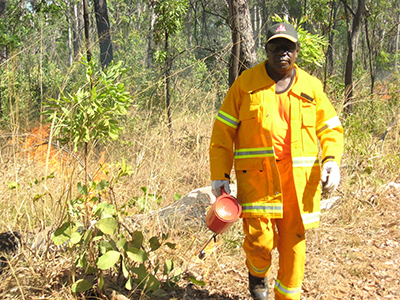
Fire stick farming is a way of managing the environment Aboriginal communities have practiced for tens of thousands of years.
It improves the health of the land and wildlife by setting cool burns, generally spot fires with smaller, more controlled flames during the early, cool dry season.
This helps prevent the build-up of vegetation that leads to the larger, hotter, uncontrolled fires of Australia’s scorching months.
Using these traditional burning methods, Indigenous carbon famers manage land and vegetation to reduce the amount of greenhouse gases that would ordinarily be released into the atmosphere.
That reduction in greenhouse gases is quantified by the Australian Government’s Clean Energy Regulator.
The famers can sell carbon credits to organisations needing to offset their own emissions.
Indigenous famers largely generate carbon credits by using a form of traditional burning, known as savanna fire management.
Not only preventing fires
Reducing vegetation that’s likely to fuel uncontrollable fires is only one aim.
Fire stick farming also supresses weeds and improves conditions for native wildlife, plants and grasses.
It’s also used to create or clear pathways to gain better access to Country for cultural purposes.
Trained Elders carry out the cool burns. The techniques used vary from region to region to suit the specific environmental conditions present.
Practitioners constantly listen to the environment – the habitat, vegetation, soil, moisture levels and more – to determine when, where, and how hot the burn will be.
Income opportunities
Currently, most fire stick farming occurs in the NT, northern QLD and northern WA. In 2018, there were nearly 80 cultural burns across savannas in northern Australia.
Savanna fire management is the most widely used form of Indigenous carbon farming and was responsible for 10 percent of Australia’s carbon credit production in 2019.
And each one of these programs provides environmental, economic, social and cultural benefits. Among them, experts estimate that fire management offsets provide around $15 million annually to local economies.
Australian Carbon Foundation Chief Executive Officer, Rowan Foley said he hoped the new partnership with City of Sydney would highlight Indigenous carbon farming and encourage other organisations to get involved.
“Carbon farming isn’t just a vital part of the fight against climate change. By reducing the risk of out of control wildfires, our Indigenous rangers help to conserve biodiversity in unique parts of Australia, as well as protect cultural and sacred sites of significance.
“By partnering with Indigenous carbon farmers, organisations provide valuable support to Aboriginal communities, helping to create jobs, growth and skills in these areas.
“The carbon industry has grown substantially in the past 10 years, with over 30 Indigenous projects now across northern Australia. We’re actively involved in several carbon projects and recently completed training Aboriginal rangers from three different groups in the Top End.”
Established in 2010, the Australian Carbon Foundation helps create environmental, social and cultural benefits for Indigenous peoples through the ethical trade of carbon credits.
The foundation connects communities who supply carbon credits with the organisations seeking to offset their carbon emissions and is a full member of the Carbon Market Institute.