Home » Rating methodology broken

Rating methodology broken

September’s rate cap announcement by the Independent Pricing and Regulatory Tribunal (IPART) is further proof of how the rating methodology is fundamentally broken, according to Local Government NSW.

IPART has set the rate cap for 2023/24 at a baseline of 3.7 per cent, despite inflation currently sitting at 6.1 per cent and expected to rise over the coming months.

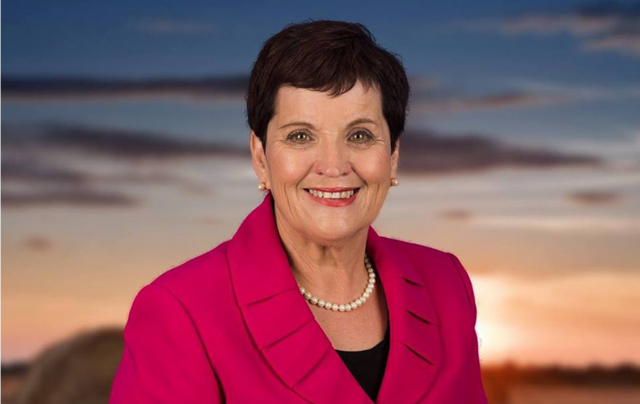
LGNSW president Darriea Turley said the announcement by IPART underlined the critical need for changes to the rating methodology as well as broader reforms that would see the abolition of rate capping, which LGNSW has been calling for over a number of years.

IPART announced in August it would review the rate cap methodology – a move welcomed by LGNSW.

“The review of the rate cap methodology cannot come soon enough, as the current system is not fit for purpose. Not only is it incapable of pre-empting or reacting to a rapidly changing economic landscape, it is formulated using two year old data,” Cr Turley said.

A major defect of the rate cap methodology is that the rate cap is a lagged measure.

The rate cap for 2023/24 is based on the change in the average costs incurred by a typical council between the 2020/21 and 2021/22 financial year, which were years when most councils were living with restrictions brought about by the COVID-19 pandemic.

“This two-year lag means that the rate cap does not reflect the real cost movements faced by councils in the year to which it applies,” Cr Turley added.

“With inflation spiralling out of control, a number of councils are preparing for double digit rate cap variations. A 3.7 per cent rate cap in these current economic conditions will mean many councils will continue reducing services, delaying essential upgrades to infrastructure and even reducing staffing levels.”

Cr Turley said IPART’s determination would heap more pressure on councils already struggling to recover from years of droughts, bushfires, floods, the COVID-19 pandemic, skills shortages, rising costs and several other challenges.

“This is another body blow for the local government sector that was still reeling from IPART’s decision to set the lowest baseline rate cap in 20 years, when it announced a 0.7 per cent increase for the current financial year,” Cr Turley said.

“Councils work hard to keep rates as low as possible, but are also required to deliver services and infrastructure that their communities expect and deserve.

“This is simply not possible with a rate cap that does not reflect the economic reality. Not only does this rate cap fall short of real cost increases that will be experienced by councils in 2023/24, it will also fall short of the anticipated local government award wage increases.”
Digital Editions


More News

  • Lockyer send flood expert north

    Lockyer send flood expert north

    Lockyer Valley Regional Council has answered the call for assistance from a community impacted by Ex-Tropical Cyclone Koji, with a staff member from Council’s Disaster Management Unit deployed to support…

  • From books to bots

    From books to bots

    Tenterfield Library is proving that technology is more than just tools and devices. From coding and robotics to tech support, the Library has become a place where curiosity, connection and…

  • Major repairs for levee

    Major repairs for levee

    Goondiwindi Regional Council has endorsed its largest-ever capital works project to repair and reinforce critical sections of the Goondiwindi levee, following significant erosion after recent floods. At this week’s Ordinary…

  • Stretching for a good cause

    Stretching for a good cause

    Ballarat residents stretched, smiled and snuggled their way through a unique Kitten Yoga event that combined relaxation with a heartwarming cause – helping kittens find their forever homes. Hosted by…

  • Murray Library upgrade open

    Murray Library upgrade open

    The Murray Library refurbishment is now complete, and the revitalised space is officially open to the community. The upgrade delivers a brighter, more accessible and flexible library that reflects the…

  • Lockyer announce Scott Greensill as CEO

    Lockyer announce Scott Greensill as CEO

    Lockyer Valley Regional Council has appointed Scott Greensill as its new Chief Executive Officer. Councillors formally approved the appointment of Mr Greensill at a Special Meeting of Council in February.…

  • Myers resigns for health reasons

    Myers resigns for health reasons

    Wollongong’s Councillor Tiana Myers has resigned, as a Ward Three Councillor for City Council due to health reasons. Cr Myers was elected to Council in 2024 with a focus on…

  • Acknowledging women’s role in councils

    Acknowledging women’s role in councils

    Council representatives from across the state gathered in Sydney today for Local Government NSW’s (LGNSW) International Women’s Day event. Mayor Darcy Byrne, President of LGNSW, said the event was an…

  • Kylie Davies beats strong field

    Kylie Davies beats strong field

    Flinders Shire Council is pleased to announce the appointment of Kylie Davies as its new Chief Executive Officer. Ms Davies will start in the role on 13 April following a…

  • Leaving on a high

    Leaving on a high

    Mount Alexander Shire Council’s Chief Executive Officer Darren Fuzzard will end his tenure at the council in July 2026, marking ten years of service to the organisation and community. Mr…