From paddock to pipelines, a revolution in low-emissions energy is coming to regional Australia.
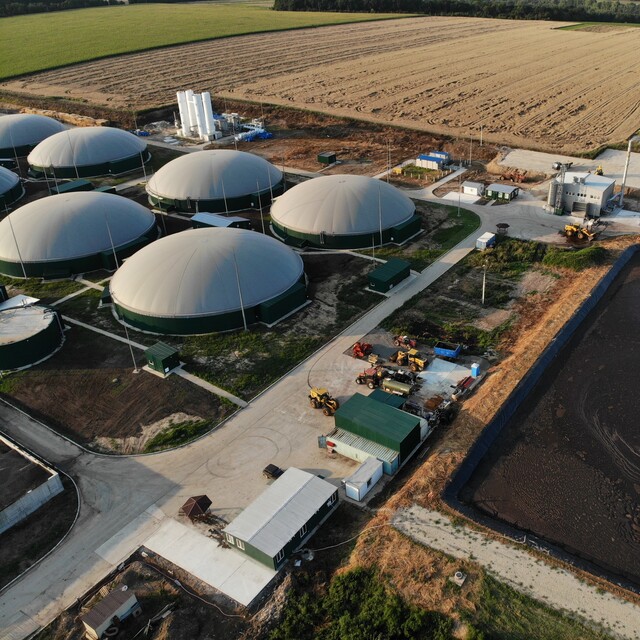
Among the rolling fields of the New South Wales Riverina, plans are afoot to turn agricultural waste into low emissions renewable gas – a sustainable energy source that can help to power homes, businesses and industries.
Australia’s developing biogas sector has taken another significant step forward with leading energy infrastructure company Jemena and Melbourne-based utility-scale biogas developer, Valorify, recently announcing a Memorandum of Understanding (MOU). As part of the MOU Jemena will assess the feasibility of injecting biomethane produced by Valorify in the Riverina region into their gas distribution network – which is currently connected to over 1.5 million homes and businesses in Sydney and parts of regional NSW.
Biomethane is a renewable gas created by processing biogas which is generated from decomposing organic waste. It is completely interchangeable with natural gas and is, therefore, compatible with all existing gas network infrastructure, gas appliances used in homes and businesses today, as well as industrial manufacturing processes.
The Riverina Bioenergy project in regional NSW, will look to leverage Jemena’s distribution assets to deliver biomethane to the market. The project will upgrade biogas captured from agricultural waste to biomethane, and is expected to produce approximately four petajoules of biomethane each year.
Jemena’s Managing Director, David Gillespie, said Valorify’s proposed Riverina Bioenergy project could produce enough biomethane to meet the equivalent energy needs of over 50,000 household customers or over 6 per cent of current industrial demand.
“Valorify’s Riverina Bioenergy project will assist the decarbonisation of large commercial gas users who produce many of the items we rely on everyday such as glass, medicines, and building materials. These industrial gas users require high-heat loads for processes which cannot be electrified,” said Mr Gillespie.
“Biomethane is identical to natural gas, which means we can avoid the need to upgrade infrastructure, reskill the workforce, retool industrial processes, or replace end-use appliances.”
CEO of Valorify, Dr Scott Grierson said businesses like Valorify are also helping local communities utilise their agricultural waste to unlock further economic potential.
“Projects like the Riverina Biomethane project can transform regional Australia by harnessing agricultural waste while stimulating local economies and creating permanent jobs in regional communities,” said Dr Grierson.
“We have seen the practical demonstration of biomethane injection in countries like Denmark, the US and the UK for a number of years. It’s an exciting time to be involved in bringing this innovation to Australia.”
Although an emerging industry in Australia, internationally biomethane production is demonstrating the benefits of a circular economy where organic waste can be diverted from landfill reducing emissions and creating a low-emission, renewable fuel which can displace natural gas.
Denmark is on track to reach 100 per cent biomethane in its gas network by 2034, the UK has over 80 biogas plants connected to its gas grid, and Germany now has over 11,000 biogas plants in operation.
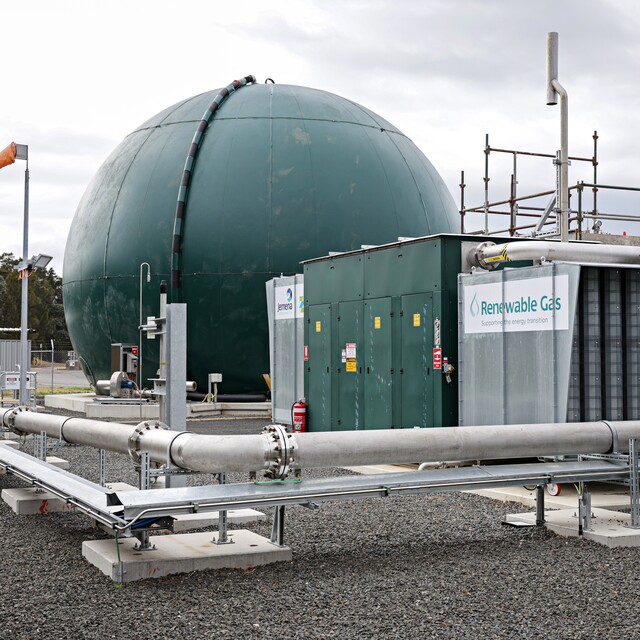
The Riverina project is just one part of Jemena’s broad commitment to renewable gas. At its Malabar Biomethane Injection Plant in Sydney — the first of its kind in Australia — the promise of renewable gas is now a reality. This innovative facility takes wastewater, converts it into biomethane, and upgrades it to meet Australian Standards before injecting it directly into Jemena’s gas network as GreenPower-certified, low-emission renewable gas. In addition,
Jemena’s Western Sydney Hydrogen Hub in Horsley Park is still trialing injection of renewable hydrogen into the gas network.
Jemena also has several MOUs in place for more renewable gas projects, including with Spanish company Solarig, to develop renewable hydrogen production and positioning regional NSW as a hub for hydrogen innovation. They are also working with Australian renewable gas producer Optimal Energy to identify additional sites in regional NSW that could produce 1.5 petajoules of biomethane annually.
The momentum is clearly building, and while government policy on renewable gas has moved slowly, the industry is moving at pace. Local government areas around the country could be in a position to take advantage of the growth in renewable gas projects and commercial opportunities.