Short-term solutions lead to long-term pain in disaster recovery and Local Government must play a major part in recovery, says a UNSW disaster response expert and
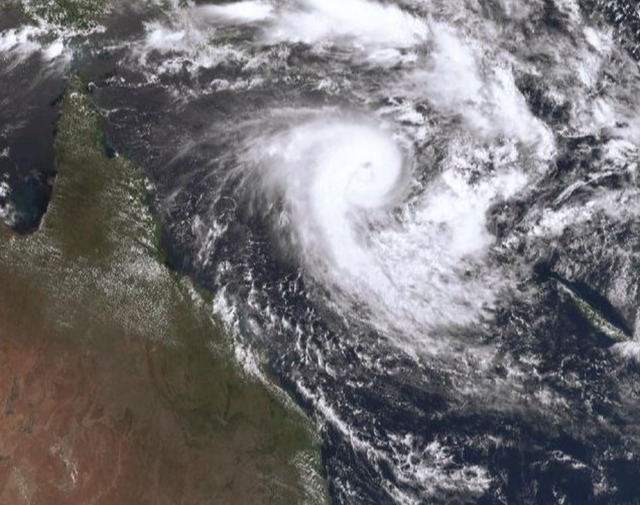
A month after Tropical Cyclone Alfred led to flooding affecting large parts of Queensland and NSW, a timely new report led by UNSW researchers highlights the need to strengthen localised responses to ‘build back better’.
The threat to housing in Australia from natural hazards is increasing, with replacement costs and logistical issues regarding rebuilding continuing to escalate according to the report.
Almost half of all Australian properties are at risk of bushfires, and over three million homes are set to be exposed to flooding from rivers, with half a million considered to be high-risk by 2030.
The need for financing housing and community preparedness and rebuilding efforts in the face of disasters is therefore urgent.
The report, released on 3 April by Australian Housing and Urban Research Institute (AHURI), is part of a larger inquiry into housing policy and disasters due to be released mid-year.
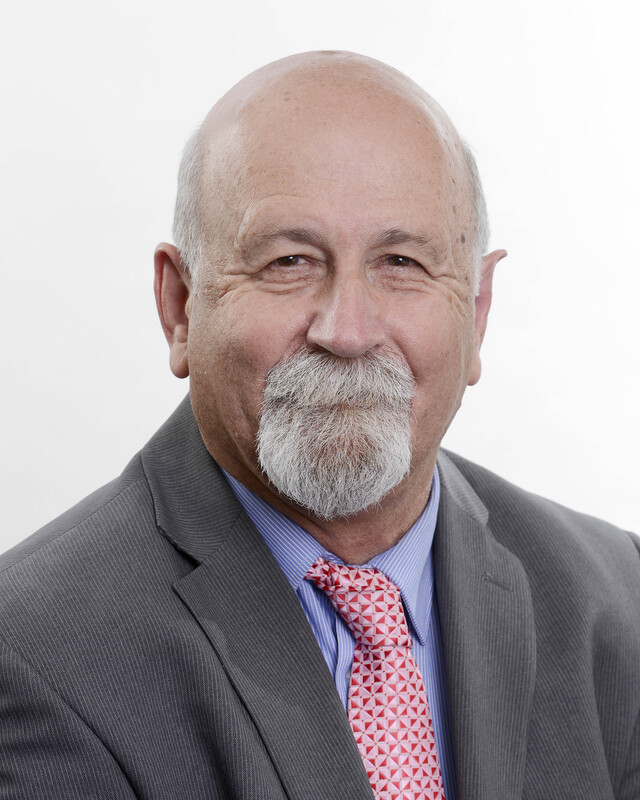
Lead researcher, UNSW Professor David Sanderson, is a disaster response and risk reduction expert from UNSW Arts, Design and Architecture. He says the current policy settings are not matching escalating need and will not work without long-term community-centred approaches.
He says Local Government is a “missing link is” in recovery.
“It is acknowledged the world over that local approaches are the best and yet energy and investment is not put into local organisations,” says Professor Sanderson.
He argues that a 4th ‘r’ – resilience – must be added to the often-quoted ‘rates, roads and rubbish’ local government mantra if community-centred recovery is to be taken seriously.
“Not only are disasters becoming more frequent and more intense, they’re also hitting what was already a housing crisis,” he said.
“It is imperative that we wake up to the need to increase the resilience of our communities. And there are no simple solutions – but there are responses that are more effective than others,” says Prof. Sanderson.
Gathering evidence
The research, which was undertaken for AHURI by researchers from UNSW, Curtin University and RMIT University, looked at seven case studies across Western Australia, New South Wales, Victoria and Queensland, covering bushfires, floods and cyclones, dating from 2009 to 2022.
Researchers conducted original research between May 2023 and June 2024 in four case study locations in Victoria and NSW. This included key informant interviews, workshops, and focus group discussions with housing providers, service providers, local and state government, and one-on-one interviews with disaster-affected community members.
The researchers also reviewed existing academic and contemporaneous literature on previous disasters, and on housing reconstruction and recovery policy and practice.
This report adds to the insights of two earlier reports released in February 2025.
The recommendations
Professor Sanderson says the country needs to take a long-term view.
“Short-term solutions like housing pods are part of the problem,” he said.
“The amount of money and time spent on setting these up robs communities of a successful long-term recovery.
“A second missing link is local government involvement. It is acknowledged the world over that local approaches are the best and yet energy and investment is not put into local organisations,” says Professor Sanderson.
Professor Sanderson argues that a 4th ‘r’ – resilience – must be added to the often-quoted ‘rates, roads and rubbish’ local government mantra if community-centred recovery is to be taken seriously.
And, thirdly, community-centred recovery is best practice and yet it rarely happens in reality.
“We have a mountain of evidence that supports community-centred recovery and yet state and federal agencies do not listen well enough to communities. They continue to take a reactive, top-down, short-term approach to responding to disasters,” says Prof. Sanderson.
What works
Prevention is clearly the best way to protect communities, along with mitigation to lessen the impacts of disasters. This includes policies that enact land use planning and zoning, so construction avoids hazard-prone locations, such as floodplains, and providing sufficient bushfire protection. The NSW Reconstruction Authority’s Disaster Adaptation Plans (DAPs) aimed at long-term risk reduction are a good step in this direction.
But planning crisis housing before the event is important, too, says Prof. Sanderson.
“Pre-identifying local accommodation options that can be brought into play in the event of a disaster, such as caravan parks, motels and hotels, holiday homes and RVs, means responses are faster and make use of existing infrastructure while also supporting local economies.
“Temporary housing villages are expensive, delay problem solving and create new problems. They should be seen as a last resort. And if they are built, then a plan for their longer-term use needs to be included.”
Building the capacity of Local Government Authorities (LGAs) to better plan and enact pre- and post-disaster housing is a step towards improved community-centred actions, he says.
“Globally, LGAs are the missing link for improved community-centred recovery,” says Prof. Sanderson. “It’s important to develop a stronger more powerful role for LGAs across all stages of disaster management – preparedness, prevention, relief and recovery. This means taking a long-term view to build local capacity.”
Improving community-centred approaches is essential, too. This requires listening from government, as well as stronger and well organised community organisations. In the Northern Rivers Resilient Lismore, Plan C and others for instance have teamed up to make their voices louder.
Build back better
Policies encouraging ‘build back better’ can reduce impacts of future disasters.
“We found that a key policy mechanism for reducing disaster risk is the approach commonly known as ‘build back better’,” says Prof. Sanderson.
“Build back better needs to become the norm in post-disaster housing rebuilding in Australia, with standards, frameworks and insurance all supporting active improvement rather than asset replacement.”
Insurance too often is set up to replace what was previously there and that sets communities up to fail again, says Prof. Sanderson.
“Build back better means that after disasters houses are rebuilt so that they are more resilient to future flood and fire hazards. This might include building homes that are raised above flood levels or use fire-resistant building materials.”
Policies might also include relocating and planning new homes away from very high-risk sites.
Prof. Sanderson, who has 30 years’ experience working across the world in development and emergencies, recently founded HowWeSurvive.com, a new long-term initiative aimed at reshaping disaster recovery to put people’s voices into the centre of recovery efforts that affect them.