The Bruce Highway is Queensland’s major north-south road corridor, connecting key centres from Brisbane to Cairns over 1700 hair-raising kilometres.
I’ve just driven the route for the second time in a year, this time in an Apollo six-berth van weighing almost 5 tonnes. We chugged along at the speed limit, so it gave me plenty of time to ruminate on things. Let me share some insights:
- Most of the highway is single lane, except for the stretch between Gympie and Brisbane (about 10 per cent of the route).
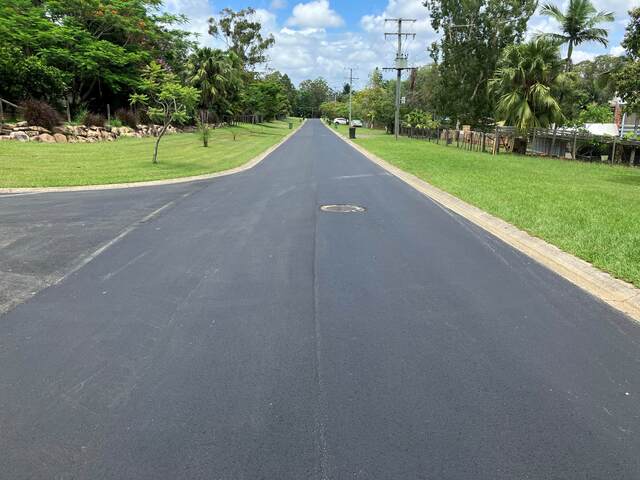
- It is a patchwork of good, bad and ugly sections – potholes, uneven surfaces, bad cambers are the norm. Admittedly there’s a lot of roadwork underway, but it’s mostly repairs and maintenance to fix the damage by heavy trucks. As road engineers will attest, it’s the combined impact of heat and water, which plays havoc with road surfaces.
- The traffic is a mix of heavy trucks, commercial and passenger vehicles, and grey power caravans that paddle along at 90-95 km/hour, often in convoy-style. The passing lanes are also infrequent and short. This leads to kamikaze overtaking scenarios. And few truckies respect the 100km/hour speed limit. Highway police and speed cameras are virtually non-existent – we saw ONE police car on our last day.
- The road is raised in many sections to deal with floodwaters, and the shoulders are also cambered to help shed water off the road. This combined with the stark lack of steel or wire safety barriers means that vehicles invariably end up in the scrub. I rang the Queensland Roads folk to ask why so few barriers and the curt reply was that Queensland is a big state.
The upshot is that the Bruce Highway has been named and shamed as one of the world’s 22 most dangerous highways. How can the fastest-growing state in a first world nation allow this to happen?
To its credit, the Australian Government has recognised this by committing $6.7 billion to upgrade the route over the decade to 2023. But for such a huge distance, there are doubts that this won’t be enough for the required road realignment as distinct from the maintenance function. And oddly, the Queensland Government is only contributing $1.8 billion over the decade, despite being in Budget surplus and the feds in severe Budget deficit. How was this allowed to happen?
Truck damage
The biggest culprit in this alarming state of affairs is arguably the trucking industry.
The particular problem is that not many folk, including politicians, understand or acknowledge the ‘Fourth Power Rule’. This means that that damage to the roadbed is proportional to the 4th power of the axle load of the vehicle. In other words, if you double the weight on an axle, the vehicle does sixteen times the damage to the road. And if a truck’s axle load is six times that of a car (which it often is) the cumulative impact on the road is 1296 times that of a car.
The fact that the Australian Government is to commence a public inquiry into road user charging this year is instructive. It will be headed by an ‘eminent’ Australian.
However, the aim is more about replacing vehicle registration fees and fuel excises with a ‘user pays’ model based on road usage, rather than meeting head-on the actual road damage caused by trucks. Indeed federal Major Projects Minister Paul Fletcher is jumpy enough, talking about a ‘ten to fifteen year journey’ that will only be delivered if there are clear benefits to the community. He might have added that he needs to nullify the voice of the Australian Trucking Association, a very powerful lobby group. They will also have the shock jocks on-side given that truckies form a big part of the radio audience.
Road-rail modal split
The fact that trucks are not paying their way on both road usage and road damage means that efforts to make railways operate profitably is a forlorn task.
Rail is supposed to be the most efficient transport mode in the long-haul transport corridors, but it’s not happening because trucks simply aren’t paying enough towards the infrastructure costs. The Adelaide-Darwin railway has been sent into receivership once already, and now the Inland Rail is headed for White Elephant status unless the true costs of road transport are properly reflected in road user charges. We trust that the eminent Australian who heads up the road user charges inquiry can achieve this.
Meanwhile councils in Queensland should be impressing upon their state government to increase its funding commitment to the Bruce Highway. And councils across the nation should be making submissions to the road user inquiry because their communities will be the direct beneficiaries of more enlightened transport
policies and practices.
Rod Brown is a Canberra-based consultant and lobbyist specialising in industry/regional development, investment attraction and clusters, and accessing federal grants. He also runs the Cockatoo Network.
Phone: (02) 6231 7261 or 0412 922 559
Email: [email protected]
Website: www.cockatooconsulting.com.au