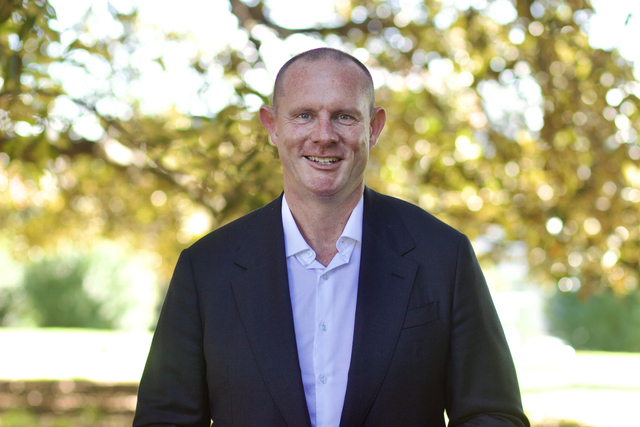
An interview with Peter Dormand, City Energy and Resource Manager at Newcastle City Council
Newcastle has been at the forefront of Australian Local Government in reducing its greenhouse gas emissions. Following from April and May, Peter Dormand continues to discuss with Bruce Rowse* what has been achieved and how Council has done it.
Q. So it’s gone well beyond just Council – now it’s going right out into the community.
We have developed a public/private partnership called Together Today. It incorporates a not for profit cooperative and it’s run by the board of directors that include the local television company, the print media, councils, the water company, the energy company, the schools, the TAFE, the university, CSIRO and more.
The vision for Together Today is to create Australia’s most energy and water efficient region. We figure that it’s no point working on just growing the demand for energy and water efficient skills and services, it’s critical that we grow the capability to supply that demand simultaneously. It’s a pretty amazing story given that to this day it doesn’t have any funding from any other level of government, other than local and the local business sector.
Q. What has been achieved in the Newcastle City community?
The target set in 2001 was to reduce Council’s corporate greenhouse gas emissions by 30 per cent by 2008 based on 1995 year levels, which we’ve achieved. The other target for the city as a whole was to return the city’s greenhouse gas emissions to 2000 year levels by 2008 and we’re within 100,000 tonnes of being able to celebrate that.
But what’s crazy for us is that we’re the only city in the world that’s measuring, so we can’t really compare ourselves with anybody. I was in Milan at an OECD conference in October last year and they agreed that we are the only city with a 500 megawatt smart electricity meter in our city centre. So we can see on an hourly basis what the consumption is.
We are measuring off 15 substations. So if you go to our climate cam website at www.climatecam.com you can see every hour what the consumption is for each of those 15 zones.
We track landfill, waste to landfill and we operate that landfill so it’s easy. We track the number of vehicles registered through the local RTA and then we can crunch those numbers as to the average kilometre travelled. We also track the number of trees planted. However about 60 per cent of our emissions are from electricity and it’s the one we believe we can make the biggest changes in.
Q. How long ago did you set a greenhouse reduction target and would you have achieved the savings you did if you hadn’t set that target?
No, we wouldn’t have. We set the target in 2000 and it was part of our participation with the ICLEI Cities for Climate Protection program so it was actually our CCP action plan. There are some 250 councils around the country participating in CCP now. It was really the driver for us to better understand what we were doing and where we could go, and that documentation provided us with the opportunity to gain the commitment of the community and of our senior management and Councillors.
Q. What have been the key benefits to Newcastle with this focus on reducing your carbon emissions?
Well we’re the biggest coal exporter in the world, which is a bit of a contradiction obviously, but I think for our community it’s given us a better understanding of what’s achievable. We’ve almost returned our emissions to 2000 year levels and this is at a time when most cities are rising by an average of four to six per cent.
We’re in a position now to provide an advanced test laboratory, if you like, for how hard is it to get to five per cent below 2000 levels and that’s the target that we have set nationally at the moment. We’re excited as a community to establish ourselves as a hub for climate innovation and we have the national CSIRO Energy Innovation Centre here.
We were rewarded a couple of weeks ago with the Enterprise Connect Centre for Clean Energy, it’s a $20 million Federal Government program, so we’d be keen to really grow our capability and reputation in that regard as truly a test laboratory where people are wanting to test their products and services in those zones that we so closely monitor.
Q. What’s next for Newcastle in cutting greenhouse gas emissions?
It’s setting our new targets for 2012, 2020 and 2050. We’ve proved categorically that having that measurement system in place all that time has provided us with an amazing window into what’s going on.
We’ve determined that if we get rid of the 48,000 electric storage hot water systems alone we will get a 12.5 per cent reduction on all of our electricity consumed, which equates to about 7.6 per cent in overall greenhouse gas emissions for the City.
The sad thing about this is that we just do not have the skill capability. So that’s why the emphasis really is on growing the skills of more people.
Q. What’s your advice to other councils wishing to cut their carbon footprint?
Invest in people, not consultants: develop your own people, grow your own capacity. I believe you will get ten times the value – you will still have to use consultants but if you grow your organisation’s capacity to do this – this in turn can grow more people.
Q. Would second to that be working to that 14 point plan, or working to a framework?
Absolutely, this framework that we’ve got just makes it easy every single minute of every single day. It makes sense in what you’re doing because you know it’s a part of something that’s interconnected that is going to achieve that measurable outcome. So much time in these areas in different businesses is wasted because often the person charged with the responsibility hasn’t got any prior knowledge in this place. It’s a really difficult place to work if you’re not equipped with the technical background and that experience, so the smartest thing we can do in Local Government is develop these people and share those experiences.
Great. Thank you Peter. It’s been really great talking to you and I think there’s a lot to learn from what you’ve done – keep it up!
*Bruce Rowse, energy efficiency engineer, is Director of CarbonetiX, an engineering consultancy specialising in carbon reduction. Contact Bruce via his blog at www.carbonetix.com.au/blog