Camden Council in Sydney’s southwest refused a development application in 2008 for an Islamic school in a rural area close to Camden. Council’s decision was based on planning considerations and was subsequently upheld by the NSW Land and Environment Court.
At the time the issue was well publicised and controversial. Some residents feared more people and more development would threaten the semi rural identity of the area that dated back to colonial times. These concerns surfaced against a prediction that the population of the Camden area was expected to grow from 50,000 to 250,000 in the next 25 years and the cultural and lingusitic makeup of local residents would change.
In late 2008, Council received $203,000 from the Department of Immigration and Citizenship (DIAC) for its Camden Local Government Area Community Harmony Strategy. This two year program of low key, community activities acknowledges these population changes and will help Camden to respond positively to them.
“Seven projects in 2010 that reflect a whole of area approach will encourage people in schools, key organisations and faith communities to regard Camden as a place where everyone belongs,” Council’s Acting General Manager, Ian Gannell, said. “Nurturing a sense of belonging in new communities and for new residents has been and will remain a focus for Council.”
Eventually about 35,000 residents are expected to take part. They include up to 20,000 parents with children at the 21 primary and secondary schools in the Local Government area. Council is helping the schools with community harmony projects that feature interschool activities, such as the recent visit between Camden High School and a nearby Muslim school.
Camden has also established an interfaith network. Originally with Baha’i, Christian and Muslim followers, the network has grown as people from other faiths have joined in. The network focuses on community projects that bring people together. It arranged Camden’s Harmony Day celebrations last year and will be instrumental in its Harmony Day plans in March 2010.
To share a sense of place, 80 young people from different cultural backgrounds took part in a public mosaic art project. Working with professional artists, the young people used art and drawing to explore and express themes that emphasised a common identity.
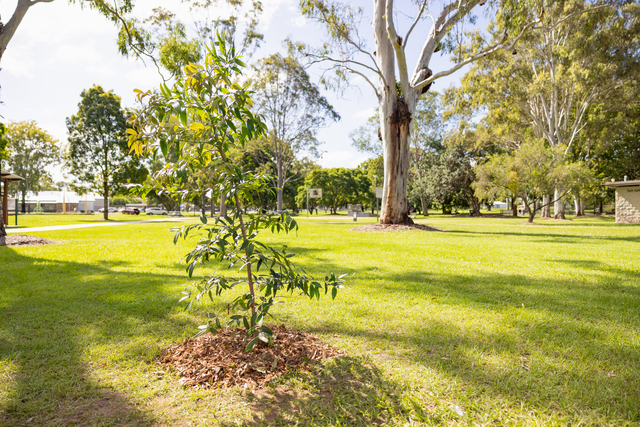
The result was a tiled mosaic walkway and themed seating, which were unveiled in a local park last October.
Throughout the past year, 32 women from old and new Camden who had not previously met attended textile workshops. Council is helping the women to stage a two day craft exhibition in the Civic Centre in May. Around the same time, seniors and young parents from different backgrounds will start meeting to recount their personal experiences. Eventually their conversations will lead to a collection of inter generational stories that are uniquely Camden and which will be distributed through digital media.
Many councils have already been involved in the Living Libraries Program, which DIAC funded in 2008. Volunteers act as ‘books’ on ‘loan’ to library patrons. They engage in personal conversations and help to break down prejudices and address misunderstandings.
In Camden, 20 people have volunteered as ‘books’, including an 18 year old Muslim woman, an Indigenous elder, council staff from Chinese, Croatian and Italian backgrounds, and an 80 year old nun who has travelled the world and migrated from the UK when she was 75.
Towards the end of the year, Camden’s Community Harmony Strategy will culminate in a major sound and light event at the Town Farm, a well known local landmark. This event will have a ‘sacred music’ theme and will be a chance for newer residents to meet members from the area’s long established farming and market gardening communities.
Ian Gannell said Camden’s Community Harmony Strategy is part of an ongoing process to build community resilience and limit the potential for intolerance as the population grows.
“The structures and systems we are developing through the strategy will be absorbed into Camden’s Cultural Plan so they continue into the future,” he said.
DIAC provides funding through the Diverse Australia Program to help Local Governments, schools and other organisations to address issues of cultural, racial and religious intolerance.
The department also funded Macquarie University to develop StepOne (www.stepone.org.au), an online resource for councils with downloadable ‘best practice’ case studies and community relations guides.
Harmony Day on 21 March 2010 offers Local Governments the opportunity to profile their diversity policies. Councils can order limited stocks of free promotional items through
www.harmony.gov.au from early February 2010.