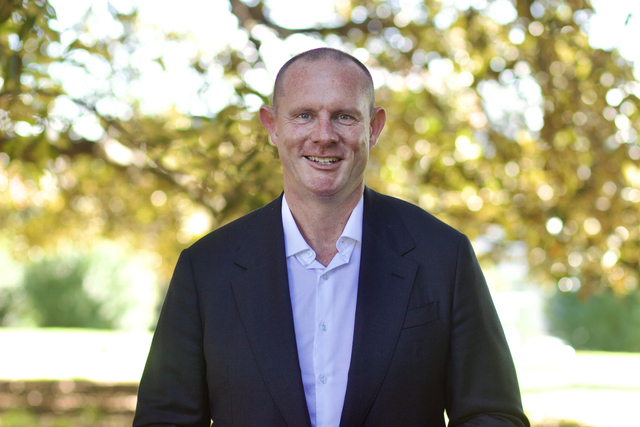
An interview with Christine Materia, Natural Resources and Environmental Management Coordinator, at the Local Government Association of Tasmania
Having worked in environmental management positions for councils in Victoria, Western Australia and Tasmania for the past 20 years, Christine Materia understands well the environmental challenges that councils will face now and into the future. As such, she believes managing the risk of, and responding to the impact of climate change will become Local Government’s greatest challenge.
Christine’s current position was created by both the Tasmanian and Federal Government under the Natural Resource Management (NRM) Facilitator project, to better engage Local Government in regional NRM planning and implementation.
However, with Federal funding for the National Local Government Facilitator Network ceasing on 30 June, Christine’s role soon will focus on assisting councils across Tasmania with developing and delivering a coordinated, strategic approach to climate change.
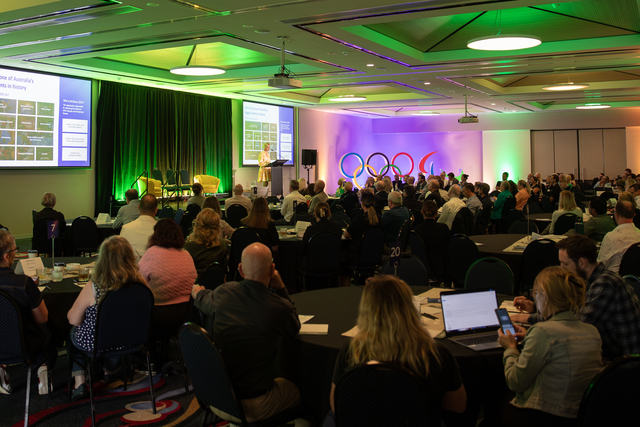
In May, LGAT bought together elected representatives and council officers from all councils to review climate change initiatives that are currently underway, and to set some strategic directions for the future.
“It was clear from this forum that Local Government in Tasmania has enormous capacity, both in its elected members and council officers in relation to adapting to and mitigating against climate change,” Christine Materia said. “There is already much knowledge in councils and what is now required is overall direction, coordination and support.”
She said that Local Government’s response to climate change requires mitigation – the management and reduction of greenhouse gas emissions, and adaptation – adjustments to existing activities and practices so we can reduce our vulnerability to the potential impacts associated with climate change.
“These two activities are complementary and should be considered simultaneously,” she said. “Climate related risks are not new to Local Government managers and adaptation does not necessarily require a fundamental change to what is already being undertaken by councils.”
Christine Materia said the predicted impacts of climate change cross many functional areas of Local Government, including infrastructure and property services, recreational facilities, health services, planning and development, natural resource management and sewage and water services.
“The effects of floods, droughts, storms and other extreme weather events are already addressed by Local Government when planning and providing services,” she said. “Councils need to assess the likely effects of climate change across all their activities and responsibilities, and plan appropriate responses. This can be done as part of existing council operational, policy and planning processes through regulations on buildings, green building, water and energy efficiency initiatives, flood prone and land slip area management, as well as bushfire protection, stormwater, waste water and water supply management.”
With climate change mitigation and adaptation issues crossing Local Government boundaries, Christine Materia said collaborative solutions are required.
“Cooperation between councils on a regional scale is not a new concept to Local Government, and has potential to provide substantial economic, social and environmental benefits,” she said. “The issue of climate change is too far reaching to be attempted by one organisation on its own.
“Partnerships enable the sharing of resources, existing knowledge and avoid ‘reinvention of the wheel’.”
In the 1990s, Christine worked with Launceston City, West Tamar and George Town Councils on developing the Tamar NRM Strategy. This subsequently grew to become Tamar NRM, an independent, not for profit natural resource management group that brings together a wide range of community, Landcare, education, business, and Local and State Government representatives.
By working together, the three councils share the costs of the operation, and have been able to attract over $5 million of funding into the region from the Natural Heritage Trust, Local Government and sponsorships, to implement a range of projects.