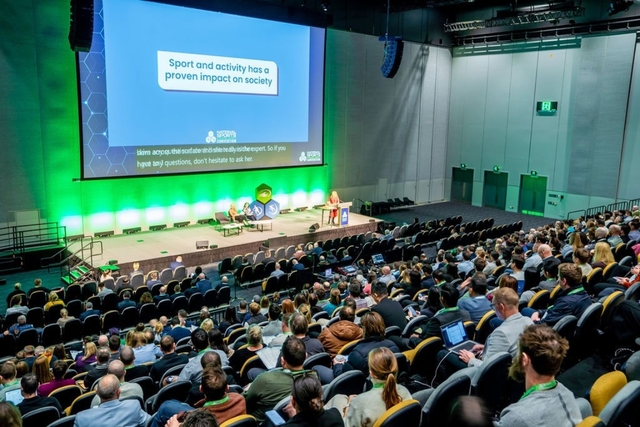
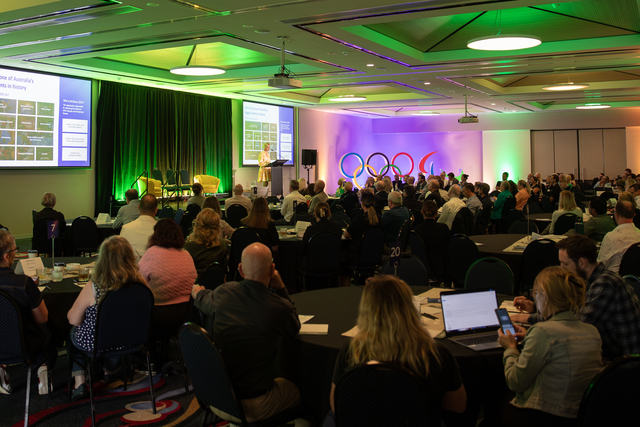
In opening the Local Government Association of Tasmania’s Annual Conference, Association President Councillor Mike Gaffney said the conference would be an opportunity for delegates to consider, discuss, reflect and question new ideas and innovations.
“We need to be aware of councils around us and what they are doing,” he said. “We are all in this together. The challenges in Local Government affect the sector like the power of a tide. The effects flow on to all of us.”
In addressing the issue of climate change, Dean of Graduate Research at the University of Tasmania, Dr Kate Crowley, said the Australian community’s desire for urgent action on climate change is the strongest it has been in a decade. She said Local Government is the tier of government most capable of grassroots mobilisation, but is not well placed to do so.
“While Local Government is in the best position to influence community action, it is also the least powerful and least financially independent,” she said. “Under these circumstances, councils will need to combine their efforts to gain the State and Federal support they need to address climate change issues. Joining up now will create networks that can help post tragedy, through recovery support.”
Kate Crowley said immediate action is needed to meet the Federal Government’s 2020 greenhouse gas emission targets. She said in doing so, sustainability plans should not be add ons to existing plans, but should be integral to them.
“Don’t waste time reinventing the wheel and designing purpose built frameworks for actions,” she said. “The big local fixes are simple. Reduce energy use, improve efficiency, use renewable power and encourage catching the bus, walking or cycling.”
Kate Crowley said councils must work with and inspire confidence in their communities when making changes or developing projects.
“There are risks in high levels of public consultations, but it is necessary,” she said. “The community won’t be happy unless they are part of any changes that are made.”
Also speaking at the conference, former organisational psychologist, facilitator and social researcher Ian Plowman posed the question, “Why are some towns more innovative than others?”
He said that all people have mobility choices, and it is the exercise of that mobility choice and the resulting net inflows or net outflows that determine whether or not a town is innovative.
Ian Plowman was part of a research team that conducted research in 2003/2004 in eight towns across Queensland. Using interviews, surveys and census data, the survey found that innovative and creative people have the highest mobility. As such, towns that nurture innovative and creative people are towns that thrive.
“It is newcomers who are most willing to invest in the social and economic fabric of a community,” Ian Plowman said. “The more they are made to feel welcome, the more willing they are to invest.”
Ian Plowman said councils also need to invest in diversity, which requires tolerance.
“Communities that are intolerant of diversity are destined to die,” he said. “The most innovative communities have fewer leaders and more ‘weirdos’, who are commonly outsiders, and see and create opportunities invisible to longer term residents. The arts are vital to this – they are a symbol of creativity and tolerance. Innovative towns celebrate the artistic dimension in a creative way.”
Ian Plowman said councils should put restrictions on the amount of time people can stay in leadership positions, such as restricting people from sitting on advisory committees for more than one or two years.
“This gets people while they are creative, interested and energised,” he said. “When they leave the position, they still have energy to support the new person and the time factor creates interest in the position.”
He said the council composition should also reflect the diversity of its constituents, with regards to age, gender, occupations and domicile.
“Companies that enforce having 50 per cent of women on their boards financially outperform those that don’t in every case,” he said.