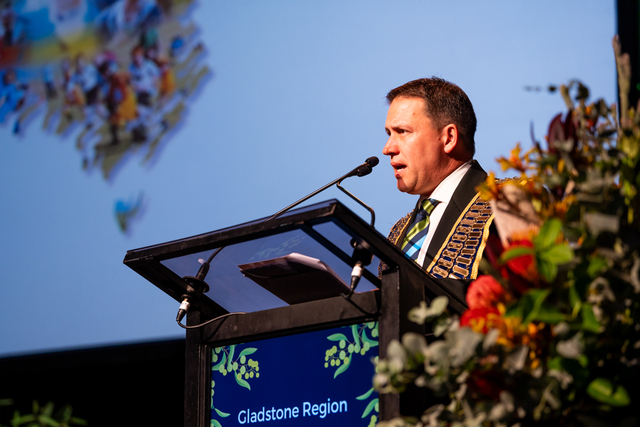
With the theme ‘ICT – It’s a Change Agent’, the Municipal Association of Victoria’s (MAV) Local Government Technology Solutions Conference was staged in Melbourne from 9 to 10 August.
Speaking at the conference, Principal of Eckermann and Associates, Robin Eckermann, said Local Government is responsible to the community to ensure they have access to broadband. He said according to Moore’s Law, computing power doubles every 18 months.
“In 1980, using a dialup connection, it would have taken 4.8 years to download a two hour DVD quality movie,” Robin Eckermann said. “Today, using a fibre to the home (FTTH) connection, it would take just over seven minutes.
“This has exciting implications for the way we all use the Internet. For example, we are able to use mobile phones and lap top computers to access home security systems from anywhere in the world via the Internet.
“For Local Government, this opens up endless possibilities, such as unobtrusive surveillance of aged care residents, to assist them to live safely at home for longer. We can see if they have had a fall or an accident, or if they need assistance, and alert the relevant authorities remotely if neccessary.”
However, Robin Eckermann said that Australia’s infrastructure will not meet the needs of the future without a multi billion dollar investment.
“The need for higher speeds continues to grow, but many Australians are already operating at the limits that ageing network infrastructure will support,” he said. “FTTH is the ultimate way to provide bandwidth adequate for the future.
“Broadband is emerging as the next essential utility and it will affect the appeal of your area as a location to live. As Local Government employees, you need to understand the issues and contribute to the debates to get broadband on the agenda.”
Also speaking at the conference, Ovum’s Public Sector Research Director, Steve Hodgkinson, agreed that with the way the web is going, high speed broadband is vital. He said that in places around the world where broadband is at saturation, Web 2.0 is the way.
Web 2.0 is the term used to define a second generation of web based communities and hosted services, such as social networking sites like Myspace, Facebook and Bebo.
“It’s all about pull, not push,” Steve Hodgkinson said. “In social media, people are in control of their conversations and participation, not the media owners.”
He said Web 2.0 enables collective intelligence by the transparency of preferences, selections, recommendations and contributions of millions of users.
“Lists and links created by peers point towards popular content, while comments and rating of content provide real time feedback loops,” he said. “However, dialogue has its dangers and governments can become easy targets for abuse. For example, when Prime Minister John Howard posted his message for climate change on You Tube, it received over 58,000 views and 98 comments, most of which were rude!
“There were more views of numerous spoof remixes with voiceovers, Midnight Oil sound tracks and text overlays.”
Steve Hodgkinson said Councils should look towards implementing low risk Web 2.0 functions that lubricate social network effects among staff.
“These include organisation wide, cross platform search tools; links to relevant information; low barrier tools for authoring, editing and commenting; and signals such as RSS to alert users to news or updates,” he said.
In her address, ‘Selling the Idea’, Principal of M-Power, Karen Morath, said IT professionals have the opportunity to become CEOs and leaders in Local Government, but they need the right language to do it.
“New media is IT’s ticket to the top table,” she said. “In the future, more and more CEOs will come from IT based backgrounds and they will become architects of the Local Government role in communities. However, they need to get out of the mindset of technical IT backgrounds.
“People who don’t understand IT don’t understand the language and if people don’t understand, you are not empowered.”
Karen Morath asked delegates to think about their language and who they are selling an idea to.
“Make sure people understand you,” she said. “Ratepayers are a very important part of your business – you need to think about how old they are and what level of understanding they have.
“People who get the way people communicate and how decisions are made will have the power.
“IT can be a change agent, but it should be ahead of people and articulating in a way that the rest of us understand.”
For further information on the conference and speakers visit www.mav.asn.au