Home » President’s comment

President’s comment

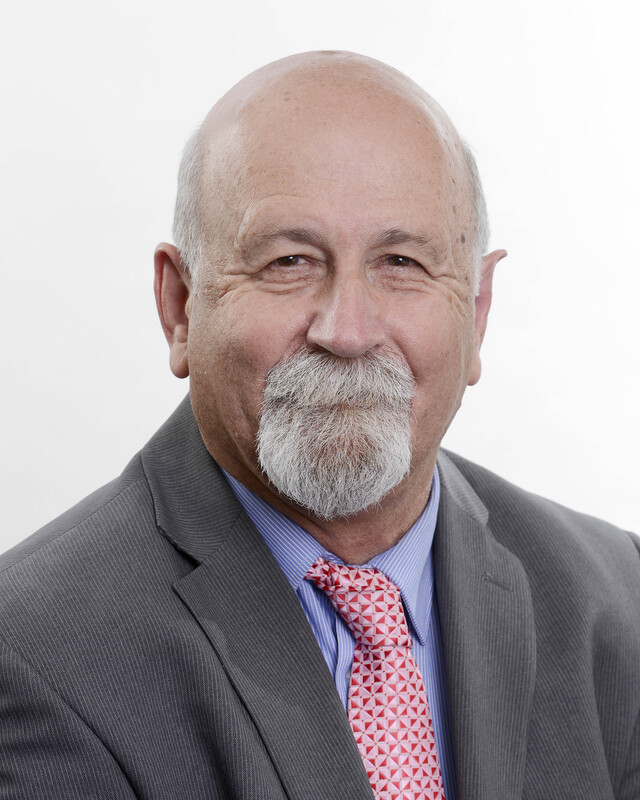
Each edition we feature the views of a Local Government Association President. The following is from Councillor Brad Matheson, President Municipal Association of Victoria.

In January, the MAV launched a report into the Economic and Financial Challenges Facing Small Rural Councils &endash; those municipalities with a population of 20,000 or less. The document’s findings show what many Councillors and Council officers have long suspected &endash; that infrastructure is the key drain on Council resources and also the key to the future.

Under the present ‘Catch 22’, small rural Councils cannot afford to maintain and/or substantially improve their infrastructure. Yet, without this improvement, the ability to attract industry and development is limited. As a result, these Councils have to strike higher rates than metropolitan Councils, relative to both valuations and household incomes.

Specifically, the report indicates that:

  • Small rural Victorian Councils spend almost 100 percent more per resident on local services than metropolitan municipalities – $943 per resident in rural areas, compared with $505 by metropolitan Councils.
  • From 1995-97, property values climbed 14 per cent in Metropolitan Melbourne, compared with a rise of just 2 percent in regional Victoria.
  • Rural residents pay a greater percentage of their household income in Council rates &endash; metropolitan rates average 2.3 percent of median household incomes, while rural rates are 3.9 percent.
  • Rural Councils spend 43 percent of their annual budget on roads. Metropolitan Councils spend only 20 percent on roads.

These figures are a poignant testament to the substantial challenge facing small Councils if they are to turn around declining economic and employment opportunities in their areas. They also provide valuable evidence for the MAV to lobby for a fairer share of the tax cake and road funding dollar for Victoria.

But, as stark as these figures are, and as big as the challenge is, many Councils are coming up with tremendously innovative programs and projects to make a difference. At Bass Coast, a broadband telecommunications network is being developed to enhance online access and lower telecommunications costs in order to boost employment, business development and service delivery.

Glenelg Shire has worked hard to attract the proposed Technology Park to Portland. Hindmarsh Shire has embarked on a Biolink Revegetation Project, which is not only of important environmental significance, but has opened up communication and cooperation between a host of government agencies.

Rural Victoria like many other communities across Australia, needs a helping hand to overcome the prevailing hardship. What is equally important is that these Councils have demonstrated a determination to shake off the prophecies of doom and gloom and are working hard to come up with solutions. The MAV is proud to assist and support them in their endeavours.
Digital Editions


  • Redlands Koala population stable

    Redlands Koala population stable

    Redland City Council has become the first local government in south-east Queensland – and within the koala’s federally-listed northern endangered range – to report stabilisation…

More News

  • New deputy for Liverpool

    New deputy for Liverpool

    Councillor Peter Harle has been elected Deputy Mayor of Liverpool City Council following the resignation of Cllr Dr Betty Green. Councillor Harle, who has served the office in the past,…

  • Erosion reef wins awards

    Erosion reef wins awards

    A West Australian-first coastal erosion research reef installed off C.Y. O’Connor Beach in 2022, reducing wave height and energy and blossoming into a thriving habitat, took out the 2025 WA…

  • More rehabilitation works for Coffs

    More rehabilitation works for Coffs

    Scores of local flood-damaged roads will be improved after the City of Coffs Harbour determined to expand rehabilitation works. An initial program of stabilisation works had already been approved for…

  • First-class Pump Track opens in Ballina

    First-class Pump Track opens in Ballina

    Ballina Shire Council is thrilled to announce the completion of the new Ballina Pump Track at Kingsford Smith Reserve in the heart of Ballina. Designed to national competition standards, the…

  • Fraser Coast support announced

    Fraser Coast support announced

    Fraser Coast Regional Council has renewed and expanded its support for three key emergency services – the Royal Flying Doctor Service (RFDS), LifeFlight, and local Rural Fire Brigades. At their…

  • Council named among Australia’s most inclusive employers

    Council named among Australia’s most inclusive employers

    Lake Macquarie City Council has become one of only two local government organisations in Australia included in a benchmark list of inclusive employers. The Diversity Council of Australia (DCA) added…

  • New deputy in Griffith

    New deputy in Griffith

    Griffith City Council has elected Councillor Scott Groat as the new Deputy Mayor at the Ordinary Council Meeting held on Tuesday, 28 October 2025. Cr Groat will hold the position…

  • Planning for the future

    Planning for the future

    Cowes Primary School students brought plenty of energy and curiosity to Berninneit Cultural Centre in mid-October for a special Meet the Mayor visit as part of their Community Walk. Organised…

  • Wollongong named as host city

    Wollongong named as host city

    Wollongong has been announced as the host city for the 2026 Local Government NSW (LGNSW) Annual Conference, following a warm invitation from the Lord Mayor of Wollongong Councillor Tania Brown…

  • Grant secured for Northwood Street Road Safety Masterplan

    Grant secured for Northwood Street Road Safety Masterplan

    The Town of Cambridge, in partnership with the Flower District Town Team, has been awarded a 2025 Streets Alive Stream Two Grant to develop the Northwood Street Road Safety Masterplan.…